
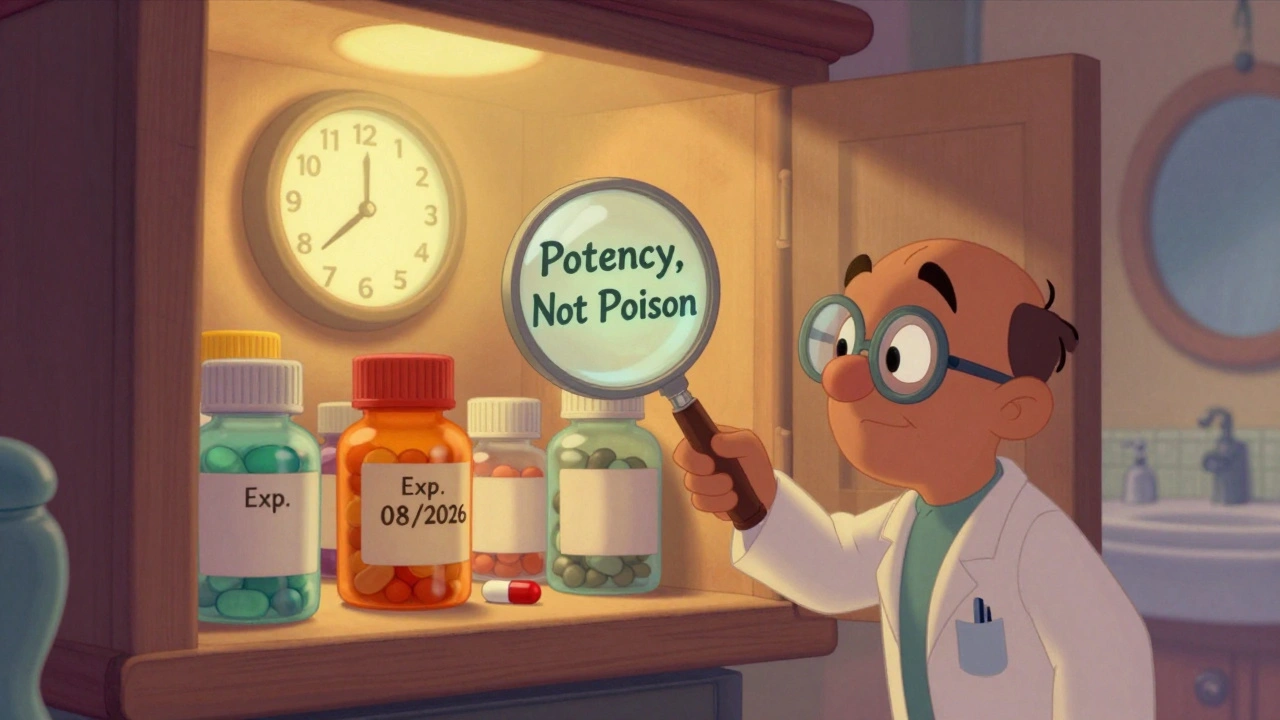
When you find an old bottle of pills in the back of your medicine cabinet, the first thing you probably think is: is this still safe to take? The expiration date printed on the label feels like a hard stop - like a timer running out on your health. But what does that date actually mean? Is it a guarantee that the medicine turns toxic after that day, or is it just a manufacturer’s best guess? The truth is more complicated - and more important - than most people realize.
Expiration Dates Are About Potency, Not Poison
The expiration date on your medication isn’t a death sentence for the drug. It’s not saying, "After this date, it becomes dangerous." Instead, it’s a promise from the manufacturer that the drug will still work as intended - at full strength - up until that date, if stored properly. This standard was required by the U.S. Food and Drug Administration (FDA) in 1979, after Congress passed amendments to the Federal Food, Drug, and Cosmetic Act. The goal? To make sure you’re getting the dose you’re supposed to get.
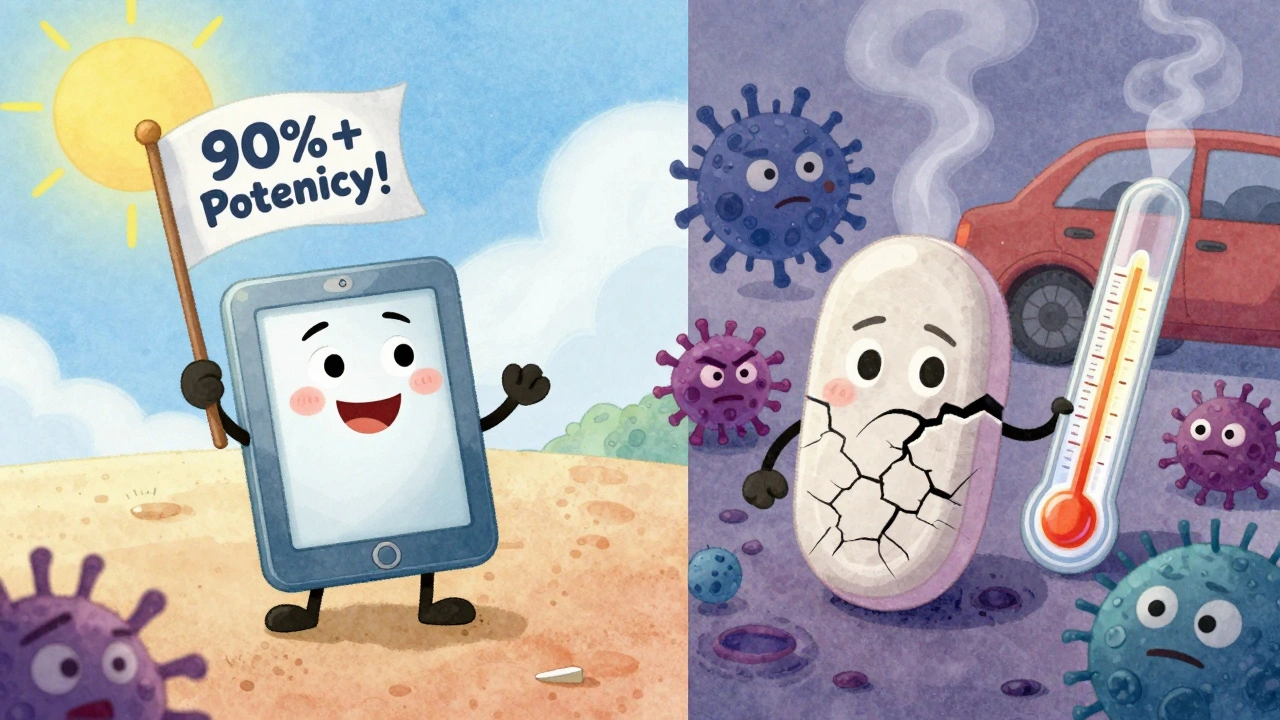
Manufacturers test their drugs under controlled conditions - heat, humidity, light - to see how long the active ingredient stays above 90% of its labeled strength. Once it drops below that threshold, the expiration date is set. Most pills and capsules are tested for 12 to 60 months. That’s why your ibuprofen might say "exp. 08/2026" even if it was made in 2023. It’s not that it’ll go bad in two years. It’s that the manufacturer only guarantees it’ll work perfectly until then.
What Happens When Medications Expire?
Most solid medications - tablets, capsules, even some creams - don’t suddenly become harmful after their expiration date. Instead, they slowly lose potency. Think of it like a battery running down. Your painkiller might still relieve your headache, but maybe not as well. Your blood pressure pill might still lower your numbers, but not as consistently.
That’s why the real danger isn’t always toxicity - it’s underdosing. If you’re taking an expired antibiotic for an infection, and it’s only 70% as strong, you might not kill all the bacteria. That can lead to resistance, longer illness, or worse infections. The same goes for heart medications, seizure drugs, or insulin. A small drop in potency can have big consequences.
But here’s the twist: a massive U.S. military study called the Shelf Life Extension Program (SLEP), which tested over 3,000 lots of 122 different drugs between 1985 and 2006, found that 88% of medications were still effective 15 years past their expiration date. Ciprofloxacin kept 97% potency 12 years later. Amoxicillin stayed at 94% after 8 years. Even aspirin and morphine tablets were still strong decades out.
The Dangerous Exceptions
Not all drugs are created equal. Some degrade quickly - and dangerously - even before their expiration date. These aren’t just "less effective." They can become life-threatening.
- Nitroglycerin - used for chest pain - loses half its strength within 3 to 6 months after opening the bottle. If you’re having a heart attack and your nitro doesn’t work, it could kill you.
- Insulin - if left unrefrigerated or exposed to heat - degrades at 1.5% to 2.5% per month. A weakened dose means higher blood sugar, diabetic ketoacidosis, or coma.
- Liquid antibiotics like amoxicillin-clavulanate suspension become ineffective within 14 days of mixing, regardless of the printed date. Bacteria can multiply unchecked.
- Epinephrine auto-injectors (EpiPens) lose 15-20% potency per year after expiration. In anaphylaxis, that could mean not enough drug to save a life.
- Warfarin - a blood thinner - can become unpredictable when expired, leading to dangerous bleeding or clotting.
If you’re using any of these, don’t gamble. If it’s expired, replace it. No exceptions.
Storage Matters More Than You Think
Your bathroom cabinet is the worst place to store medicine. Humidity from showers can reach 75-85% - way above the 60% recommended for stability. Heat from radiators or sunlight through windows speeds up degradation. A drug stored at 30°C degrades 40-60% faster than one kept at 25°C, according to the European Medicines Agency.
Keep medications in their original containers with child-resistant caps. Store them in a cool, dry place - like a bedroom drawer, not above the fridge or near the sink. Avoid leaving pills in your car during summer. Temperatures inside a parked car can hit 60°C. That’s not storage - that’s a chemistry experiment.
Look for signs of damage: tablets that are cracked, discolored (white turning yellow), or smell odd. Powdery or sticky capsules. Liquid that’s cloudy or has particles. If you see any of this, toss it. Even if it’s not expired, it’s compromised.
What Should You Do With Expired Meds?
Don’t flush them unless they’re on the FDA’s Flush List - drugs like fentanyl patches or oxycodone tablets that pose high overdose risk if accidentally ingested. For everything else, the safest option is a drug take-back program.
In the U.S., the DEA runs National Prescription Drug Take-Back Days twice a year. In 2023 alone, over 900,000 pounds of unused meds were collected from 5,886 sites. Many pharmacies also have permanent drop boxes. In the UK, you can return expired medicines to any pharmacy - they’ll dispose of them safely.
If no take-back option is available, mix pills with coffee grounds or cat litter, seal them in a container, and throw them in the trash. Don’t crush them. Don’t flush them. Just make them unappealing and unaccessible.
When Is It Okay to Use an Expired Drug?
There’s no blanket rule. But experts agree on this: Never use expired meds for life-threatening conditions. If you’re treating high blood pressure, diabetes, epilepsy, or an infection that could turn septic - get a new prescription.
For minor, non-critical issues - like occasional headaches, mild allergies, or heartburn - an expired ibuprofen, antihistamine, or omeprazole might still work. If it’s only a few months past expiration, stored properly, and looks normal, the risk is low. But it’s not a guarantee.
Pharmacists often assign "beyond-use" dates when they dispense medication. For solid oral drugs, that’s usually one year from the fill date - even if the original bottle says 2027. That’s because once you open the bottle, exposure to air and moisture begins. Your pharmacist knows this better than the manufacturer.
The Bigger Picture: Waste vs. Safety
Every year, the U.S. throws away $765 billion worth of unused or expired medication. That’s 13-15% of all pharmaceutical spending. The military saves $1.2 billion a year by extending expiration dates on stockpiled drugs - because their data shows it’s safe.
But the FDA won’t change consumer guidelines. Why? Because they can’t control how you store your meds. They can’t know if your insulin sat in a hot car. They can’t test your pills before you take them. So they err on the side of caution.
Emerging tech might change this. Smart packaging with time-temperature sensors is already being used in biologics. In 2023, the FDA began testing Bluetooth-enabled sensors that update expiration dates based on real storage conditions. Early results show a 22% drop in unnecessary discards for insulin.
Research at the University of Utah is building algorithms that predict remaining potency using your drug’s storage history. If your app knows you kept your blood pressure pill in a cool drawer, it might tell you it’s still good for another 6 months - even if the label says otherwise.
But until those tools are widely available, the safest rule is simple: When in doubt, throw it out. Especially if it’s critical for your health.
What to Do Today
Take five minutes right now and check your medicine cabinet. Look for:
- Any pills past their expiration date
- Any liquid medications more than a year old
- Any insulin, nitroglycerin, or EpiPen past its date
- Any pills that look, smell, or feel strange
If you found anything expired or damaged, don’t panic. Just plan to replace it. Call your pharmacy. Ask if they have a take-back bin. Or wait for the next National Prescription Drug Take-Back Day.
And next time you pick up a prescription, ask your pharmacist: "What’s the beyond-use date?" They’ll tell you. That’s the real expiration date for your bottle - not the one printed by the manufacturer.
Is it dangerous to take expired medication?
For most solid medications like ibuprofen or statins, expired pills aren’t dangerous - they’re just less effective. But for critical drugs like insulin, epinephrine, nitroglycerin, or antibiotics, taking expired versions can be life-threatening due to loss of potency or unpredictable effects. Always replace these.
Do expiration dates apply to over-the-counter drugs too?
Yes. The same FDA rules apply to both prescription and over-the-counter medications. The expiration date guarantees potency and safety under proper storage. Don’t assume OTC drugs are safer to use after expiration - especially if they’re for pain, allergies, or sleep.
Can I still use an expired EpiPen in an emergency?
If it’s your only option during a severe allergic reaction, using an expired EpiPen is better than doing nothing. But don’t rely on it. EpiPens lose 15-20% potency per year after expiration. That could mean not enough epinephrine to stop anaphylaxis. Always carry a fresh one.
Why do pharmacies give drugs a shorter expiration date than the bottle?
Pharmacies assign "beyond-use" dates based on how the drug will be stored after dispensing. Once you open the bottle, exposure to air, moisture, and light begins. For most pills, pharmacies set a 1-year beyond-use date. For liquids or eye drops, it’s often 30 days or less. This is more accurate than the manufacturer’s date.
How should I store my medications to make them last longer?
Keep them in their original containers, in a cool, dry place away from sunlight and moisture. A bedroom drawer is ideal. Avoid bathrooms, kitchens, and cars. Ideal storage is below 25°C (77°F) and under 60% humidity. Use a dehumidifier if you live in a damp climate.
Are there any countries that allow expired medications to be used?
Sixty-seven countries permit expiration date extensions for emergency stockpiles, like military or disaster supplies. But only 12% allow consumers to use expired meds under any circumstances. Most, including the U.S., UK, and EU, advise against it - even if the science suggests many drugs remain safe.
Maria Elisha
December 5, 2025 AT 21:24Just checked my cabinet and found three expired ibuprofen. Honestly? I’ve been taking them for months. My headache still goes away. 🤷♀️
Ajit Kumar Singh
December 7, 2025 AT 17:55USA says throw away but in India we use everything till last drop. My grandma took 10 year old amoxicillin for fever and lived to tell it. Modern science is too scared to live. 💀
Angela R. Cartes
December 8, 2025 AT 15:15Wow. So you’re saying we should just… trust our intuition over regulatory science? 😮💨 I mean, I love a good conspiracy but this is like drinking tap water in a third world country and calling it ‘traditional wisdom’. 🤦♀️
Andrea Beilstein
December 10, 2025 AT 02:28Expiration dates are a reflection of our fear of uncertainty. We want a number on a bottle to give us control over chaos. But biology doesn’t care about corporate liability. The real question isn’t whether the drug works-it’s whether we’re willing to accept risk without a label to blame.
And yet, we’ve built entire systems on the illusion of precision. We don’t store meds properly. We don’t test them. We just panic when the date flips. It’s not about safety. It’s about surrendering agency to corporations and regulators who profit from our anxiety.
Lisa Whitesel
December 11, 2025 AT 22:19People who take expired meds are just one bad infection away from being a statistic. You’re not being brave. You’re being reckless. And now you’re putting others at risk with antibiotic resistance. Wake up.
Stop pretending you’re a rebel. You’re just lazy and ignorant.
Larry Lieberman
December 11, 2025 AT 23:24So if my EpiPen expired last year but looks fine… should I use it if I’m choking on a peanut? 🤔 I mean… I’ve got one fresh one but what if it’s in the car and I’m at the park? 😅
Sabrina Thurn
December 12, 2025 AT 17:58Let’s clarify the clinical nuance: solid oral dosage forms (tablets/capsules) exhibit minimal chemical degradation under ambient conditions. The primary concern is pharmacodynamic efficacy, not toxicity. The SLEP data is robust-88% potency retention beyond 15 years for 80% of compounds tested.
However, liquid formulations, biologics, and thermolabile agents (insulin, nitroglycerin) undergo hydrolytic and conformational degradation that compromises therapeutic thresholds. Storage conditions are the dominant variable-humidity > temperature. Refrigeration extends shelf life by 2–4x for most agents.
Pharmacies assign beyond-use dates based on USP <795> guidelines for compounding, not manufacturer stability data. This is why your 2027 bottle says ‘use by 2024’-it’s a risk mitigation protocol, not a chemical truth.
Courtney Black
December 14, 2025 AT 17:42It’s funny how we treat medicine like milk. Expiration date? Throw it out. But we’ll eat sushi from last week, drink water from a plastic bottle left in the sun, and still swipe left on someone who doesn’t like pineapple on pizza. We’ve built a culture of performative safety-where the appearance of caution replaces actual understanding.
We’re not protecting ourselves. We’re performing obedience to systems we don’t understand. And then we get mad when the system fails us.
Maybe the real expiration date isn’t on the bottle. Maybe it’s on our willingness to think for ourselves.
iswarya bala
December 15, 2025 AT 12:13i just took my 2 year old aspirin for headache and it workd great 😊 no need to wast money every time 😄
Simran Chettiar
December 16, 2025 AT 19:29It is a matter of profound philosophical inquiry, this notion of expiration as a construct imposed by industrial capitalism upon the natural decay of chemical substances. The pharmaceutical industry, in its pursuit of perpetual revenue streams, has engineered a doctrine of obsolescence that transforms medicine into a consumable commodity rather than a fundamental tool of human preservation. The expiration date, then, is not a scientific datum but a sociopolitical artifact-a mechanism of control disguised as precaution. And yet, the individual, burdened by the weight of institutional authority, dares not question it. For to question is to risk. And risk, in our age, is the ultimate sin.
Richard Eite
December 18, 2025 AT 13:46USA leads the world in medicine. If the FDA says don’t use it, you don’t use it. Anyone who thinks otherwise is a dangerous idiot. You think India knows better? They’re still using cow dung as medicine. Wake up. America is right.
And if you’re too cheap to replace your meds, go get a job.
Katherine Chan
December 18, 2025 AT 23:28Thank you for this! I just cleaned out my cabinet and found 3 expired things. I’m going to drop them off at the pharmacy next week. Small step, right? 💪 Let’s all do better, together!
Philippa Barraclough
December 19, 2025 AT 18:07Interesting that the military data shows extended potency, yet civilian guidelines remain conservative. The disconnect suggests institutional risk aversion outweighs empirical evidence. One wonders whether this is driven by liability concerns, pharmaceutical lobbying, or genuine public health calculus.
Also, the storage conditions referenced-25°C and 60% humidity-are not universally applicable. In tropical climates, ambient temperatures routinely exceed 35°C. The manufacturer’s shelf life assumption is therefore invalid for a significant portion of the global population. A one-size-fits-all expiration label is, in practice, a form of medical colonialism.
Tim Tinh
December 21, 2025 AT 06:22man i just threw out my last ibuprofen because the date was up… but now i feel kinda dumb. i mean… it was just sitting there. maybe i should’ve kept it. 😅 thanks for the reminder to check the cabinet. gonna do it tonight.
Olivia Portier
December 21, 2025 AT 12:45so many of us are scared to ask questions about our meds. but your pharmacist? they’re your secret weapon. next time you pick up a script, just say ‘hey, what’s the real date on this?’ they’ll love you for it. 🌿💛
Tiffany Sowby
December 23, 2025 AT 11:41Wow. So now we’re supposed to trust random internet strangers who say ‘my grandma took 10-year-old antibiotics and lived’? And you call yourself a ‘cultural ambassador’? That’s not culture-that’s negligence wrapped in romanticism. People die from underdosed antibiotics. Don’t glorify it.