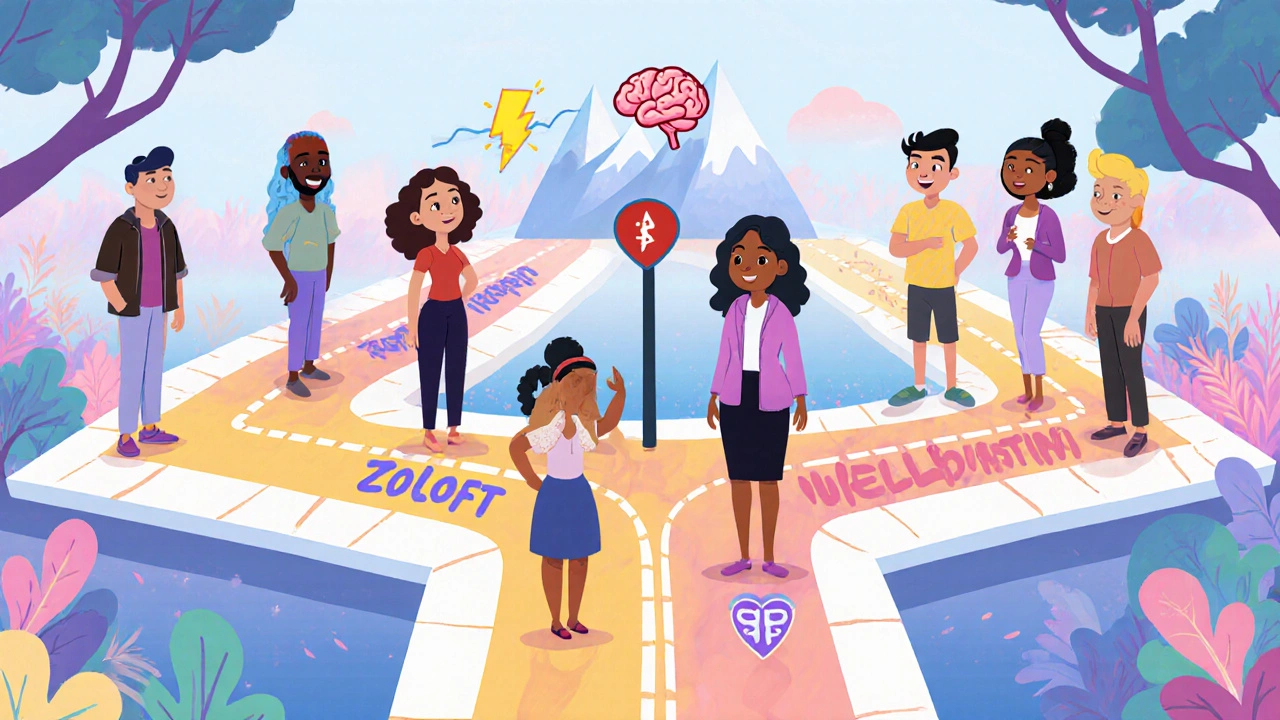
When people talk about Zoloft, a selective serotonin reuptake inhibitor (SSRI) used to treat depression, anxiety, and obsessive-compulsive disorder. Also known as sertraline, it is one of the most prescribed antidepressants in the U.S. and has helped millions manage symptoms that once felt overwhelming. Unlike some meds that knock you out or make you feel numb, Zoloft works slowly—over weeks—to help your brain regain balance. It doesn’t change who you are. It just helps you feel more like yourself again.
Zoloft is part of a larger group called SSRIs, which includes drugs like Prozac and Lexapro. These aren’t quick fixes. They don’t work like caffeine or painkillers. You take them daily, even when you feel fine, because they rebuild your brain’s chemistry over time. Many users report feeling better after 4 to 6 weeks, but some need longer. If it doesn’t help after 8 weeks, talking to your doctor about switching or adding therapy isn’t failure—it’s smart planning.
Side effects are real, but often mild and temporary. Nausea, dry mouth, and trouble sleeping are common at first. Some people feel more anxious before they feel better. That’s not unusual. But if you notice sudden mood shifts, suicidal thoughts, or extreme restlessness, call your doctor immediately. Zoloft isn’t safe for everyone. If you’re pregnant, breastfeeding, or taking other meds like migraine drugs or blood thinners, you need to be extra careful. Always tell your pharmacist and doctor everything you’re on.
People often wonder if Zoloft causes weight gain or makes you tired. For some, yes. Others lose weight or feel more energy. It varies. What matters is tracking how you feel—not just your mood, but your sleep, appetite, and focus. Keep a simple journal. That way, when you talk to your doctor, you’re not guessing. You’re showing patterns.
There’s a lot of noise online about stopping Zoloft cold turkey. Don’t do it. Withdrawal can hit hard—dizziness, brain zaps, nausea, even panic attacks. Tapering down slowly under medical supervision makes all the difference. You’re not addicted. But your brain got used to the extra serotonin. It needs time to adjust.
Below, you’ll find real-world guides on how Zoloft fits into broader treatment plans. Some posts compare it with other antidepressants. Others warn about drug interactions you might not expect—like mixing it with certain painkillers or herbal supplements. One article even covers how to safely dispose of old pills to protect your privacy. This isn’t just theory. These are stories from people who’ve been there, and advice from pharmacists who’ve seen the mistakes.
© 2026. All rights reserved.