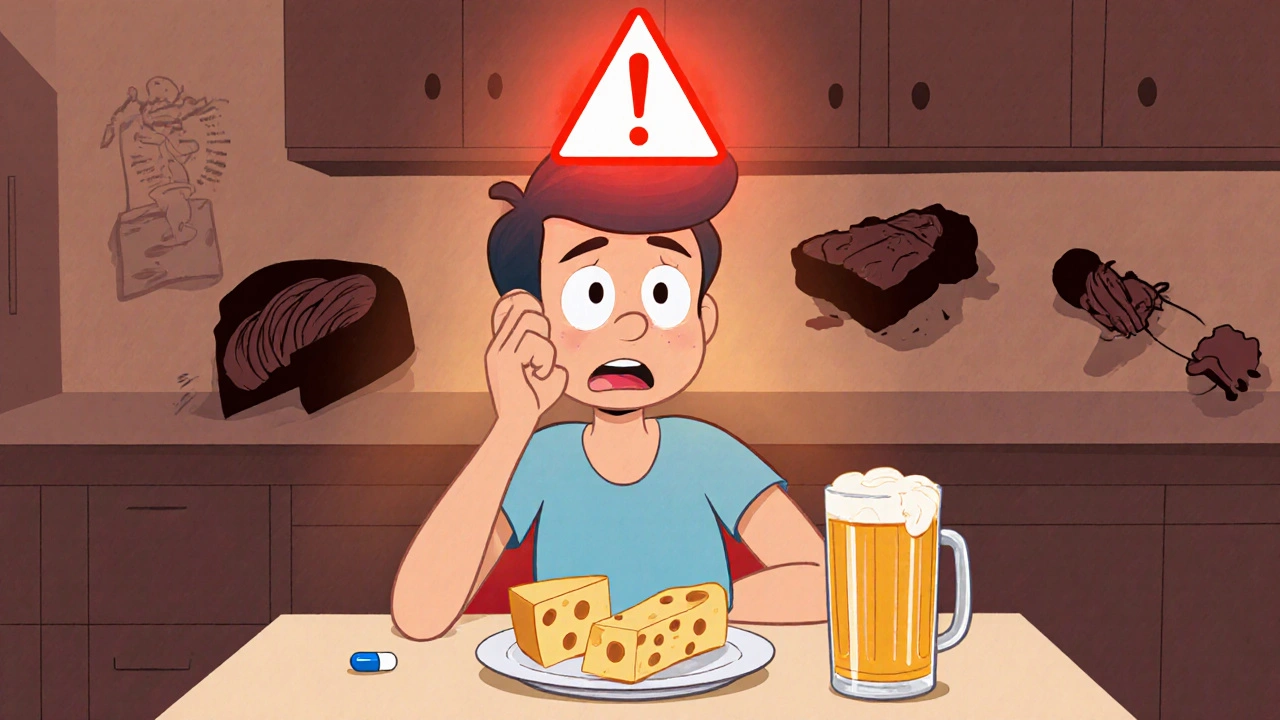
When you take linezolid, a synthetic antibiotic used for serious bacterial infections like MRSA and pneumonia, you’re not just fighting an infection—you’re also risking a spike in blood pressure. This isn’t a common side effect for everyone, but for some, it can be dangerous. Linezolid is an MAO inhibitor, a type of drug that blocks enzymes that break down neurotransmitters like tyramine, and that’s where the trouble starts. When MAO is blocked, tyramine builds up in your system. And tyramine? It’s a natural compound found in aged cheeses, cured meats, soy sauce, and even some wines. Too much of it triggers a sudden, sharp rise in blood pressure—sometimes called a hypertensive crisis.
This isn’t just theoretical. Real cases have been reported where people on linezolid ate a slice of aged cheddar or had a beer and ended up in the ER with headaches, chest pain, and dangerously high blood pressure. The risk isn’t the same for everyone. People with existing hypertension, chronic high blood pressure that already strains the heart and arteries, or those taking other meds like decongestants or certain antidepressants, are at higher risk. Even if your blood pressure is normal now, linezolid can push it into dangerous territory fast. That’s why doctors don’t hand out linezolid like a common painkiller—it’s reserved for tough infections when other antibiotics have failed.
What makes this even trickier is that you might not feel anything until it’s too late. No dizziness. No warning. Just a sudden, pounding headache or blurred vision. That’s why if you’re prescribed linezolid, you need to know exactly what to avoid—not just the obvious stuff like blue cheese, but also tap beers, fermented soy products, and even some over-the-counter cold meds. It’s not about being perfect—it’s about being smart. A single mistake can undo weeks of healing.
And here’s the thing: this isn’t just about diet. Linezolid can also interact with other drugs that affect serotonin or norepinephrine, like SSRIs or SNRIs, raising the risk of serotonin syndrome—a separate but equally serious condition. So if you’re on antidepressants, talk to your pharmacist before starting linezolid. Don’t assume it’s safe just because your doctor didn’t mention it. Many patients don’t realize how much their meds can clash until it’s too late.
Below, you’ll find real-world posts that dig into the hidden dangers of common antibiotics, how they interact with your body’s chemistry, and what you can do to stay safe. From QT prolongation risks to how dairy affects absorption, these aren’t theoretical guides—they’re based on actual patient cases, FDA alerts, and clinical data. If you’re taking linezolid—or thinking about it—this collection gives you the facts you won’t get from a one-page patient leaflet.
© 2026. All rights reserved.