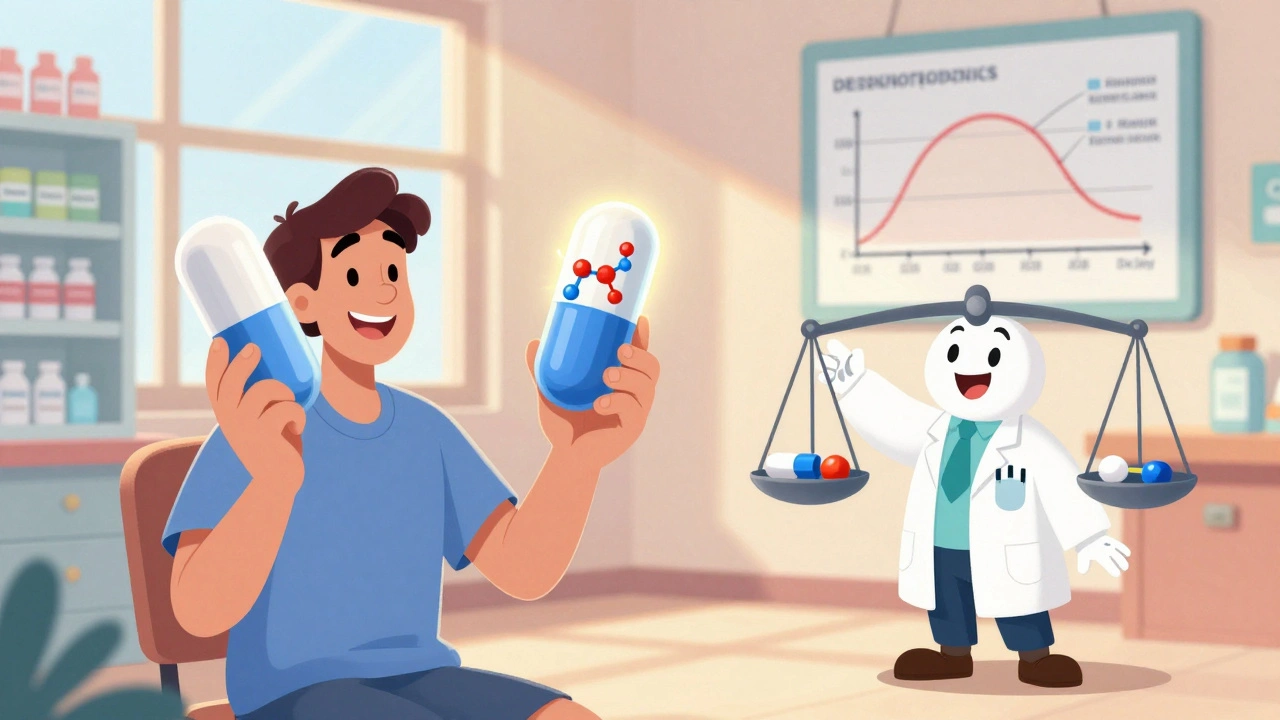
When you pick up a prescription, you might see two names on the bottle: one you recognize, and another that looks like a chemical code. The first is the brand name drug, a medication marketed under a company’s trademark after years of research and patent protection. Also known as proprietary drug, it’s what your doctor originally wrote on the script. The second is the generic drug, an FDA-approved version that contains the same active ingredient, dose, and route of delivery as the brand, but without the marketing costs. Also known as nonproprietary drug, it’s the same medicine, just cheaper. The generic vs brand debate isn’t about quality—it’s about cost, perception, and how the system works.
Here’s the truth: every generic drug must pass the same strict tests as the brand. The FDA doesn’t just accept claims—it runs dissolution tests to make sure the pill breaks down in your body at the same rate. It checks bioequivalence to confirm your blood absorbs the same amount of medicine. That’s why a generic version of metformin or lisinopril works just as well as the brand, even if it looks different or costs 80% less. The difference isn’t in the medicine—it’s in the label. Brand names pay for ads, fancy packaging, and sales reps. Generics don’t. That’s why Americans save over $445 billion a year using generics instead of brand names.
But not all generics are created equal in your eyes. Some people stick with brands because they trust the name, even if it’s the same pill. Others get confused when the color or shape changes between refills—because different manufacturers make the same generic. That’s normal. The FDA allows multiple companies to produce generics, and each may use different inactive ingredients like fillers or dyes. These don’t affect how the drug works, but they can cause rare allergies or make the pill look different. If you’re on a medication like levothyroxine or warfarin where tiny dose changes matter, talk to your pharmacist about sticking with the same manufacturer. For most other drugs? Switching between generics is safe and saves money.
There’s also something called an authorized generic, a version made by the original brand company and sold under a generic label. Also known as same-as-brand generic, it’s identical to the brand in every way—same factory, same ingredients, same packaging—but priced like a generic. These are rare, but they exist. If your insurance lets you choose, it’s the closest thing to the brand without paying the brand price.
What about patents? That’s where the TRIPS agreement, a global rule that enforces pharmaceutical patents. Also known as international patent law, it delays generic entry in many countries. In the U.S., generic companies can challenge weak patents to get to market faster. That’s why some generics appear years before others. It’s not about quality—it’s about legal battles and timing.
And here’s what most people don’t realize: your workers’ compensation plan, Medicare Part D, and even your employer’s health plan all push generics because they save billions. It’s not a trick. It’s smart policy. The FDA, CDC, and major medical associations all agree: generics are safe, effective, and the smart choice for most people.
Below, you’ll find real stories, hard numbers, and clear explanations about how these drugs compare—from how they’re made to why your pill looks different every time. You’ll learn what the FDA really checks, why some doctors still push brands, and how to save hundreds a year without risking your health. No fluff. Just facts you can use.
© 2026. All rights reserved.