When you take an antibiotic, a medicine used to kill or slow down bacteria causing infections. Also known as antibacterial agents, they’re powerful—but what you eat can make them work better, worse, or even dangerous. Many people don’t realize that food isn’t just something to swallow with pills. It can interfere with how your body absorbs the drug, change how fast it breaks down, or trigger side effects like nausea, dizziness, or heart rhythm problems.
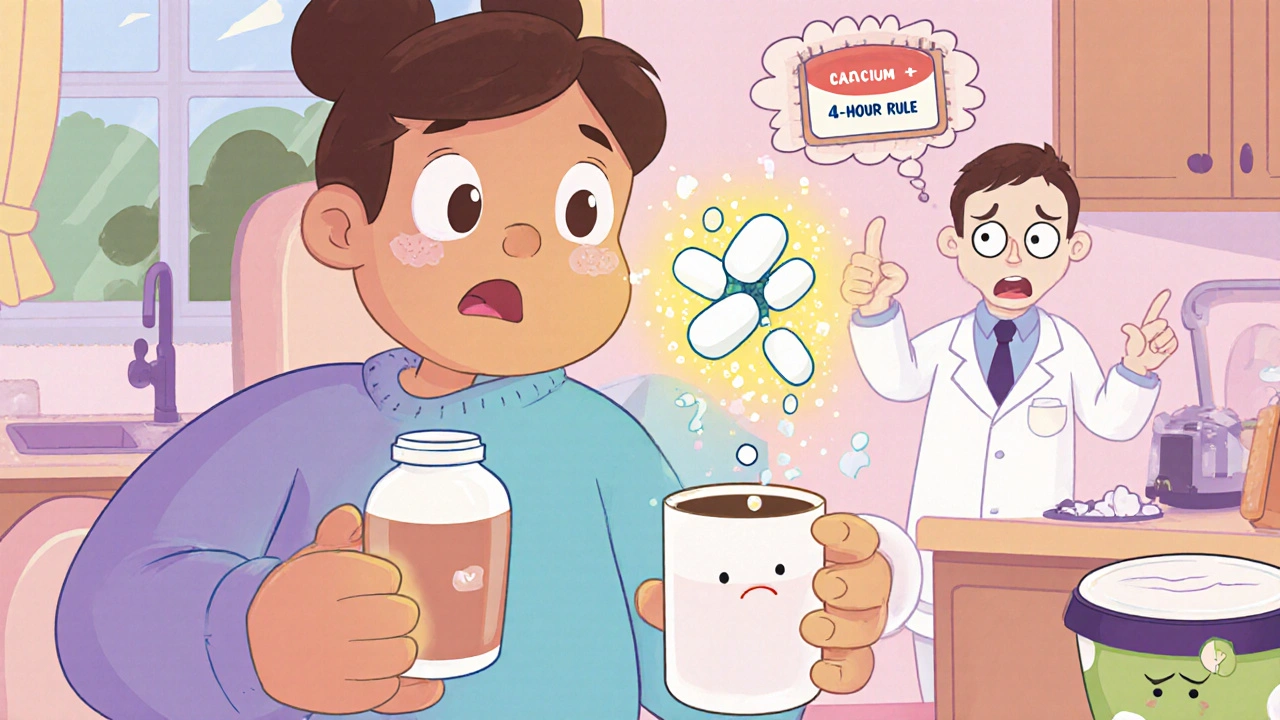
Take dairy, foods like milk, cheese, and yogurt rich in calcium. Calcium binds to certain antibiotics like ciprofloxacin and doxycycline, blocking absorption. That means the drug never reaches the infection site properly. The fix? Wait two hours before or after taking the pill to eat dairy. Same goes for antacids, medications that reduce stomach acid—they contain aluminum, magnesium, or calcium and can do the same thing. Even supplements with iron or zinc? Keep them separate. Timing matters more than you think.
Then there’s grapefruit, a fruit that blocks enzymes in your liver and gut that break down drugs. It’s not just grapefruit juice—it’s the whole fruit and even some citrus hybrids. This affects antibiotics like erythromycin and some others, causing too much of the drug to stay in your system. That can lead to serious side effects like muscle damage or irregular heartbeat. You don’t need to give up citrus entirely—just avoid grapefruit and its close relatives while on antibiotics.
Alcohol? It doesn’t directly cancel out most antibiotics, but it can make you feel worse. If you’re on metronidazole or tinidazole, mixing alcohol can cause vomiting, flushing, and a racing heart. Even with other antibiotics, alcohol adds stress to your liver, slows healing, and makes fatigue worse. You’re trying to get better—why add more strain?
Some antibiotics need an empty stomach. Others work better with food to avoid nausea. Doxycycline? Take it on an empty stomach or with a light snack—no dairy, no antacids. Amoxicillin? Food is fine. Ciprofloxacin? Avoid calcium-rich meals. It’s not one-size-fits-all. The label on your bottle matters, but so does knowing why.
And it’s not just about what you eat. It’s about what you’re taking alongside your antibiotic. Supplements like probiotics? They help your gut but should be taken a few hours apart so the antibiotic doesn’t kill the good bacteria before they can settle. Herbal teas? Some, like St. John’s wort, can speed up how fast your body clears the drug. That means it won’t stay in your system long enough to fight the infection.
You don’t need to memorize every rule. But if you’re on an antibiotic and feel weird after eating something, or if your symptoms aren’t improving, food might be the missing piece. The posts below cover real cases—like how ciprofloxacin can cause mental side effects when mixed with certain foods, or how expiration dates on antibiotics matter more than you think. You’ll find practical tips on avoiding interactions, what to ask your pharmacist, and how to spot when your meds aren’t working because of what’s on your plate. This isn’t guesswork. It’s science you can use today to make your treatment actually work.
© 2026. All rights reserved.