

What Is Venom Immunotherapy?
Vein immunotherapy, or VIT, is the only treatment that can actually change how your body reacts to insect stings. It doesn’t just treat symptoms-it rewires your immune system so you stop overreacting to venom. If you’ve ever had a scary reaction to a bee, wasp, or hornet sting-like trouble breathing, swelling in your throat, or passing out-this therapy could be life-changing.
Unlike carrying an epinephrine auto-injector, which only helps after a sting happens, VIT stops you from having those reactions in the first place. It works by slowly exposing your body to tiny, controlled amounts of purified insect venom. Over time, your immune system learns not to see it as a threat. Think of it like training your body to ignore something it used to panic over.
How Effective Is It?
The numbers speak for themselves. For people allergic to wasp or yellow jacket venom, VIT reduces the chance of a severe reaction from nearly 70% down to just 3-5%. That’s a 90% drop in risk. For honeybee allergies, the protection is still strong-77-84% effective. These aren’t theoretical numbers. They come from tracking thousands of patients over decades.
One major study followed people for 10 years after they finished treatment. Eighty-five to ninety percent of them still had protection. That means if you complete the full course, you might never need another shot again. And if you do get stung? You’re far more likely to feel just a little pain, not end up in the ER.
How Does the Treatment Work?
VIT has two phases: buildup and maintenance. During buildup, you get shots once or twice a week for about 3 to 6 months. The dose starts incredibly small-less than a drop of venom-and increases slowly. Most people reach the full dose in 12 to 20 visits. After that, you switch to maintenance: one shot every 4 to 8 weeks, for at least 3 to 5 years.
The venom used is pure and standardized. Each vial contains specific proteins from the insect-like Api m 1 for honeybees or Ves v 5 for yellow jackets. These are made under strict FDA and European standards to ensure every batch is consistent. You won’t get random mixtures. You get precise, reliable doses.
After each shot, you have to wait in the clinic for 30 to 60 minutes. That’s because most reactions happen within that window. But here’s the thing: most reactions are mild-a little redness, itching, or swelling at the injection site. Serious reactions during treatment? Only 2-5% of people experience them.
Who Should Get It?
You’re a good candidate if you’ve had a systemic reaction to a sting. That means symptoms beyond just a swollen bump: dizziness, nausea, trouble breathing, hives over large areas, or losing consciousness. If you only got a big local reaction-say, your whole arm swelled up-that’s not enough reason to start VIT.
It’s also recommended if you’re at higher risk. Farmers, gardeners, construction workers, or anyone who spends a lot of time outdoors should consider it. Even if your reaction was mild, if you’re likely to get stung again, the long-term protection is worth it.
There are exceptions. People with mast cell disorders, like mastocytosis, have a higher chance of treatment failure. Your allergist will check for that before starting. Kids under 18 rarely get VIT unless they’ve had a life-threatening reaction. Most doctors wait until adulthood to begin.

How Does It Compare to Other Options?
Some people think, “I’ll just carry an EpiPen.” But that’s like wearing a seatbelt but never fixing the broken brakes. An EpiPen saves your life after a reaction-but it doesn’t stop the reaction from happening again. And you’ll always live with the fear.
Sublingual immunotherapy (drops under the tongue) sounds easier, but it doesn’t work as well. Studies show only 40-55% success with drops, compared to 90%+ with shots. Oral immunotherapy? Still experimental. No FDA-approved options exist yet.
And here’s the kicker: VIT is more effective than allergy shots for pollen or dust mites. Yes, you read that right. For insect venom, it’s the gold standard. The European Academy of Allergy and Clinical Immunology calls it the most effective allergen therapy we have.
What Are the Downsides?
No treatment is perfect. VIT requires time, money, and commitment. You’ll need to miss work or school for appointments every few weeks for years. That’s tough if you’re busy or live far from an allergist. In rural areas, 35% of people live more than 50 miles from one.
Cost is another factor. A full course can run $2,800 to $4,500 out of pocket. Insurance helps-Medicare covers 80%, and most private plans approve 75-85% of requests-but prior authorization is common. Some people get denied because their doctor didn’t document the sting history well enough.
And yes, there’s a small risk. About 1 in 20 people have a reaction during treatment. Most are mild, but some need emergency care. That’s why clinics require observation after every shot. It’s not optional. It’s safety.
Real People, Real Results
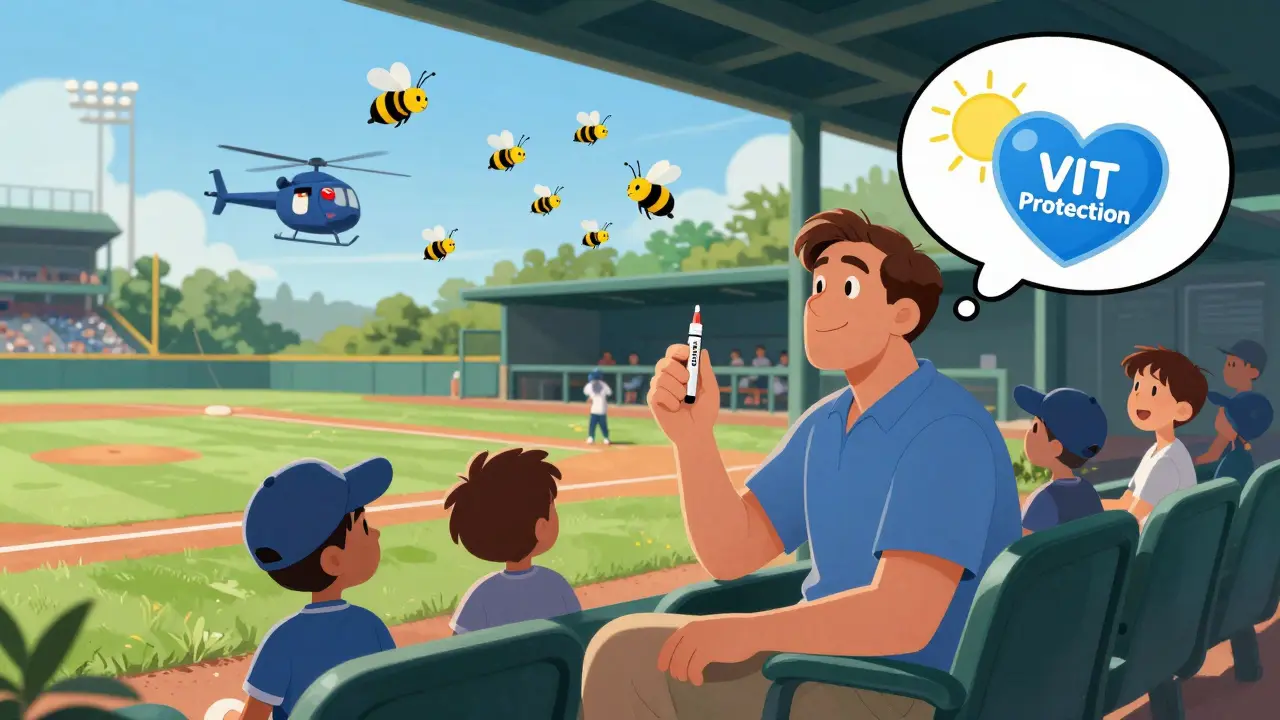
On patient forums, the stories are powerful. One woman in Texas said she stopped gardening for 12 years after a wasp sting sent her to the hospital. After VIT, she planted tomatoes again. Another dad in Ohio said he used to panic at his kids’ baseball games because bees hovered near the dugout. Now he sits in the stands without checking his EpiPen every five minutes.
A survey of over 1,200 VIT users found 87% felt less anxious about being outside. Seventy-three percent stopped carrying multiple auto-injectors. On Reddit, 89% said they’d recommend it to others. That’s not marketing. That’s lived experience.
But it’s not all smooth sailing. Some people report sore arms, missed workdays, or frustration with insurance delays. One user on a mast cell support group said, “I love that I can hike again, but I hate the 6-month commute to the clinic.”
What’s New in 2026?
The field is evolving. In January 2023, the FDA approved a new fire ant venom extract-finally giving relief to the 600,000 Americans allergic to these aggressive insects. Rush protocols now let some people reach full dose in just 1-3 days instead of months. But these come with higher short-term reaction rates, so they’re not for everyone.
Researchers are working on recombinant venom proteins made in labs, not extracted from insects. That could mean more consistent, safer products. They’re also testing blood markers like IgG4 levels to predict who will respond best-so you might not need to wait years to know if it’s working.
Is It Worth It?
Let’s do the math. A full course of VIT costs about $3,500. But one severe allergic reaction can cost $10,000-$25,000 in emergency care, hospital stays, and follow-ups. Over five years, VIT saves money. It saves time. But more than that-it saves peace of mind.
If you’ve ever stared at a wasp hovering near your lemonade and thought, “This could kill me,” then VIT isn’t just a treatment. It’s freedom. It’s the ability to live without fear. And that’s priceless.
Next Steps
If you think you might benefit:
- Write down every sting reaction you’ve ever had-what happened, how fast, how bad.
- Find an allergist who specializes in insect venom. Not all do.
- Ask for venom-specific IgE blood tests and skin tests.
- Discuss your lifestyle, job, and risk level. Don’t assume you’re not a candidate.
- Ask about insurance pre-approval. Get it in writing.
- If you’re told you don’t need it, ask why. Get a second opinion.
Don’t wait until the next sting. If you’ve had one serious reaction, you’re at higher risk for another. And the next one could be worse.
James Dwyer
January 27, 2026 AT 13:26jonathan soba
January 28, 2026 AT 10:23matthew martin
January 29, 2026 AT 15:38Phil Davis
January 29, 2026 AT 21:50Jess Bevis
January 30, 2026 AT 14:08Kathy Scaman
February 1, 2026 AT 13:58Anna Lou Chen
February 2, 2026 AT 06:40Mindee Coulter
February 3, 2026 AT 07:44Rhiannon Bosse
February 4, 2026 AT 19:56Bryan Fracchia
February 5, 2026 AT 20:53