
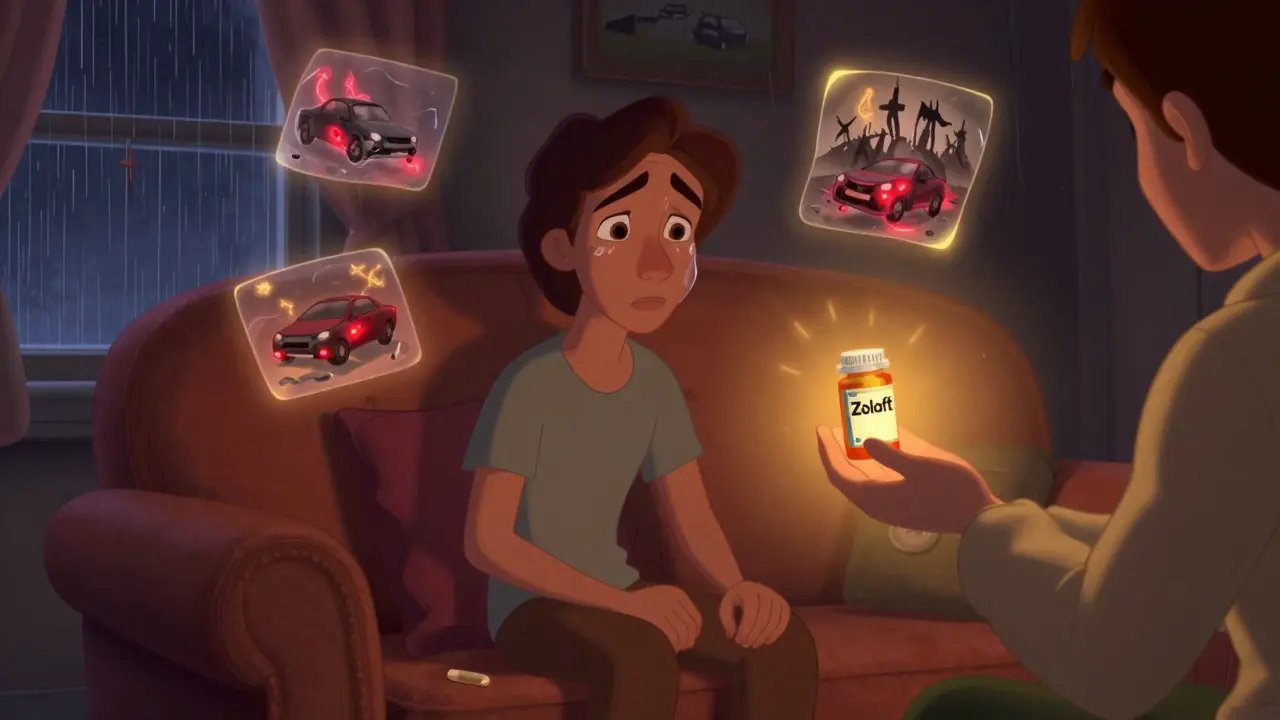
When someone survives a car crash, combat, assault, or any deeply frightening event, their brain doesn’t always reset. For about 1 in 10 adults, the fear doesn’t fade-it lingers. Flashbacks, nightmares, feeling on edge all the time, avoiding anything that reminds them of what happened. That’s Post-Traumatic Stress Disorder (PTSD). It’s not weakness. It’s a biological response to overwhelming trauma. And treating it isn’t just about taking a pill or going to therapy-it’s about how those two things work together, or sometimes against each other.
What PTSD Actually Feels Like
PTSD isn’t just being "stressed out." It’s four things happening at once: intrusive memories (flashbacks, nightmares), avoiding people or places that trigger those memories, negative thoughts about yourself or the world ("I’m broken," "No one can be trusted"), and being constantly on guard-jumping at loud noises, sleeping poorly, feeling angry for no reason. These symptoms last more than a month and make daily life hard. You might lose your job. Stop seeing friends. Feel numb. Or feel so wired you can’t sit still. The DSM-5-TR, the official guide doctors use to diagnose mental health conditions, says PTSD only counts if these symptoms are severe enough to mess with your life. And it’s not rare. Around 3.6% of U.S. adults have it right now. Veterans, first responders, survivors of abuse-they’re often the most visible, but anyone who’s been through something terrifying can develop it.The Two Main Ways to Treat PTSD
There are two big tools: trauma-focused therapy and medication. Neither is magic. But together, they can change everything. Trauma-focused therapy means talking through the trauma in a safe, structured way. Two types stand out: Cognitive Processing Therapy (CPT) and Prolonged Exposure (PE). In CPT, you learn how trauma changed your beliefs-like thinking "I’m to blame" or "The world is completely dangerous." You challenge those thoughts with facts. In PE, you slowly face memories and places you’ve been avoiding. Not all at once. But step by step. It’s hard. It feels like reopening a wound. But over time, the pain loses its power. Medication doesn’t erase the trauma. It doesn’t help you process it. But it can make the symptoms quiet enough that therapy becomes possible. If you’re so hypervigilant you can’t sleep, or so depressed you can’t leave the house, a pill might give you the breathing room you need to start healing.What Medications Actually Work
The FDA has only approved two drugs specifically for PTSD: sertraline (Zoloft) and paroxetine (Paxil). Both are SSRIs-selective serotonin reuptake inhibitors. They boost serotonin, a brain chemical tied to mood and fear regulation. Studies show about half of people on these drugs see a meaningful drop in symptoms. Sertraline helps 53% of users. Paroxetine helps 60%. That sounds good-but remember, that means nearly half get little or no benefit. And side effects? Common. Nausea, insomnia, weight gain, and sexual problems (low libido, trouble reaching orgasm) lead 42% of people to quit, according to Reddit user surveys. But here’s the twist: venlafaxine (Effexor XR), an SNRI, isn’t FDA-approved for PTSD… but it works just as well in real-world studies. Many doctors prescribe it anyway. Mirtazapine and amitriptyline show modest help too, but with more side effects like drowsiness and weight gain. For nightmares-a huge problem for many-prazosin is a game-changer. It’s a blood pressure pill, but at night, it calms the brain’s fear response during sleep. Veterans report 50% fewer nightmares within weeks. One VA survey found 73% of users saw big improvements. It’s cheap, generic, and often used alone or with SSRIs. Atypical antipsychotics like risperidone and quetiapine are sometimes added for severe agitation or dissociation. But they’re not first-line. Their benefits are small, and side effects (weight gain, tremors, metabolic issues) can be serious.Therapy vs. Medication: Which Wins?
Here’s the truth: therapy wins. Not because it’s "better"-but because it changes your brain’s wiring. CPT and PE lead to 60-70% remission rates. That means symptoms disappear enough that you’re not diagnosed anymore. SSRIs? Around 50-60%. And once you stop the pill, 55% relapse within a year. Therapy? The gains stick. Your brain learns to handle triggers without falling apart. But medication wins in speed. You might feel calmer in 2-4 weeks on sertraline. Therapy takes 8-12 weeks to show real progress. If you’re in crisis-can’t sleep, can’t function-meds can be a lifeline. Cost matters too. A generic SSRI costs $4-$10 a month. Therapy? $100-$200 per session. But therapy ends. Medication often doesn’t. Long-term, therapy saves money.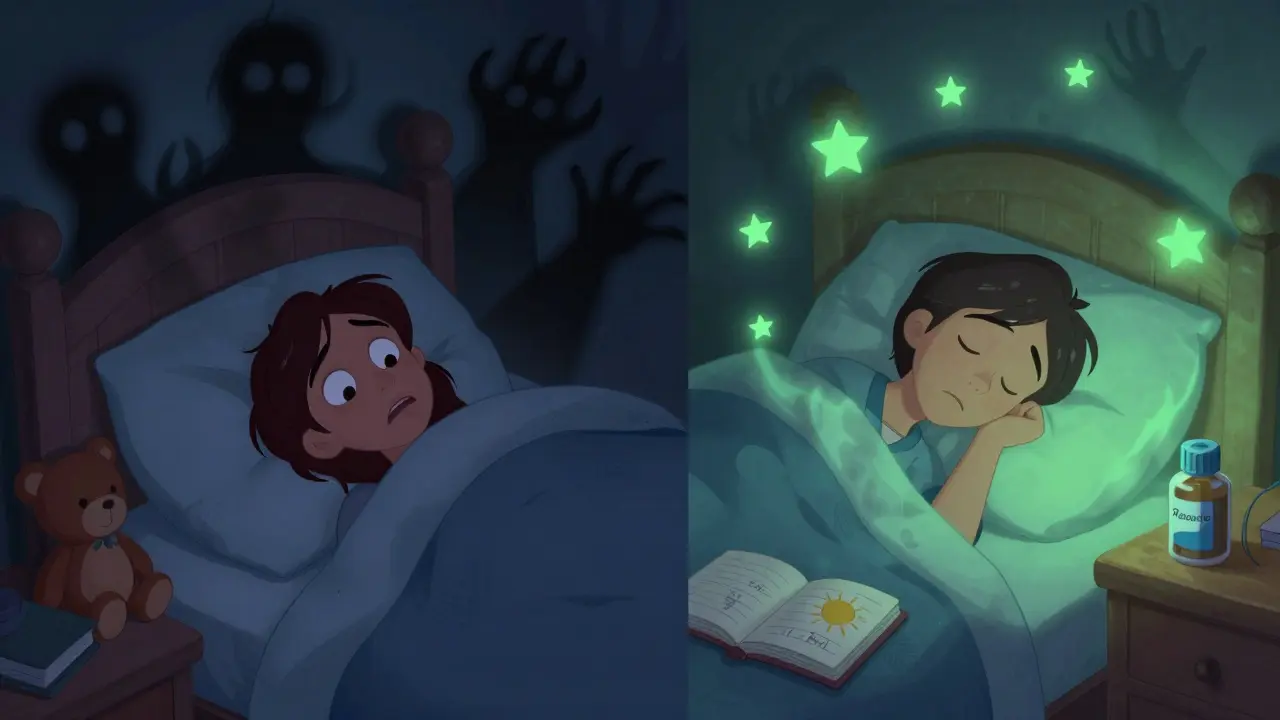
Combining Therapy and Medication: The Best of Both?
Some experts say you should do both from the start. A 2021 JAMA Psychiatry study found that people on sertraline + Prolonged Exposure had a 72% response rate-higher than either alone. For people with severe symptoms, this combo can be life-changing. But others warn: meds might blunt emotions too much. If you’re numb, you can’t feel the fear you need to process in therapy. Dr. Jonathan Shay, a VA psychiatrist, says SSRIs can "blunt emotional processing necessary for trauma resolution." That’s not theoretical. Patients report feeling "like a zombie" on meds, unable to cry or connect-even when therapy is working. So what’s the right order? The VA/DoD guidelines say: start with therapy. Give it 8-12 weeks. If you’re still stuck, add medication. Many private doctors skip to meds first-easier, faster, more profitable. But if you can access trauma-focused therapy, start there. Use meds only if symptoms are too overwhelming to engage.What Doesn’t Work (And Why)
Not all meds help. Benzodiazepines like Xanax? They’re sometimes prescribed for anxiety-but they make PTSD worse long-term. They don’t touch the trauma. They just numb it. And you get addicted. The VA stopped recommending them in 2017. Marijuana? Some people swear by it. But studies show no consistent benefit. And it can worsen paranoia or memory issues. Not recommended. Ketamine? Psychedelics? These are experimental. MDMA-assisted therapy showed 67% remission in a 2023 JAMA trial. The FDA may approve it by 2026. But it’s not available yet. Don’t chase unproven treatments.What to Do If Medication Fails
If you’ve tried sertraline, paroxetine, and venlafaxine-and nothing worked-you’re not broken. You’re not alone. About 20-30% of people are treatment-resistant. Options:- Try prazosin for nightmares-even if other meds failed.
- Switch to a different therapy. If PE didn’t work, try CPT. Or EMDR (Eye Movement Desensitization and Reprocessing).
- Join a support group. Veterans, survivors, and first responders often find healing in shared stories.
- Ask about clinical trials. New drugs like brexpiprazole (added to SSRIs) are showing promise.
- Use digital tools. The VA’s PTSD Coach app helps track symptoms and offers coping exercises. It’s free, and 27% more people stick with therapy when they use it.

How to Start Treatment
If you think you have PTSD:- See a mental health provider who specializes in trauma. Not every therapist knows how to do CPT or PE.
- Ask: "Do you use evidence-based trauma therapies?" If they say "I just listen," find someone else.
- Don’t pressure yourself to start meds right away. Try therapy first.
- If you do start an SSRI, give it 8-12 weeks at full dose (sertraline ≥150 mg, paroxetine ≥40 mg). Don’t quit after 2 weeks because you feel worse.
- Track your symptoms. Use a journal or app. Note sleep, nightmares, mood, triggers.
- Be honest about side effects. Sexual dysfunction? Nausea? Emotional numbness? Tell your doctor. There are ways to adjust.
The Future of PTSD Treatment
We’re moving toward personalized care. Researchers found 95 genetic variants that affect how people respond to SSRIs. Soon, a blood test might tell you: "Sertraline will likely work for you," or "Try venlafaxine instead." MDMA-assisted therapy could become standard by 2030. It’s not about getting high. It’s about using the drug to reduce fear during therapy, so you can face trauma without shutting down. Digital tools, wearable sensors that track stress responses, AI-guided therapy apps-they’re all coming. But none replace human connection. Healing from trauma isn’t about fixing a broken part. It’s about rebuilding trust-in yourself, in others, in the world.Final Thought
PTSD isn’t a life sentence. But healing isn’t linear. Some days you’ll feel strong. Others, you’ll be back in the trauma. That’s normal. Medication can help you survive the storm. Therapy helps you learn to walk in the rain without breaking. And sometimes, you need both.Don’t wait for "perfect" timing. Don’t wait until you’re "ready." You’re ready when you’re tired of suffering. Start there.
Can you cure PTSD with medication alone?
No. Medications like sertraline or paroxetine can reduce symptoms-flashbacks, anxiety, sleep problems-but they don’t help you process the trauma. Without therapy, the root cause stays unaddressed. Studies show relapse rates hit 55% within a year after stopping meds. Trauma-focused therapy like CPT or PE changes how your brain responds to triggers, leading to lasting recovery.
What’s the best SSRI for PTSD?
Sertraline (Zoloft) and paroxetine (Paxil) are the only two FDA-approved for PTSD. Sertraline is more commonly prescribed because it has fewer side effects and is available as a cheap generic. Studies show it helps 53% of users, while paroxetine helps 60%. But response varies by person. Some do better on venlafaxine, an SNRI not approved for PTSD but often used off-label with similar results.
How long does it take for PTSD meds to work?
Most people start noticing improvements in 2-4 weeks, but full benefit takes 8-12 weeks. Doctors recommend staying on the full dose for at least 3 months before deciding if it’s working. Stopping too early is a common reason people think meds "don’t work." If no improvement after 12 weeks, talk to your doctor about switching or adding therapy.
Why do some people get worse on SSRIs at first?
SSRIs can increase anxiety, insomnia, or emotional numbness in the first few weeks. This is normal for many, but it’s also why doctors start with low doses (25-50 mg) and increase slowly. For some, especially those with severe hyperarousal, this initial spike can be unbearable. That’s why prazosin or short-term use of other calming meds might be added temporarily. If side effects are severe, don’t quit-talk to your provider. There are alternatives.
Is therapy really better than medication for PTSD?
Yes, for long-term results. Trauma-focused therapy like CPT or PE leads to remission in 60-70% of cases, compared to 50-60% for SSRIs. More importantly, the gains from therapy last after treatment ends. Medication only works while you’re taking it, and stopping often leads to relapse. Therapy teaches your brain new ways to respond to triggers. It’s harder and slower, but it builds real resilience.
Can I take prazosin without an SSRI?
Yes. Prazosin is often used alone for trauma-related nightmares, especially in veterans. It doesn’t treat all PTSD symptoms-just sleep disruption and nightmares. But for people whose nightmares keep them from sleeping or functioning, it can be life-changing. Studies show 50-73% of users report major reductions in nightmare frequency within 4 weeks. It’s safe, inexpensive, and non-addictive.
What if I can’t afford therapy?
Many VA centers, community health clinics, and nonprofits offer low-cost or free trauma therapy. The VA’s PTSD Consultation Program provides free clinical support for veterans and their providers. Online platforms like Open Path Collective connect people with therapists charging $30-60 per session. Also, apps like PTSD Coach (free from the VA) offer evidence-based tools to manage symptoms while you wait for therapy. Medication can help in the short term, but don’t give up on therapy-it’s the most effective path to recovery.
Melissa Taylor
December 16, 2025 AT 18:16It’s not about taking a pill and calling it a day. Therapy is where the real work happens. I’ve seen people go from barely leaving their homes to leading support groups-just by sticking with CPT. It’s slow, it’s messy, but it sticks. You’re not broken. You’re rebuilding.
John Brown
December 17, 2025 AT 19:54Been on sertraline for 6 months. Helped with the hypervigilance, but I still felt like a ghost in my own life. Started PE last month. First session felt like being punched in the chest. Third session? I cried for the first time in years. Not because it hurt-but because I finally felt something real again.
Christina Bischof
December 18, 2025 AT 13:55prazosin saved my sleep. no more nightmares. no more dreading bedtime. i dont even think about it anymore. just take it like a vitamin. simple. cheap. works. if you have nightmares, try it. no hype.
Jocelyn Lachapelle
December 19, 2025 AT 02:00People act like meds are the enemy or the answer. It’s not that simple. Some of us need the calm meds give just to sit through a therapy session without shaking. Others need therapy to feel alive again. You don’t have to pick one. You just need to find what lets you breathe. And that’s okay.
Mike Nordby
December 19, 2025 AT 22:37The data is clear: trauma-focused CBT outperforms pharmacotherapy in both efficacy and durability. The 60-70% remission rate for CPT/PE versus 50-60% for SSRIs is statistically significant (p < 0.01). Furthermore, the relapse rate post-medication discontinuation is nearly double that of therapy-alone cohorts. Clinicians must prioritize evidence-based protocols over convenience.
Sai Nguyen
December 20, 2025 AT 11:23Why are we wasting money on therapy? Just give them pills. In my country, we fix problems fast. No talking. No crying. Just medicine. Stop making it so emotional.
Nupur Vimal
December 22, 2025 AT 10:21Everyone’s so obsessed with therapy but no one talks about how hard it is to find someone who actually knows what they’re doing. I went to three therapists before one even knew what CPT stood for. And the last one? She just nodded and said "I hear you." Thanks, I paid $180 for that.
Cassie Henriques
December 23, 2025 AT 06:27As a psych NP, I’ve seen the SNRI vs SSRI data firsthand. Venlafaxine’s norepinephrine modulation hits the hyperarousal axis harder than SSRIs-especially for combat trauma. Add prazosin for REM dysregulation and you’re targeting the core neurobiology. Still, the real magic? When the patient stops dissociating during exposure. That’s when neuroplasticity kicks in.
Benjamin Glover
December 24, 2025 AT 06:11How quaint. Americans think talking about feelings is healing. In the UK, we treat trauma with discipline, structure, and occasionally, a stern talking-to. Medication is for the weak. Therapy is for the indulgent. Real resilience is built by enduring, not dissecting.