
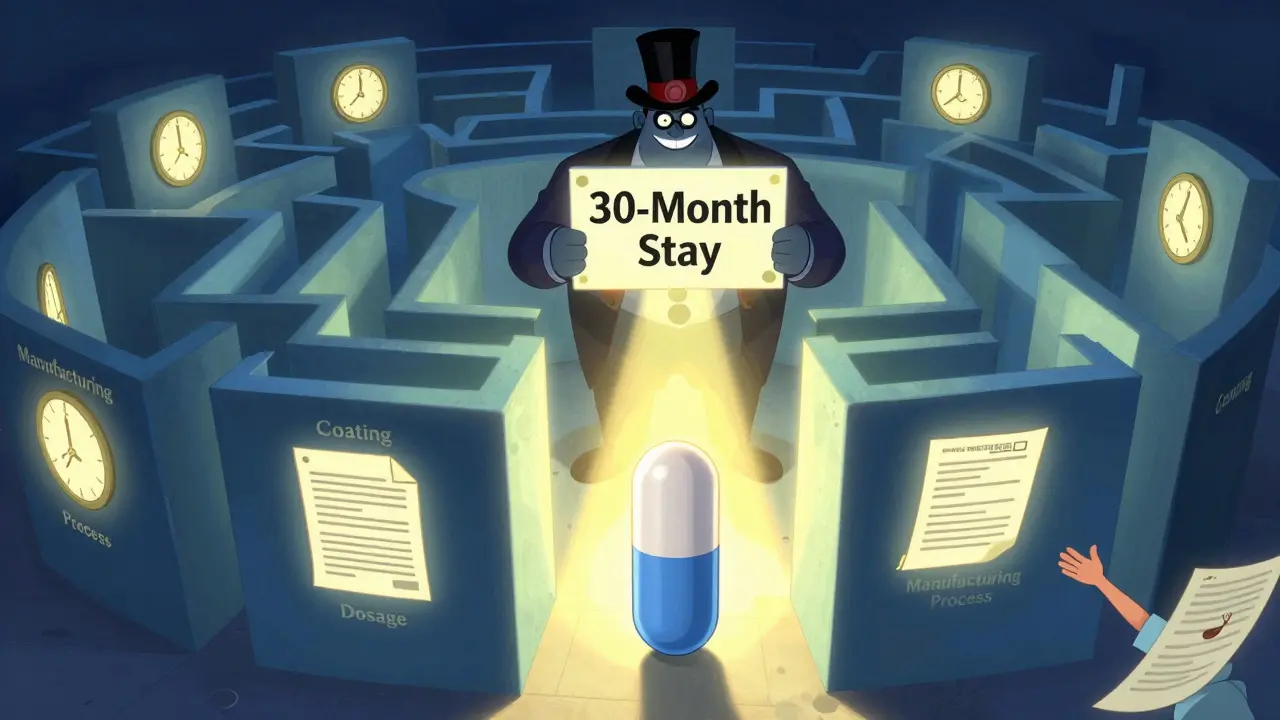
When a new brand-name drug hits the market, it comes with a patent that gives the company exclusive rights to sell it-usually for 20 years. But here’s the catch: that 20-year clock doesn’t start when the drug is approved. It starts when the company first files the patent, often years before the drug even reaches patients. By the time the FDA approves the drug, the patent may already be halfway done. That’s where the Hatch-Waxman Act comes in. Designed in 1984 to speed up generic competition, it was supposed to balance innovation with affordability. Instead, it became a legal loophole that lets brand-name companies stretch monopolies for years-long after the original patent should have expired.
How a Generic Drug Gets Stuck in Legal Limbo
When a generic company wants to launch a cheaper version of a brand-name drug, they file what’s called an Abbreviated New Drug Application (ANDA). If they believe the brand’s patent is invalid or won’t be infringed, they submit a Paragraph IV certification. That’s a legal notice saying: “We’re coming, and we think your patent doesn’t hold up.” That’s when the brand-name company gets a 45-day window to sue. And if they do? The FDA can’t approve the generic for 30 months. That’s not a judge’s decision. That’s not a trial outcome. That’s an automatic pause built into the system. Even if the patent is weak, even if the generic wins in court later-the clock still ticks down those 30 months. And in practice, that’s just the beginning. A 2021 NIH study found that on average, generic drugs don’t actually hit the market until 3.2 years after that 30-month stay ends. That means a drug approved in 2018 might not see a generic version until 2025-even if the patent expired in 2020. Why? Because brand-name companies don’t stop at one patent. They file dozens.The Patent Thicket Trap
Think of it like a maze. The original patent covers the active ingredient. But then come the secondary patents: one for the pill coating, another for the dosage form, another for how it’s taken, another for a specific manufacturing process. Many of these aren’t even filed until after the drug is already on the market. A 2023 study found that 72% of patents used in litigation were filed after FDA approval. Each new patent triggers another lawsuit. Each lawsuit triggers another 30-month delay. Generic companies can’t just wait. They have to fight back-again and again. That’s called serial litigation. And it’s not rare. Nearly 60% of first generic approvals face at least one Paragraph IV challenge. And in many cases, multiple challenges stack up. The result? A drug that should have had a generic version by year 7 ends up without one until year 11 or 12. Patients pay $1,200 a month for insulin because the generic was approved in 2022 but still can’t launch until 2024. Employers pay an extra $1.2 billion in 2023 alone because Humira’s generics were held up by patent battles. These aren’t edge cases. They’re the norm.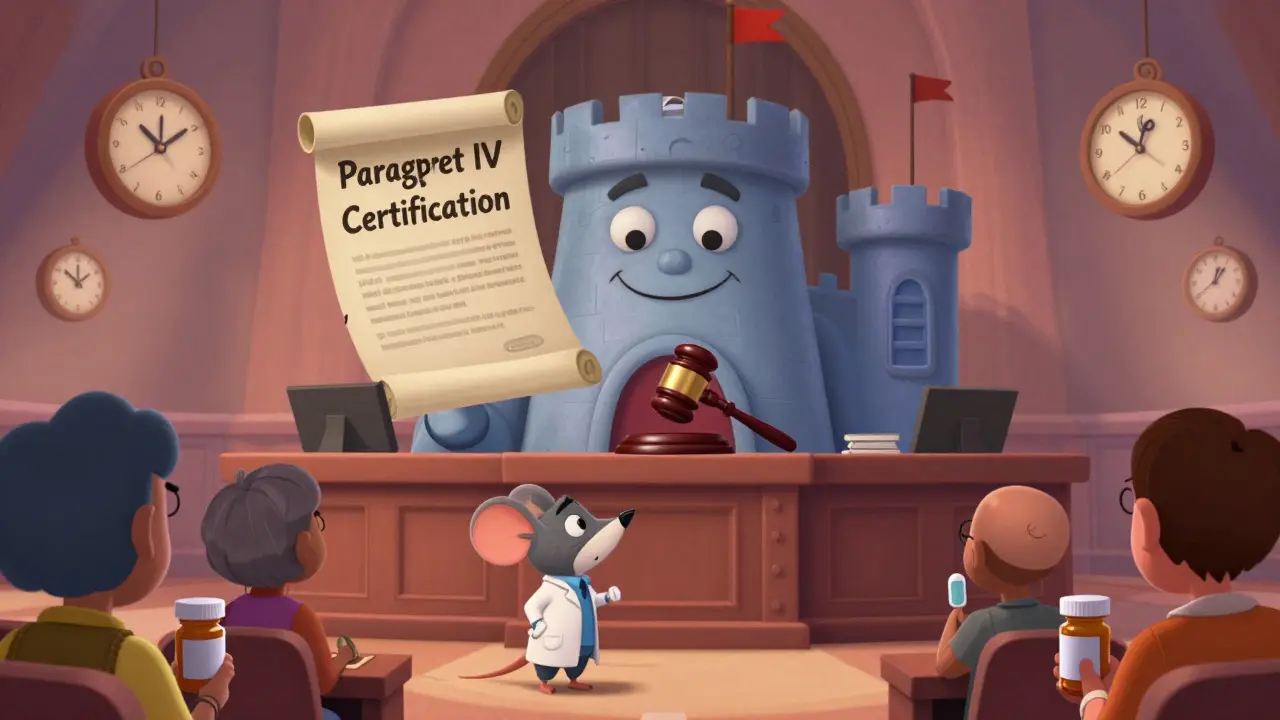
Who Wins? Who Loses?
The brand-name companies win. A top 10 drug generating $85 billion a year in sales has every incentive to delay a generic by even one year. That’s billions in extra revenue. And the legal system makes it easy. Defending a single patent case costs $3 to $5 million. A full appeal? Over $10 million. Most generic companies can’t afford that. Only the biggest ones-Teva, Mylan, Sandoz-have teams of 50+ patent lawyers just to handle these fights. But the real losers are patients. People rationing insulin because they can’t afford the brand. Seniors skipping doses because their copay jumped from $10 to $150. Small employers dropping coverage because drug costs exploded. And it’s not just small drugs. Biosimilars-generic versions of complex biologic drugs-are even slower. Their litigation takes 25% longer than regular generics. Even when generics win in court, they still don’t launch right away. The legal process drags on. Appeals take years. Settlements get negotiated behind closed doors. And sometimes, the brand company pays the generic company to stay off the market. That’s called a “pay-for-delay” deal. The FTC has been fighting these for over a decade. In 2010, they found that just 24% of patent cases involved these shady payments-but those few cases cost consumers billions.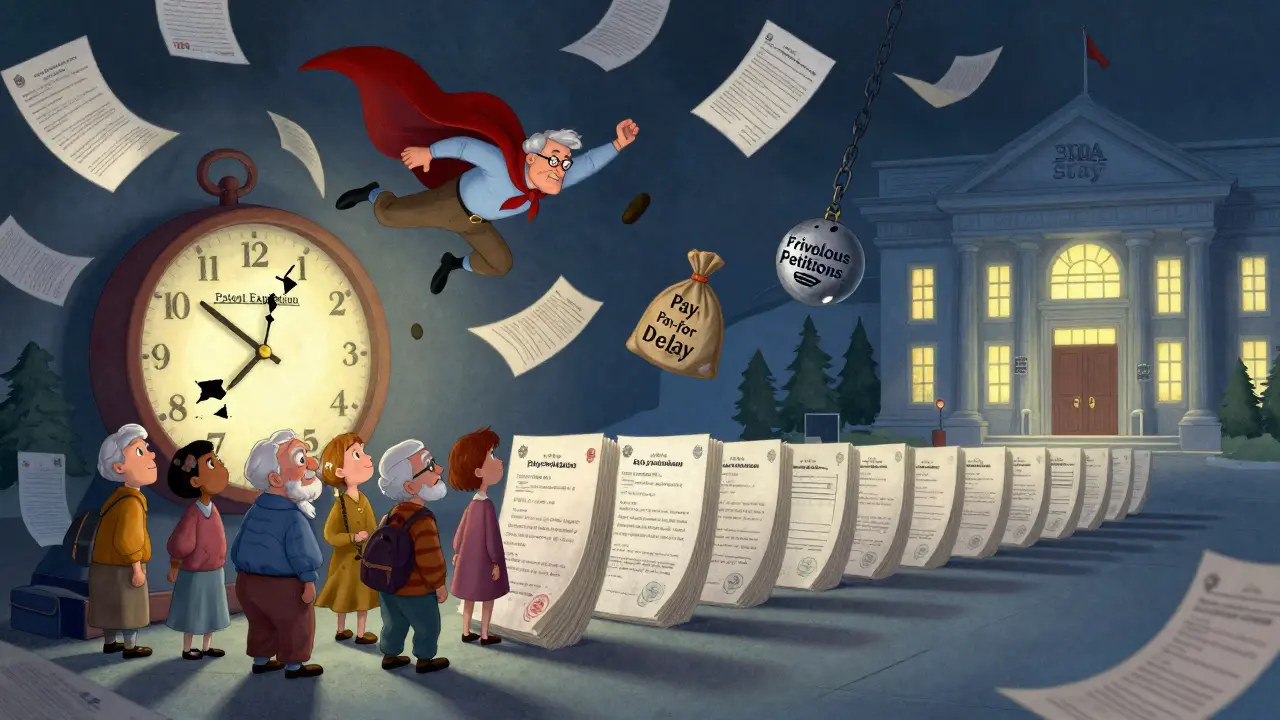
Why the System Still Works for Big Pharma
The FDA approves generics quickly. In 2023, they approved 90 first-time generic drugs. But approval doesn’t mean availability. The Orange Book-the official list of patents linked to brand drugs-is riddled with errors. About 15% of the patents listed there are wrong. Generic companies don’t know which ones are real threats. So they play it safe. They wait. They delay. Or they go to court. Pharmacy benefit managers (PBMs) like Express Scripts now build 24- to 36-month delay windows into their forecasts. They don’t expect generics to launch when the patent expires. They expect them to launch when the lawsuits finally end. That’s not a market failure. That’s how the system is designed. And it’s getting worse. New strategies are emerging: restricting access to drug samples so generics can’t test their versions, filing frivolous petitions with the FDA to block approvals, and using patents on delivery devices to block competitors. The CREATES Act tried to fix sample restrictions, but enforcement is weak. Congress has proposed bills to cap the number of patents that can be listed and ban serial litigation. So far, nothing’s passed.What’s Next? Will Things Change?
There’s pressure building. The FTC is more aggressive than ever. Chair Lina Khan said in early 2024 they’ll keep challenging pay-for-delay deals and patent abuse. Generic manufacturers are pushing back harder. And patients are speaking up. But change won’t come from lawsuits alone. It needs policy. The system was built to encourage competition. Now it’s built to block it. Until Congress rewrites the rules-limiting how many patents can be listed, banning pay-for-delay deals, and removing the automatic 30-month stay-generic drugs will keep getting stuck in legal quicksand. For now, the only way a generic gets to market is if a company is willing to gamble millions on a lawsuit they might lose. That’s not competition. That’s a high-stakes game where patients pay the price.Why do generic drugs take so long to launch after FDA approval?
Even after the FDA approves a generic drug, it can’t launch if the brand-name company files a patent lawsuit. The law gives the brand 45 days to sue, which triggers an automatic 30-month delay. But that’s just the start. Many brand companies file multiple patents, triggering new lawsuits one after another. On average, generics don’t reach the market until 3.2 years after the 30-month stay ends-sometimes over a decade after the original patent expired.
What is a Paragraph IV certification?
A Paragraph IV certification is a legal notice a generic drug company files with the FDA when they believe a brand-name drug’s patent is invalid or won’t be infringed. This triggers a 45-day window for the brand company to sue. If they do, the FDA can’t approve the generic for 30 months-no matter how weak the patent is. This is the main legal tool used to delay generic entry under the Hatch-Waxman Act.
What are pay-for-delay agreements?
Pay-for-delay agreements happen when a brand-name drug company pays a generic manufacturer to delay launching its cheaper version. Instead of competing, the generic company agrees to stay off the market for years in exchange for cash or other benefits. The FTC considers these illegal anti-competitive deals. They’ve challenged dozens of these since 2010, but they still happen-especially when the brand drug makes billions in annual sales.
How do patent thickets delay generic drugs?
Patent thickets are clusters of overlapping patents-sometimes dozens-covering minor changes like pill coatings, dosing schedules, or delivery methods. Many are filed years after the original drug is approved. Each new patent can trigger a new lawsuit and another 30-month delay. A 2023 study found 72% of patents used in litigation were filed after FDA approval. This strategy lets brand companies extend monopolies far beyond the original 20-year patent term.
Can generic companies launch before winning a lawsuit?
Yes. This is called “launching at risk.” A generic company can start selling its drug after receiving FDA approval-even while patent lawsuits are still ongoing. But it’s risky. If they lose the case, they could owe the brand company hundreds of millions in damages. Only the largest generic manufacturers, like Teva or Sandoz, have the resources to take this gamble. Most choose to wait, even if it means delaying patient access.
Why doesn’t the FDA just approve generics faster?
The FDA can approve generic drugs quickly-in fact, they approved 90 first-time generics in 2023. But they’re legally blocked from letting them launch if a patent lawsuit is active. The 30-month stay is mandated by law, not FDA policy. Even if the FDA believes the patent is weak or invalid, they can’t override the court system. That’s why approval and availability are two completely different things.
What’s being done to fix this system?
The FTC is increasing enforcement against pay-for-delay deals and patent abuse. Congress has introduced bills like the Protecting Consumer Access to Generic Drugs Act, which would limit how many patents can be listed in the Orange Book and ban serial litigation. The CREATES Act tried to stop brand companies from blocking generic access to drug samples. But so far, none of these reforms have passed into law. Without legislative action, the delays will continue.
Fabian Riewe
December 29, 2025 AT 11:12Man, this is wild. I had no idea the system was this rigged. My grandma’s insulin costs $400 a month, and she’s on a fixed income. Meanwhile, the pharma execs are sipping champagne on their yachts. This isn’t capitalism-it’s extortion with a law degree.
Henriette Barrows
December 31, 2025 AT 08:11Wow. I read this and just sat there stunned. I work in a clinic and see patients skipping doses every week because they can’t afford the brand. It’s not just about money-it’s about people dying because the system lets them. Someone needs to blow this wide open.
Joe Kwon
January 1, 2026 AT 07:35From a patent law standpoint, the Hatch-Waxman Act was a brilliant compromise-until corporate counsel weaponized every loophole. Paragraph IV certifications are essentially legal landmines. The 30-month stay isn’t a delay-it’s a strategic pause button pressed by deep-pocketed litigators. And the patent thicket strategy? Pure game theory. It’s not about innovation anymore; it’s about transactional obstruction.
What’s worse is the Orange Book’s inaccuracy rate. If you’re a generic filer, you’re playing chess blindfolded. And the CREATES Act? A Band-Aid on a hemorrhage. No enforcement = no deterrence. The FTC’s chasing ghosts while the money keeps flowing.
And let’s not forget the PBMs-they’re not neutral actors. They’ve built 24- to 36-month windows into their models because they *expect* litigation. That’s not market inefficiency-it’s institutionalized collusion.
The real tragedy? The FDA approves generics in weeks. But the courts? They take years. And when a generic wins? They still don’t launch. Why? Because the brand company files another patent. And another. And another. It’s a legal hamster wheel, and patients are stuck in the cage.
Serial litigation isn’t a bug-it’s the feature. And until Congress caps patent listings, bans pay-for-delay, and nukes the automatic stay, we’re just rearranging deck chairs on the Titanic.
Sharleen Luciano
January 2, 2026 AT 09:52Let’s be honest-this isn’t a policy failure. It’s a moral one. You have a group of people who’ve spent decades optimizing the exploitation of legal frameworks to extract maximum rent from sick people. And you call this innovation? Please. This is feudalism with a compliance department.
Those ‘secondary patents’? Half of them are just reworded descriptions of the color of the pill. The fact that courts still honor them is proof that the judiciary has been captured. The system isn’t broken. It’s working exactly as intended-for them.
And don’t get me started on ‘launching at risk.’ Only mega-corporations can afford to gamble millions on a lawsuit they might lose. That’s not competition. That’s a billionaire’s game where the stakes are people’s lives.
David Chase
January 4, 2026 AT 08:32AMERICA IS BEING ROBBED!!!
THEY’RE KILLING OUR GRANDPARENTS FOR PROFIT!!!
WHY ISN’T THE GOVERNMENT DOING SOMETHING???
THEY’RE ALL CORRUPT!!!
THEY’RE ALL CORRUPT!!!
THEY’RE ALL CORRUPT!!!
🇺🇸💔💊
Jim Rice
January 5, 2026 AT 01:43You guys are overreacting. This is capitalism. If you can’t afford the drug, don’t buy it. Maybe you should’ve saved more. Also, generics aren’t even that much cheaper. I checked-some are only 15% off. Who’s really being hurt here? The CEOs? Nah. The shareholders? Maybe. But patients? They’ve got Medicaid. Stop crying.
Nisha Marwaha
January 6, 2026 AT 22:28From a global IP perspective, the U.S. model is a textbook case of regulatory capture. The patent thickets are a form of non-tariff trade barrier-essentially, a domestic subsidy disguised as innovation protection. What’s alarming is how other jurisdictions are now mimicking this playbook. India’s generics industry used to be the world’s pharmacy, but even they’re starting to see patent litigation creep in. This isn’t just an American problem-it’s a global contagion.
And the pay-for-delay deals? They’re not just anti-competitive-they’re anti-humanitarian. When a generic is delayed by 2 years, that’s 2 years of preventable mortality. The WHO should be calling this a public health emergency.
Lisa Dore
January 8, 2026 AT 21:50I just want to say thank you for writing this. I’ve been working in community health for 12 years and every day I see the same story: someone choosing between insulin and rent. This isn’t just about law-it’s about dignity. I’m so glad someone’s finally putting this in plain terms. Maybe now people will stop acting like it’s just ‘business.’
It’s not business. It’s betrayal.
Russell Thomas
January 10, 2026 AT 03:52Oh wow, another ‘Big Pharma is evil’ article. Let me guess-you also think vaccines are a plot and the moon landing was faked? You know what’s really sad? That people still fall for this crap. The patents protect innovation. Without them, no one would spend $2 billion developing a drug. You want cheap drugs? Fine. Then stop pretending the R&D doesn’t cost anything.
And generics? They’re not even the same quality. You think your $10 insulin is as safe as the brand? Good luck with that.
Paige Shipe
January 10, 2026 AT 07:39Wow. This is so sad. I cried reading this. My dad passed last year because he couldn't afford his med. I just want to say, we need to fix this. Like, NOW. I'm not even mad, I'm just heartbroken. This is wrong. So wrong. I'm going to call my rep tomorrow. Someone please help.
Tamar Dunlop
January 10, 2026 AT 16:48It is with profound solemnity that I address this matter. The erosion of equitable pharmaceutical access, as delineated in this exposition, constitutes not merely a regulatory aberration, but a moral rupture in the social contract between the state and its most vulnerable citizens. The systemic manipulation of intellectual property law to perpetuate monopolistic rents-particularly through the exploitation of procedural delays and patent thickets-represents a chilling capitulation to corporate fiduciary imperatives over human dignity.
Canada, for its part, has adopted a more restrained approach to patent listings and has implemented price controls that mitigate such abuses. One cannot help but wonder whether the United States, a nation that once prided itself on innovation and justice, has lost its way.
May this be the catalyst for a collective reckoning.