
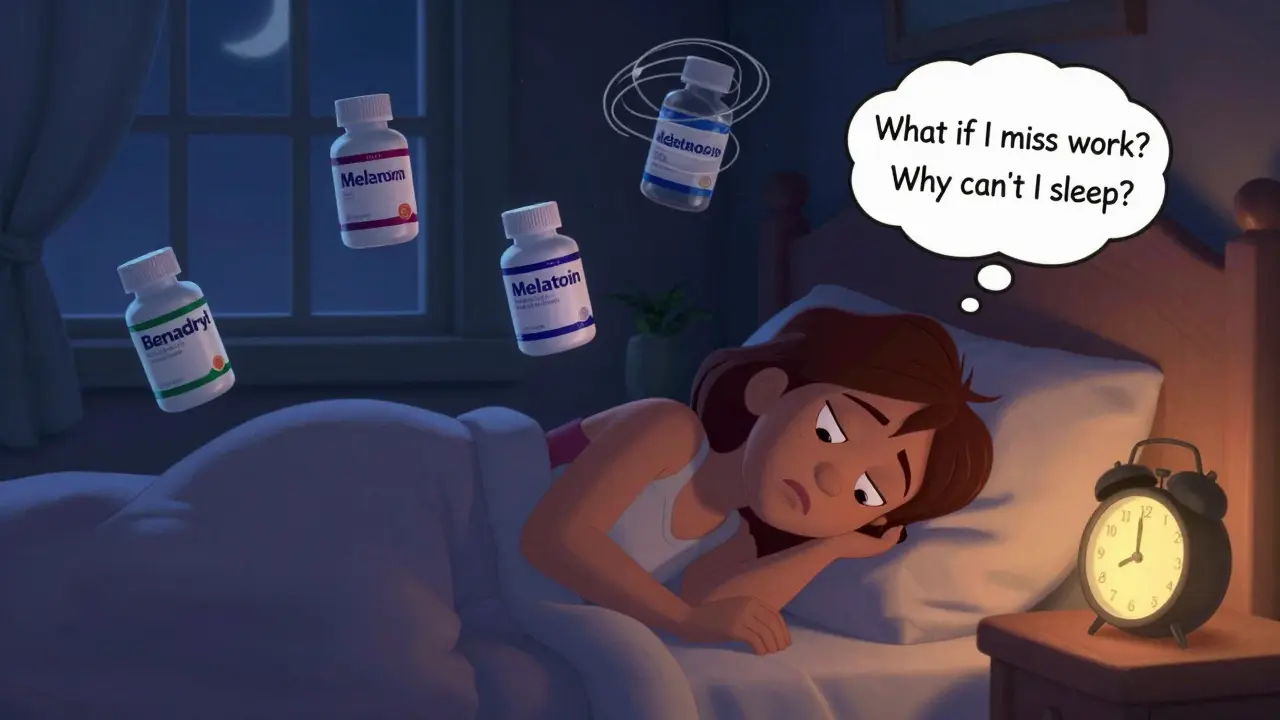
More than 1 in 10 adults struggle with chronic insomnia, but millions reach for OTC sleep aids instead of seeing a doctor. You’re not alone if you’ve taken a pill because you couldn’t shut off your mind at 2 a.m. But here’s the truth: those little capsules might be doing more harm than good-if you use them the wrong way.
What’s Actually in OTC Sleep Aids?
Most over-the-counter sleep aids fall into two camps: antihistamines and supplements. The big names you see on shelves-Benadryl, Sominex, Nytol, Unisom SleepTabs-all contain either diphenhydramine or doxylamine. These are the same ingredients found in allergy pills. They make you drowsy as a side effect, not because they’re designed to help you sleep.
The other group includes natural-seeming options like melatonin, valerian root, and chamomile. Melatonin is the most popular. It’s a hormone your body naturally makes to signal bedtime. Supplements try to mimic that. But here’s the catch: a 2017 study found that melatonin products contained anywhere from 83% less to 478% more than what’s listed on the label. You could be taking a dose five times higher than you think.
And don’t assume “natural” means safe. Valerian and chamomile aren’t regulated like drugs. There’s no guarantee of consistency, purity, or strength. What’s in one bottle might be totally different from the next.
How Much Do They Actually Help?
Let’s get real: OTC sleep aids don’t fix insomnia. They just nudge you a little closer to sleep. According to clinical trials, these products typically cut the time it takes to fall asleep by just 3 to 13 minutes. Total sleep time might increase by 20 to 60 minutes. That’s not a miracle. That’s barely enough to feel a difference.
For jet lag or a single rough night, that’s fine. But if you’re lying awake most nights, you need more than a pill. The American Academy of Sleep Medicine says there’s simply not enough proof these products work for long-term sleep problems-and they warn against using them for that reason.
Meanwhile, the gold standard for treating chronic insomnia is Cognitive Behavioral Therapy for Insomnia (CBT-I). It works for 70 to 80% of people. No pills. No side effects. Just changes in how you think about sleep and how you behave at bedtime. And the results last. Unlike pills, which stop working once you quit.
The Hidden Dangers of Antihistamines
Diphenhydramine and doxylamine are anticholinergic drugs. That means they block a brain chemical called acetylcholine. That’s why they help with allergies and make you sleepy. But they also cause side effects that can be serious-especially as you get older.
Common side effects include:
- Dry mouth (32% of users)
- Blurred vision (18%)
- Constipation (24%)
- Difficulty urinating (especially dangerous for men with prostate issues)
- Confusion and memory fog
And here’s the scariest part: a 2015 study tracking over 3,400 people for more than seven years found that long-term use of anticholinergic drugs-including these sleep aids-was linked to a 54% higher risk of dementia. That’s not a small risk. That’s a red flag.
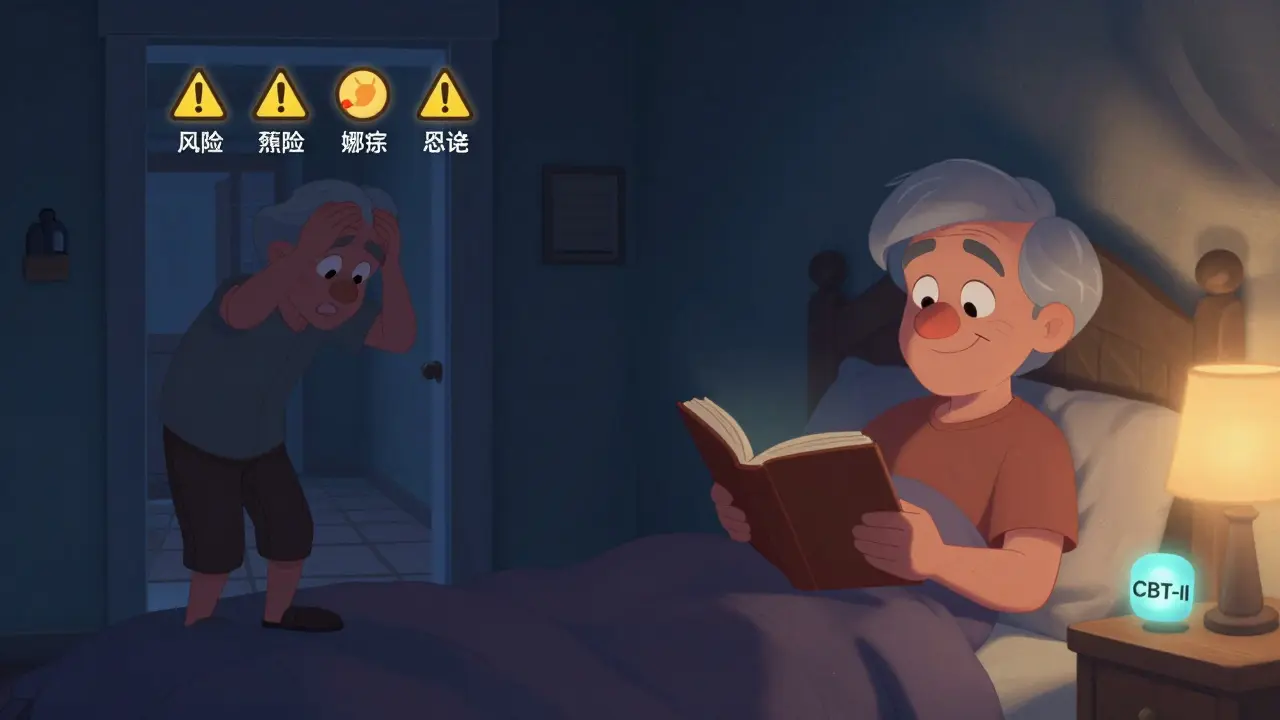
Older adults are especially vulnerable. The Beers Criteria, updated in 2023, lists diphenhydramine as a medication to avoid in people over 65. Why? Because it increases fall risk by 50%. One stumble, one hip fracture, and your life can change forever.
What About Melatonin?
Melatonin gets a bad rap for being “natural,” but it’s not harmless. The most common complaints? Daytime drowsiness (45% of users), headaches (31%), and vivid dreams or nightmares (68%). Higher doses-like 5mg or 10mg-make these worse. Some people wake up confused, nauseous, or dizzy. A few even report leg pain so bad they have to stop taking it.
And here’s something most people don’t know: melatonin isn’t a sleep inducer. It’s a timing signal. If your body’s clock is off-like after a long flight-0.5mg to 1mg taken a few hours before bed can help reset it. But if you’re taking 5mg every night because you “can’t sleep,” you’re probably confusing the hormone’s purpose. You’re not fixing the problem. You’re masking it.
Worse, some people develop tolerance. A 2021 study found that 25% of daily users stopped responding after just 10 days. Then they up the dose. Then they can’t sleep without it. That’s dependence-and it’s real.
Rebound Insomnia Is Real
When you stop taking OTC sleep aids after more than two weeks, your brain doesn’t just go back to normal. It overcompensates. That’s called rebound insomnia. About 30% of people who use these products for longer than 14 days end up sleeping worse than before they started.
It’s like your brain forgot how to fall asleep on its own. You relied on the pill to do the work. Now, when you take it away, your system panics. You feel more awake than ever. It’s frustrating. It’s demoralizing. And it’s completely avoidable.
Who Should Avoid These Pills Altogether?
Some people should never take OTC sleep aids-not even once.
- People with sleep apnea: These pills relax your throat muscles. That makes breathing interruptions worse. You could be putting yourself at risk for heart problems or even sudden death.
- Adults over 65: As mentioned, the risks of confusion, falls, and dementia are too high. The Beers Criteria says these drugs are “potentially inappropriate” for older adults.
- Pregnant or breastfeeding women: Diphenhydramine is labeled “Category B,” meaning no proven harm-but also no solid safety data. Melatonin? There’s almost no research on its effects during pregnancy. Better to skip it.
- People with glaucoma, enlarged prostate, or urinary problems: Antihistamines can make these worse. You might end up in the ER.

What’s the Safe Use Limit?
The FDA says: don’t use antihistamine sleep aids for more than two weeks. The Cleveland Clinic says the same. The Sleep Foundation says start with the lowest dose possible-0.5mg for melatonin, 25mg for diphenhydramine-and use it only as needed, not every night.
But here’s the problem: a 2022 survey found that 38% of users go past two weeks. Nearly 20% use them for a month or longer. Why? Because they think it’s harmless. Because they don’t know the risks. Because they’re desperate.
If you’ve been using one for more than two weeks, it’s not a sign it’s working. It’s a sign you need help.
What Should You Do Instead?
Stop looking for a quick fix. Start building better sleep habits. Here’s what actually works:
- Keep a consistent sleep schedule-even on weekends.
- Get sunlight in the morning. It resets your body clock.
- Avoid screens an hour before bed. Blue light kills melatonin production.
- Make your bedroom cool, dark, and quiet. No TV. No phone.
- Don’t lie in bed awake for more than 20 minutes. Get up, read a book, come back when you’re sleepy.
- Try CBT-I. It’s available online, through apps, or with a therapist. Many insurance plans cover it now.
These aren’t fancy tricks. They’re basics. But they work. Better than any pill. And they don’t come with a warning label.
Final Thoughts
OTC sleep aids aren’t evil. They’re not magic. They’re temporary tools-like a bandage on a cut that needs stitches. If you’re using them every night, you’re ignoring the real problem. And you’re risking your long-term health for a few extra minutes of sleep.
If you’ve been struggling for more than two weeks, talk to a doctor. Not a pharmacist. Not a Reddit thread. A real healthcare provider who can help you figure out why you’re not sleeping-and how to fix it, safely.
Can I take OTC sleep aids every night?
No. Most OTC sleep aids are meant for occasional use only-no more than 7 to 10 days in a row. Using them nightly increases your risk of side effects, tolerance, and rebound insomnia. If you need help sleeping every night, you need to find the root cause, not just mask it with pills.
Is melatonin safer than diphenhydramine?
Melatonin has fewer immediate side effects than antihistamines like diphenhydramine, but it’s not risk-free. High doses can cause next-day grogginess, headaches, and strange dreams. It also lacks long-term safety data, especially for people under 18 or over 65. Neither option is ideal for regular use. Both should be used sparingly and only as a short-term bridge to better sleep habits.
Why do I feel more tired the next day after taking OTC sleep aids?
Antihistamines like diphenhydramine and doxylamine have long half-lives-they stay in your system for hours. Even if you sleep through the night, your brain is still processing the drug the next day. That’s why you feel foggy, sluggish, or groggy. Melatonin can cause similar effects if you take too much or take it too late.
Can OTC sleep aids cause addiction?
They don’t cause physical addiction like opioids or alcohol. But they can lead to psychological dependence. You start believing you can’t sleep without them. When you stop, you panic. That’s not addiction-it’s habituation. But it’s still dangerous because it keeps you from fixing the real problem.
Are herbal sleep aids like valerian root safe?
There’s no strong evidence that valerian root or chamomile reliably improve sleep. Because they’re sold as supplements, they’re not regulated for strength, purity, or safety. One bottle might have no active ingredient. Another might contain contaminants. If you want to try them, stick to reputable brands and use them for short periods only.
When should I see a doctor about my sleep problems?
If you’ve had trouble sleeping for more than two weeks, or if you’re relying on OTC sleep aids to get through the night, it’s time to talk to a doctor. Also see a professional if you snore loudly, wake up gasping, feel excessively tired during the day, or have other symptoms like leg cramps or restless legs. These could signal sleep apnea, anxiety, depression, or another medical issue that needs treatment.
If you’re tired of feeling exhausted every morning, don’t reach for another pill. Reach for a better solution. Your brain-and your future self-will thank you.
Katie Schoen
January 6, 2026 AT 21:27Been using Unisom for 3 years. Thought it was my best friend until I woke up dizzy at 3 a.m. and couldn’t remember my kid’s birthday. Yeah. That happened. Now I’m doing CBT-I through an app. It’s boring as hell but I actually sleep now. No more zombie mode.
Pavan Vora
January 7, 2026 AT 01:56India has this thing called 'jharay'-like herbal tea with ashwagandha and nutmeg. Grandmas swear by it. No pills. Just warm milk, a pinch of spice, and silence. I tried it last month. Took 10 days to work. But no fog. No crash. Just… sleep. Maybe we lost something going Western with these capsules.
Indra Triawan
January 8, 2026 AT 22:57It’s not about sleep. It’s about escaping. You think you’re taking a pill to rest-but you’re really trying to shut down the noise inside your head. The anxiety. The guilt. The fear that tomorrow will be just as empty. These drugs don’t fix insomnia. They just numb the screaming. And then you wonder why you feel more broken than before.
Wesley Pereira
January 10, 2026 AT 03:15Anticholinergic = brain rot. Full stop. Diphenhydramine is basically a chemical lobotomy with a side of dry mouth. And people wonder why their 70-year-old uncle keeps forgetting where he put his dentures. Bro. It’s not aging. It’s the Unisom. Stop it.
Amy Le
January 11, 2026 AT 10:21OMG I just realized I’ve been taking 10mg melatonin every night like it’s candy. 🤯 I thought I was being proactive. Turns out I was just hallucinating about flying squirrels. And now I’m terrified to stop. HELP.
Stuart Shield
January 11, 2026 AT 22:25There’s a quiet dignity in learning to sleep without chemicals. It’s like relearning how to breathe. You don’t need a pill to quiet your mind-you need stillness. A dark room. A book. The absence of screens. The courage to sit with your thoughts instead of drugging them into silence. It’s harder. But it’s yours.
Molly McLane
January 13, 2026 AT 00:53For anyone feeling overwhelmed by this: start small. One habit. One night. No pills. Just turn off the phone an hour before bed. Sit in the dark. Breathe. Don’t try to force sleep. Just let it come. You don’t need to fix everything at once. Progress, not perfection.
Mukesh Pareek
January 13, 2026 AT 17:50CBT-I? That’s just cognitive behavioral therapy for insomnia, right? Look, I’ve read the studies. The effect size is modest. The dropout rate is high. And it requires discipline-which most people lack. Meanwhile, a 25mg pill? Easy. Fast. Doesn’t require existential work. Sometimes, you just need to get through the night.
Ashley S
January 14, 2026 AT 03:01People who use melatonin are just deluding themselves. It’s not a supplement-it’s a placebo with a fancy label. If you’re not sleeping, it’s because you’re weak. Just go to bed earlier. Stop blaming the pills. Start blaming yourself.
Joann Absi
January 14, 2026 AT 03:21My mom took diphenhydramine for 8 years. She forgot how to make coffee. Then she fell. Broke her hip. Then she forgot my name. Now she’s in a home. Don’t let this be you. This isn’t just sleep. This is your identity. And these pills are stealing it.
Dana Termini
January 14, 2026 AT 18:29Just stopped taking melatonin after 6 months. Day 3 was brutal. Felt like my brain was rewiring itself. But by day 7? I slept deeper than I had in years. No pills. No guilt. Just me, my bed, and the quiet. Turns out I never needed help falling asleep. I just needed to stop fighting it.