
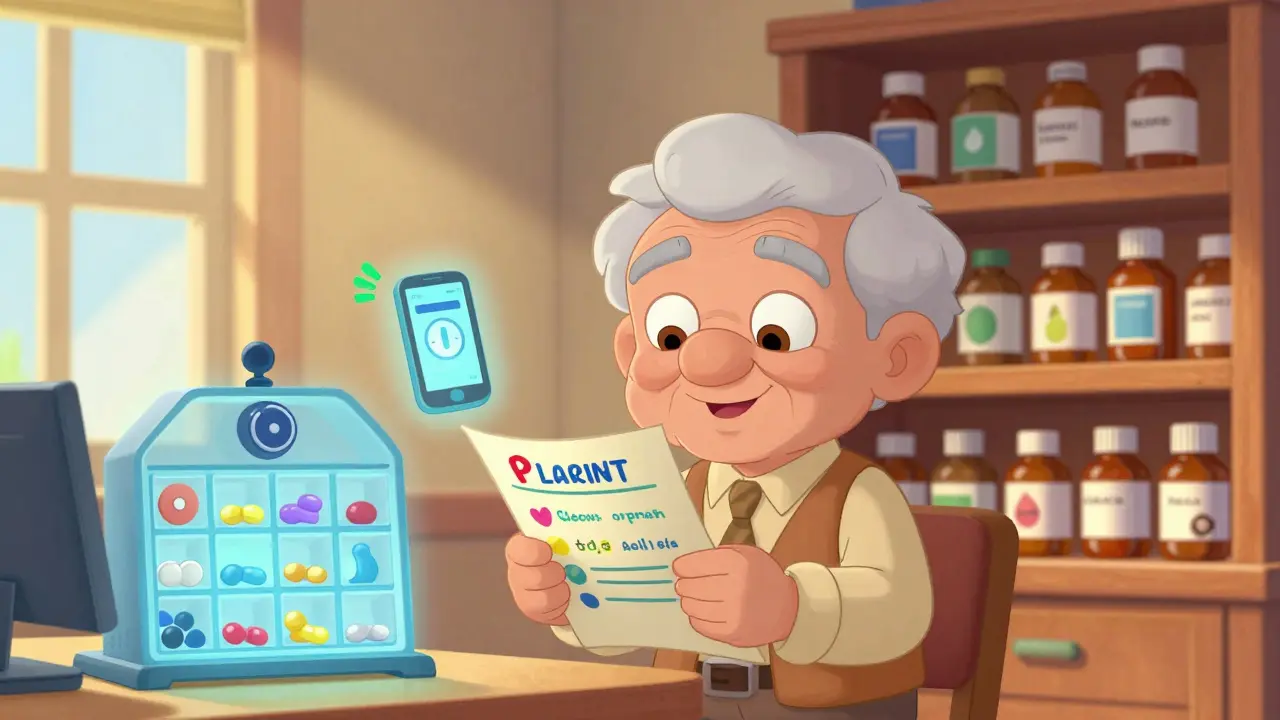
Taking medication every day for years isn’t just a routine-it’s a lifeline. For millions with diabetes, high blood pressure, arthritis, or heart disease, pills are as essential as breathing. But the longer you take them, the riskier things can get. Side effects build up. Interactions sneak in. Memory slips. And suddenly, what was meant to help starts hurting.
Why Long-Term Medication Use Is Different
Short-term meds? You take them until you feel better, then stop. Long-term meds? You take them even when you feel fine-because stopping could mean a stroke, a hospital visit, or worse. That’s why safety isn’t about remembering to take your pill. It’s about building a system that works for decades.
The average person over 65 takes five or more prescriptions daily. That’s called polypharmacy. And it’s not just common-it’s dangerous. Studies show people on five or more medications are 40% more likely to fall, 30% more likely to be hospitalized, and twice as likely to suffer a serious drug reaction. The problem isn’t the drugs themselves. It’s the lack of oversight.
Keep a Real-Time Medication List
Most medication errors happen during transitions-when you switch doctors, get discharged from the hospital, or visit the ER. Why? Because no one has the full picture.
Start with a simple list. Write down every pill, patch, inhaler, and injection you take. Include:
- Brand and generic name
- Dose (e.g., 10 mg, 2 sprays twice daily)
- Time of day you take it
- Purpose (e.g., "for blood pressure," "for joint pain")
- When it was started
Don’t keep this in your head. Don’t rely on the pharmacy label. Keep a printed copy in your wallet, on your fridge, and saved on your phone. Update it every time your doctor changes something-even if it’s just a new bottle with the same pill. When you walk into a clinic, hand it to the provider before they even ask.
Know Your Medication’s Purpose
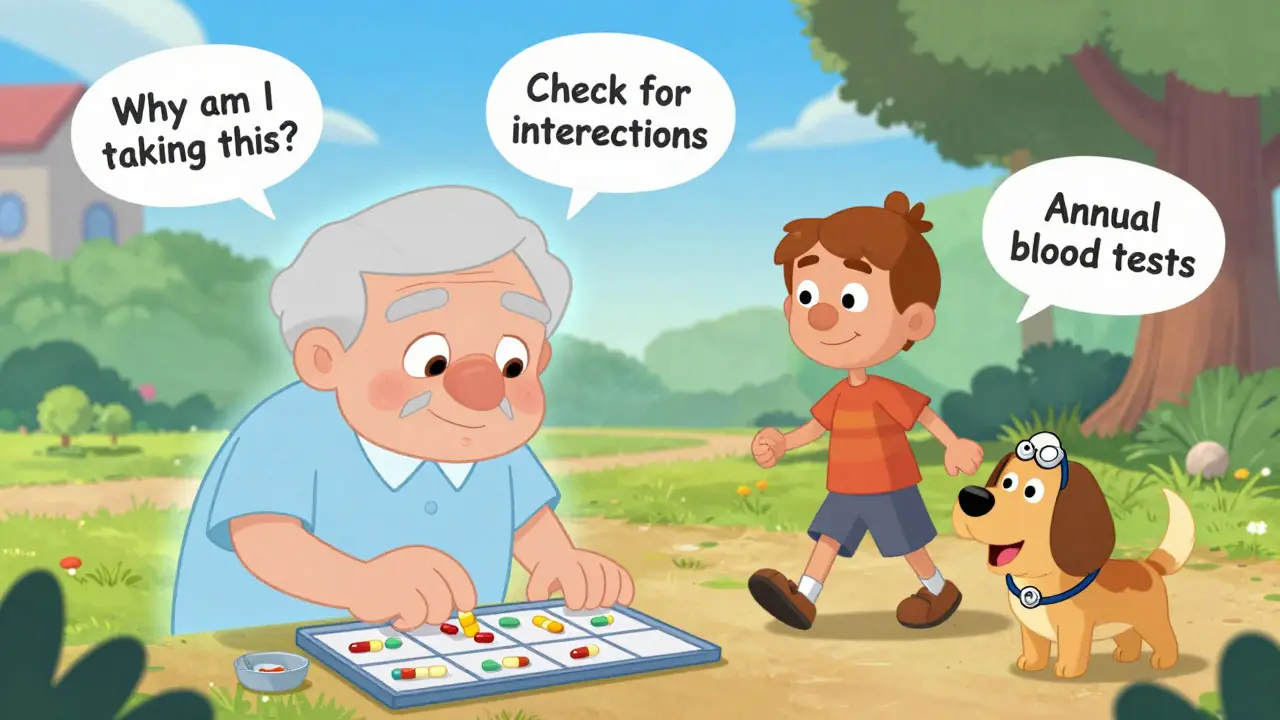
How many times have you taken a pill without knowing why? If you can’t explain what your medication does, you’re flying blind.
Ask your doctor or pharmacist: "What is this for?" and "What happens if I skip it?" Don’t accept vague answers like "it’s just for your condition." Be specific. For example:
- "This statin lowers LDL cholesterol to prevent heart attacks. If I stop, my risk goes up by 25% in the first year."
- "This diuretic removes extra fluid so my heart doesn’t have to work so hard. Skipping it can cause swelling and shortness of breath."
Understanding your meds helps you spot problems. If you feel dizzy after starting a new drug, you’ll know to connect it to the medication-not just blame it on "getting older."
Watch for Drug Interactions
Some medications are fine alone. Together, they can be dangerous. A common example: taking aspirin and diclofenac (a painkiller) at the same time. Both thin the blood. Together, they can cause stomach bleeding-especially in older adults.
Every time a new prescription comes in, ask: "Could this interact with anything I’m already taking?" Even over-the-counter drugs, supplements, and herbal teas count. St. John’s Wort can make blood thinners useless. Calcium supplements can block thyroid meds. Grapefruit juice can turn a harmless statin into a liver toxin.
Use a free tool like the FDA’s MedSafety app or your pharmacy’s online checker. But don’t rely on apps alone. Talk to your pharmacist. They’re trained to catch these clashes.
Stick to the Schedule-But Be Smart
Adherence isn’t just about taking your pill. It’s about taking it right. Timing matters. Some drugs work best on an empty stomach. Others need food to avoid nausea. Some must be taken at the same time every day to keep levels steady.
Use a pill organizer with alarms. Don’t just buy a cheap plastic box-get one with a timer or one that syncs with your phone. Set reminders for every dose. If you miss a dose, don’t double up unless your doctor says so. Most meds are safe to skip one day, but doubling can cause overdose.
For complex regimens (like insulin or blood thinners), keep a daily log. Note the time you took it, any side effects, and how you felt. Bring it to every appointment. It’s not extra work-it’s your safety net.
Get Regular Medication Reviews
Medications aren’t set in stone. Your body changes. Your conditions change. Your other drugs change. So should your list.
Ask for a full medication review at least once a year-or anytime you see a new specialist. Ask: "Is every pill still necessary?" Many people take drugs they no longer need. A study found that 20% of older adults were on at least one unnecessary medication. These aren’t just wasted pills-they’re risks.
Pharmacists can help. In team-based care models, pharmacist-led reviews cut hospital readmissions by 30%. They check for duplicates, outdated prescriptions, and drugs that no longer match your health goals.
Use Technology Wisely
Barcode systems at pharmacies, automated dispensers, and e-prescriptions reduce errors by over 50%. But you don’t need high-tech gear to benefit.
- Use your pharmacy’s app to track refills and get alerts.
- Enable voice reminders on your smart speaker: "Alexa, remind me to take my blood pressure pill at 8 a.m. and 8 p.m."
- Ask your doctor if your prescriptions can be sent electronically-paper scripts get lost, misread, or delayed.
But don’t let tech replace human checks. If your app says "medication refilled," confirm with your pharmacist. Systems fail. People don’t.
Watch for Hidden Side Effects
Side effects aren’t always obvious. Dizziness? Could be your blood pressure med. Confusion? Could be a sleep aid. Muscle pain? Could be your statin. Fatigue? Could be your thyroid pill.
Don’t assume it’s aging. Don’t ignore it. Write down new symptoms the moment they start. Bring them to your next visit. Say: "I’ve noticed [symptom] since I started [medication]. Is this related?"
Some side effects are slow. A drug might cause kidney damage after six months. Or liver stress after two years. That’s why annual blood tests are non-negotiable for long-term users. Ask your doctor: "What labs should I get every year?"

Don’t Stop Without Talking to Your Doctor
Many people quit meds because they feel fine. Or because they’re expensive. Or because they’re scared of side effects. That’s dangerous.
Stopping blood pressure meds suddenly can trigger a heart attack. Stopping antidepressants can cause brain zaps and severe depression. Stopping steroids can crash your adrenal system.
If you want to stop, change, or reduce a dose-talk to your doctor first. Never taper yourself. Never skip doses to save money. Ask about generics, patient assistance programs, or mail-order discounts. There are options. But never guess.
Build a Support System
You don’t have to manage this alone. Who helps you remember pills? Who drives you to appointments? Who notices if you seem off?
Designate one trusted person-a spouse, child, neighbor, or friend-to be your medication buddy. Give them a copy of your list. Let them call the pharmacy if you miss a refill. Ask them to check in weekly. This isn’t about losing independence. It’s about staying safe.
Community health programs, pharmacist-led clinics, and home care nurses can also help. In the UK, NHS Medicines Use Reviews are free and available to anyone on long-term prescriptions. Ask your GP about them.
Know When to Speak Up
You’re the expert on your body. If something feels wrong, say it. Even if the doctor says "it’s normal." If you’re confused, ask again. If you’re scared, say so.
Medication safety isn’t just about doctors and pills. It’s about you speaking up. It’s about asking: "Is this still right for me?" It’s about refusing to accept "that’s just how it is."
Every year, 125,000 people in the U.S. die from medication errors-many from long-term drugs taken without proper oversight. But it doesn’t have to be that way. With a simple list, a clear understanding, and the courage to ask questions, you can take your meds safely-for years, not just months.
What should I do if I miss a dose of my chronic medication?
Don’t double up unless your doctor says to. Check the medication guide or call your pharmacist. For most drugs, if you miss a dose by a few hours, take it as soon as you remember. If it’s close to the next dose, skip it. For blood thinners, insulin, or seizure meds, always call your provider-these require specific guidance.
Can I use herbal supplements with my long-term prescriptions?
Some can be dangerous. St. John’s Wort can make antidepressants, birth control, or blood thinners ineffective. Garlic and ginkgo can increase bleeding risk with aspirin or warfarin. Always tell your doctor and pharmacist about every supplement-even if you think it’s "natural" or "harmless."
How often should I get my medications reviewed?
At least once a year, or whenever you see a new specialist, start a new drug, or change pharmacies. If you’re on five or more medications, ask for a formal Medicines Use Review (MUR) through your NHS pharmacy. Many patients don’t know this service is free.
Why do I need to take blood tests if I feel fine?
Many medications affect your liver, kidneys, or electrolytes slowly-without symptoms. A statin might raise your liver enzymes. A diuretic might lower your potassium. You won’t feel it until damage is done. Annual blood tests catch these changes early, before they become serious.
What if I can’t afford my medications?
Never skip doses to save money. Ask your doctor for generic alternatives. Check patient assistance programs from drug manufacturers (many offer free or low-cost meds to qualifying patients). In the UK, you can apply for an NHS Prescription Prepayment Certificate (PPC) to cap your annual costs. Pharmacists can help you find savings.
Can I use a pill organizer for all my medications?
Most yes-but not all. Some pills shouldn’t be crushed or stored in plastic containers for long periods (like sublingual tablets or capsules with moisture-sensitive coatings). Check with your pharmacist. Also, avoid organizers with more than a week’s supply if you travel or have memory issues-risk of confusion increases.
How do I know if a new symptom is from my medication?
Track it. Note the date the symptom started, what meds you were taking then, and whether it got worse after a dose change. Bring this to your doctor. They’ll look at the timing and known side effects. Many reactions appear 2-8 weeks after starting a new drug. Don’t wait for it to get worse.
Final Thought: Safety Is a Habit, Not a One-Time Task
Medication safety for chronic conditions isn’t about perfection. It’s about consistency. It’s about knowing your list, asking questions, and never assuming. The goal isn’t to take fewer pills-it’s to take the right ones, the right way, for as long as you need them. And that starts with you.
Patrick Merrell
January 26, 2026 AT 20:01People think meds are candy. They skip doses because they feel fine. Then they end up in the ER with a stroke. This isn't hypothetical. I've seen it. Your body doesn't care if you 'feel good' today. The damage is silent until it's too late. No excuses. Stay on schedule or get off the pot.
Anjula Jyala
January 28, 2026 AT 07:06Polypharmacy is the silent epidemic. Five or more meds? That's not treatment. That's pharmacological chaos. Most clinicians don't have the bandwidth to audit regimens properly. Patients are left to self-manage complex interactions without training. The system is broken. You need a clinical pharmacist embedded in your care team. Not a pharmacy app. Not a Google search. A human who understands kinetics, metabolites, and contraindications. If you're on more than four meds, demand a formal review. Every six months. Not annually. Six months.
Kathy McDaniel
January 29, 2026 AT 04:17i just started using a pill box with alarms and it changed everything. i used to forget half my stuff or take double doses by accident. now my phone buzzes and i'm like oh right time for my blood pressure thing. also i printed my list and taped it to the fridge. my mom saw it and said 'why didn't you do this sooner?' lol. small wins, right? 😊
Kegan Powell
January 30, 2026 AT 22:18One of the most underrated tools is the pharmacy's refill tracker. I used to panic when I ran out of my statin. Now I get a text when it's ready. And I always ask the pharmacist 'is this still right for me?' They catch stuff the doctor misses. Like when I was on two blood pressure pills that did the same thing. Saved me a headache and a hundred bucks. You don't need to be a genius. Just be consistent. And ask. Always ask.
Conor Flannelly
January 31, 2026 AT 02:04There's a quiet dignity in managing chronic illness with discipline. It's not glamorous. No one posts about it on Instagram. But the person who wakes up at 7 a.m. to take their pills, logs their symptoms, calls their pharmacist about that weird dizziness, and brings their list to every appointment? That person is winning. Not because they're cured. But because they're still here. Still fighting. Still choosing to be the author of their own survival. That's the real medicine.
Desaundrea Morton-Pusey
February 1, 2026 AT 08:59Why do Americans take so many pills? In Europe they don't do this. My cousin in Germany takes one pill for her blood pressure. Here? Five. And that's before the supplements. This whole system is a pharmaceutical racket. Doctors get kickbacks. Pharmacies push brand names. You're being sold fear wrapped in a prescription bottle.
Conor Murphy
February 1, 2026 AT 13:55Just wanted to say thank you for writing this. My mom is 78 and on seven meds. She used to get confused and mix up her pills. I printed the list you described and made a color-coded chart. We sit down every Sunday and go over it together. She cried the first time she said 'I actually know what each one does now.' It's not about being perfect. It's about being present. And that matters more than any pill.
Kirstin Santiago
February 3, 2026 AT 09:03For anyone reading this who thinks they can just stop their meds because they feel fine - please don't. I lost my dad to a sudden cardiac event because he stopped his beta-blocker after three months because he 'didn't need it anymore.' He felt fine. That's the trap. The medicine isn't for how you feel today. It's for how you'll feel in six months. Or a year. Or ten. Don't gamble with your future self.