
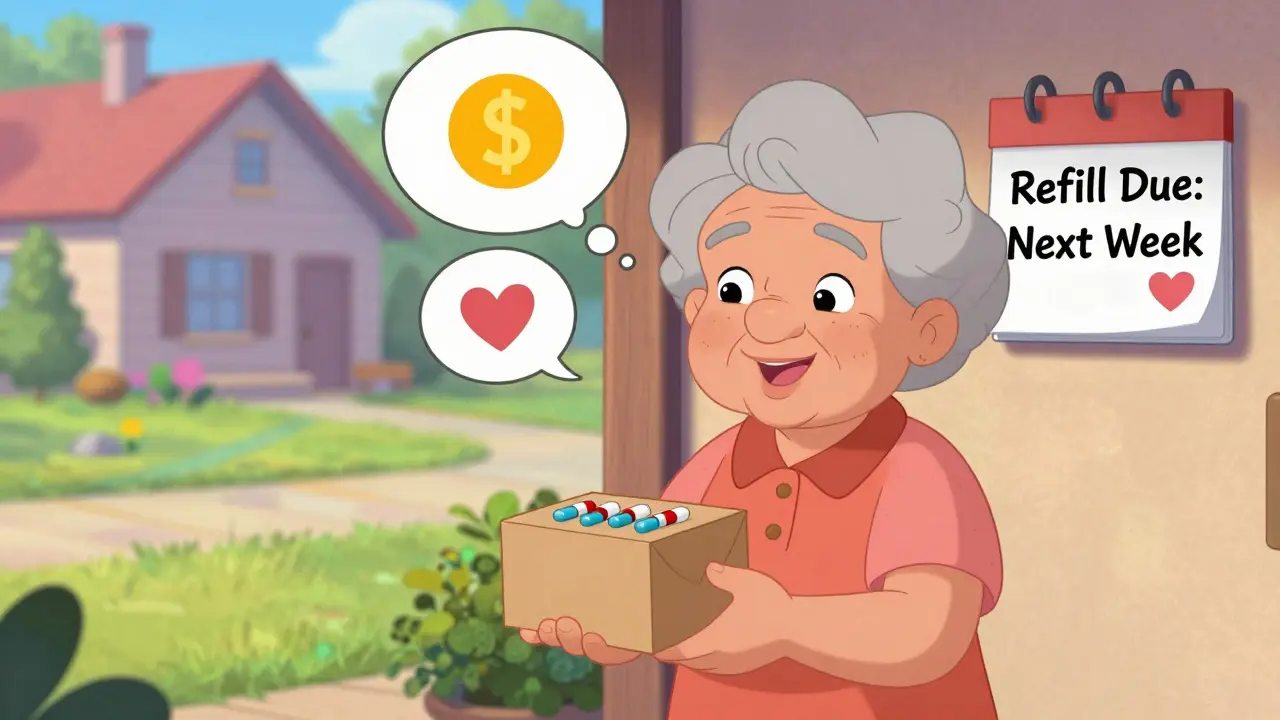
Getting your medications delivered to your door sounds simple - and it can save you serious money. But is it really worth it? For people on long-term prescriptions, mail-order pharmacies can cut costs by hundreds of dollars a year. But if you’ve ever waited days for a refill that got lost in the mail, you know there’s a flip side. Let’s cut through the hype and look at what actually works - and what doesn’t.
How Mail-Order Pharmacies Save Money
Mail-order pharmacies don’t just ship your pills. They’re built to save money by doing more with less. Instead of filling a 30-day supply every month, they send you a 90-day supply in one package. That means you pay for two months’ worth of medication but get three months’ worth. If your 30-day prescription costs $30 at your local pharmacy, the mail-order version usually costs $60 - not $90. That’s a $30 saving every three months, or $120 a year. For someone on three maintenance meds? That’s over $300 saved annually.
This isn’t magic. It’s efficiency. Mail-order pharmacies use automated systems to fill hundreds of prescriptions at once. No waiting in line. No staff to pay for walk-in customers. No shelf space to rent. That savings gets passed on. According to the Pharmaceutical Care Management Association (PCMA), mail-order pharmacies offer median discounts on brand-name drugs that are 4 to 7 percentage points better than retail pharmacies. For generic drugs, the gap is even wider.
Most major health plans - including Blue Cross NC, Sutter Health Plus, and UnitedHealthcare - include mail-order as a standard benefit. You don’t pay extra. You just switch where you get your refills. Many plans even make it automatic: once you sign up, your next refill ships out before you run out. No phone calls. No trips to the pharmacy.
The Real Benefits Beyond Price
Money isn’t the only win. If you’re managing a chronic condition like high blood pressure, diabetes, or thyroid disease, sticking to your meds matters. Studies show people using mail-order pharmacies are 5 to 15% more likely to take their drugs as prescribed. Why? Because they’re not forgetting. The delivery arrives on schedule. No need to remember to refill. No last-minute panic when you’re out.
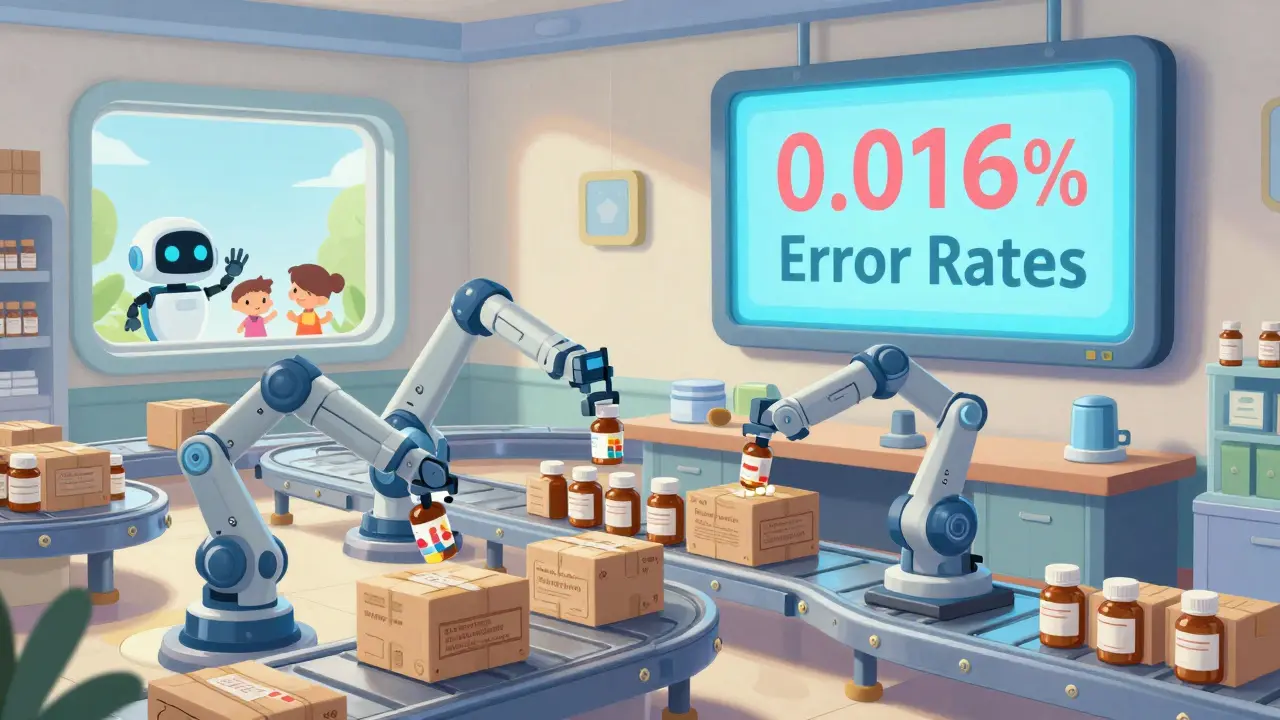
There’s also safety. Mail-order pharmacies have error rates of just 0.016% per dispensing - about 60% lower than retail pharmacies, according to AMCP.org. Automated systems scan every prescription for dangerous interactions. If you’re on five different meds, they check them all against each other. Retail pharmacists are great, but they’re juggling dozens of customers. Mail-order systems don’t get distracted.
And if you live far from a pharmacy, have trouble driving, or can’t get out of the house? Mail-order isn’t a convenience - it’s a lifeline. Rural areas in the U.S. have seen pharmacy closures for years. For many, mail-order is the only way to get consistent access to meds.
The Downsides You Can’t Ignore
Here’s the truth: mail-order isn’t perfect. The biggest problem? Time. You can’t walk in and get your antibiotic for a sinus infection tomorrow. Mail-order is for maintenance meds - the ones you take every day, not the ones you need right now. If you’re out of something urgent and your next delivery isn’t due for five days? You’re stuck. One Reddit user shared how their blood pressure meds got lost in transit. They had to pay full price at Walgreens just to avoid a hospital visit.
Delivery issues happen. About 0.5% of shipments are damaged, delayed, or lost, according to UnitedHealth Group’s 2025 report. That sounds low, but if you’re relying on that pill to stay alive, even 1 in 200 is too high. Some users report packages arriving weeks late, especially in winter or during peak seasons. No one likes waiting for a prescription that’s supposed to keep them alive.
Another issue? You lose face-to-face contact. At a local pharmacy, your pharmacist knows your name. They ask how you’re doing. They notice if you seem confused about your meds. Mail-order pharmacies have 24/7 phone support, but it’s not the same. If you’re elderly, have trouble reading labels, or need help understanding side effects, you might miss that human touch.
Who Gets the Most Out of It?
Mail-order pharmacy works best for three types of people:
- People on multiple long-term meds - If you take three or more daily prescriptions, the savings add up fast. One user on Reddit said they saved $120 a year just by switching three meds to Express Scripts.
- Those in rural or underserved areas - If the nearest pharmacy is 40 miles away, mail-order isn’t optional. It’s necessary.
- People with mobility issues - Chronic pain, arthritis, or recovery from surgery? Getting to the pharmacy is hard. Having meds delivered removes a major daily burden.
It’s less ideal if you’re:
- On new prescriptions that need fine-tuning
- Need meds immediately (antibiotics, inhalers, emergency meds)
- Prefer talking to your pharmacist in person
How to Get Started
Signing up is easier than you think. Most health plans have a simple online portal. Log in, find your prescription, and choose mail-order. You’ll need to transfer your current prescription - most PBMs (pharmacy benefit managers) handle this for you. Just give them your pharmacy’s info and your doctor’s contact. They’ll call your doctor, get approval, and ship your first order.
Set up automatic refills. That’s the key. You won’t have to remember anything. The system tracks your supply and ships before you run out. Most users complete their first setup in under 15 minutes, according to Blue Cross NC’s 2023 data.
Check your plan’s rules. Some require you to use mail-order after the first 30-day fill. Others let you switch back and forth. Know your options. And if you run into trouble? Call your PBM’s support line. Express Scripts, CVS Caremark, and OptumRx all have 24/7 help desks.
The Big Picture: Is It Worth It?
Mail-order pharmacies aren’t a cure-all. But for people on chronic meds, they’re one of the most reliable ways to cut costs and stay on track. The data doesn’t lie: better adherence, fewer errors, real savings. The industry is growing fast - 1.5 billion prescriptions are processed annually by just three major players: Express Scripts, CVS Caremark, and OptumRx.
By 2030, experts predict up to 35% of maintenance prescriptions will be filled through mail-order, up from just 12% today. That could mean $7 to $10 billion in annual savings across the U.S. health system. But the real win isn’t the number. It’s the person who doesn’t have to choose between buying food and filling their prescription. It’s the senior who doesn’t have to drive 50 miles just to get their heart pills. It’s the parent who doesn’t miss work because the pharmacy was closed.
Yes, there are risks. Packages get lost. Delays happen. But for most people on long-term meds, the pros outweigh the cons - especially when you know how to use the system right. If you’re on three or more maintenance drugs, give it a try. The savings are real. The convenience? Even better.
Can I use mail-order pharmacy for all my medications?
No. Mail-order pharmacies are best for maintenance medications - the ones you take every day, like blood pressure pills, diabetes meds, or thyroid hormones. They’re not designed for acute needs like antibiotics, pain relievers, or emergency inhalers. If you need a medication right away, stick with your local pharmacy.
How long does it take to get my meds from a mail-order pharmacy?
Most mail-order pharmacies deliver within 5 to 7 business days after your order is processed. First-time orders may take longer if your doctor needs to approve the transfer. Once you’re set up, automatic refills usually ship before you run out, so you rarely wait. Some providers, like CVS Caremark, are testing same-week delivery for 85% of U.S. addresses as of March 2025.
Are mail-order pharmacies safe?
Yes - and in some ways, safer than retail. Mail-order pharmacies have dispensing error rates of just 0.016%, compared to 0.04% at retail pharmacies. They use automated systems to check for drug interactions across all your prescriptions, even if you use multiple pharmacies. They also screen for duplicate prescriptions and dangerous dosages. The risk of getting the wrong pill is lower than at your local drugstore.
Do I need to switch all my prescriptions to mail-order?
No. You can keep your local pharmacy for acute needs and use mail-order only for maintenance drugs. Many people do this. For example, you might get your daily blood pressure pill through mail-order but still go to CVS for an antibiotic or allergy shot. Your health plan won’t force you to switch everything - just make sure you understand your coverage rules.
What if my medication gets lost in the mail?
Most major mail-order pharmacies (Express Scripts, CVS Caremark, OptumRx) offer free replacement shipments if your package is lost or damaged. You’ll need to contact their customer service - usually available 24/7 - and report the issue. They’ll verify your order and send a new one, often with expedited shipping. Some even offer emergency refill options at local pharmacies if you’re in urgent need. Keep your pharmacy’s contact info handy.
rebecca klady
March 26, 2026 AT 11:02I switched to mail-order for my thyroid med and blood pressure pill last year. Saved like $200 annually and never had an issue. The auto-ship is magic - I forget I even take meds sometimes. Just wake up, open the mailbox, done.
Only thing? I keep a 7-day backup at home just in case. You never know when the postal service decides to take a vacation.
Namrata Goyal
March 28, 2026 AT 03:30OMG u think this is a solution?? LMAO. My cousin got her insulin delayed for 11 days bc of ‘weather delays’ and had to go ER. Mail order is a luxury for people who dont actually need meds. If u r poor and sick, u r still screwed. This article is so white middle class it hurts.
Blessing Ogboso
March 29, 2026 AT 20:42As someone from Nigeria who’s seen how fragile healthcare systems can be, I truly appreciate the structure mail-order pharmacies provide - even with their flaws. In many parts of the world, just having consistent access to medication is a revolution.
But let’s be real: in places where infrastructure is weak, even the best system fails. The real win isn’t just the cost savings - it’s the dignity of being able to manage your health without begging, begging, begging just to get a refill.
I wish more countries could adopt this model with proper oversight. The U.S. has the tech, the logistics, the scale - it just needs the will. And maybe a little more empathy for the folks who live 60 miles from the nearest pharmacy.
Also - if you’re on multiple meds? Do it. The data doesn’t lie. But always, always have a backup plan. No one should risk their life because a package got misrouted.
Jefferson Moratin
March 29, 2026 AT 22:10The fundamental economic logic of mail-order pharmacies is sound: economies of scale, reduced transactional friction, and automated error-checking yield measurable improvements in both cost efficiency and clinical safety.
However, the human element - the tacit trust built through face-to-face interaction - is not merely sentimental. It is a form of risk mitigation. Pharmacists are not clerks; they are clinical gatekeepers who detect subtle behavioral cues, medication non-adherence patterns, and psychosocial stressors that algorithms cannot perceive.
The 0.016% error rate is statistically impressive, but it ignores the non-linear consequences of failure. A single missed interaction can cascade into hospitalization, which costs orders of magnitude more than any annual savings.
Thus, mail-order should not be a replacement, but a complement - a tool, not a doctrine.
Zola Parker
March 31, 2026 AT 13:45YASSS to mail order 😍 but also… I once got my anticoagulant delivered in a box that smelled like old socks 🤢. Now I keep a vial in my purse. Just in case. 🤷♀️
florence matthews
April 1, 2026 AT 14:58My grandma uses mail-order and it changed her life. She’s 82, lives alone, and used to call me every time she ran out because she couldn’t drive. Now? She gets her meds on a Tuesday like clockwork.
She says the only thing she misses is when the pharmacist at CVS would ask how her garden was doing. So now I send her flowers every week. And a little note. It’s not the same… but it’s something.
Maybe the system isn’t perfect, but we can still be human about it.
Kenneth Jones
April 2, 2026 AT 00:24Stop romanticizing this. Mail-order pharmacies exist because insurance companies want to cut costs. Not because they care about you. They’ll ship you meds but deny your MRI. They’ll automate your refill but make you jump through 17 hoops to get a new prescription. Don’t confuse convenience with compassion.
I’ve seen too many seniors get stuck without meds because their PBM ‘lost’ the transfer. And now they want you to pat them on the back for being efficient? No. We need real reform. Not corporate PR.
Mihir Patel
April 2, 2026 AT 13:13Bro I switched to mail order for my diabetes meds and it was a rollercoaster 😭 First month: smooth sailing. Second month: package gone. Third month: got the wrong dosage. I called CVS Caremark 3 times. One rep said ‘we’ll send a new one’ then hung up. I had to drive 45 mins to get a 3-day supply. I cried in the parking lot.
But then… I got my refill right on time last week. And the tech guy actually said ‘hope you’re feeling better’ like he meant it.
So yeah it’s a gamble. But for me? Worth it. Just… keep a backup. And a therapist.