
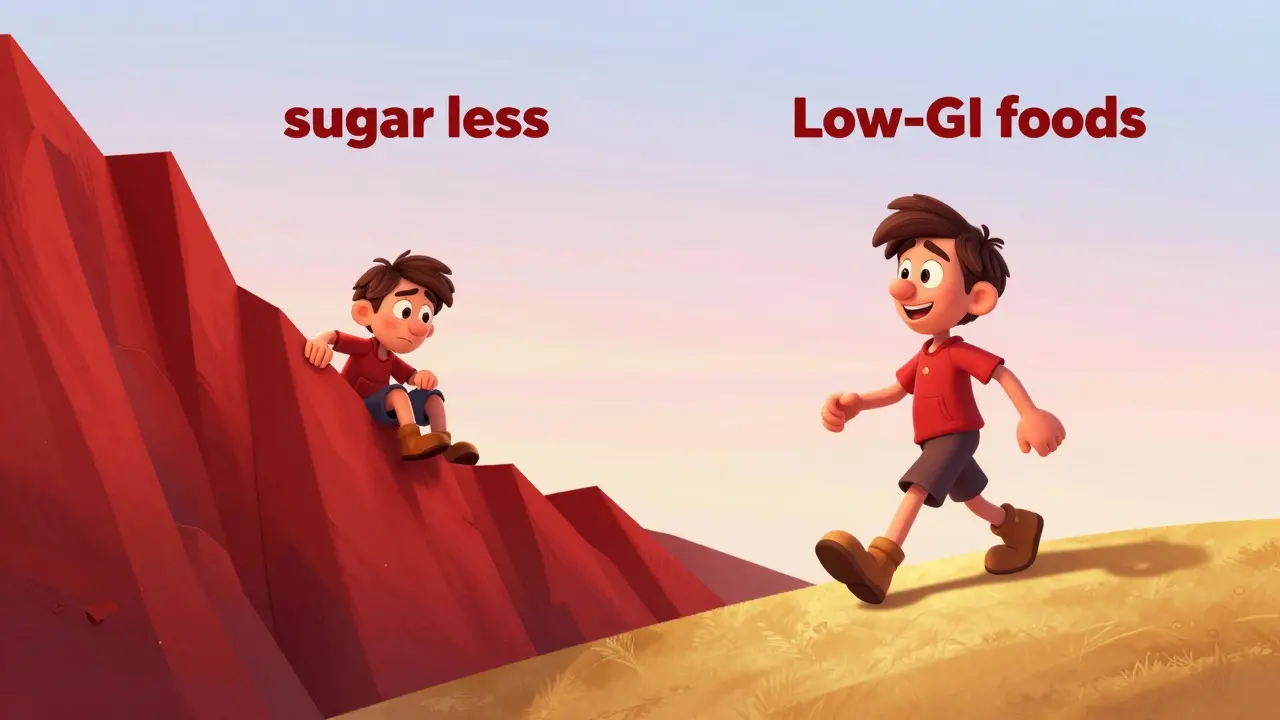
Imagine eating a slice of white bread and feeling a surge of energy, only to crash an hour later, feeling starving and irritable. That "crash" isn't just in your head; it's a physiological reaction to how quickly your body absorbs sugar. By switching to a Low-GI Diet, you can stop that rollercoaster ride. Instead of sharp spikes and dips, you get a steady stream of energy that keeps you full longer and makes managing your weight feel less like a battle of willpower.
What Exactly is the Glycemic Index?
At its core, Glycemic Index (or GI) is a ranking system that tells us how quickly a carbohydrate-containing food raises blood glucose levels. Developed in 1981 by Dr. David Jenkins at the University of Toronto, it uses a scale from 0 to 100. Pure glucose is the gold standard with a score of 100. If a food has a GI of 30, it means it raises your blood sugar much more slowly than a piece of candy would.
Foods are generally split into three buckets:
- Low GI (55 or less): These are the "slow burners." Think of lentils, most fruits, and non-starchy vegetables.
- Medium GI (56-69): These are the middle ground, like whole grain rye bread or some types of corn.
- High GI (70 or higher): These are the "fast burners." White rice, corn flakes, and white bread fall here.
Why does this happen? It comes down to how your body digests the food. Low-GI foods usually have more fiber, a more complex structure, or a bit of healthy fat or acid that slows down the enzymes in your gut. This results in glucose leaking into your bloodstream slowly, rather than flooding it all at once.
Can a Low-GI Diet Actually Help You Lose Weight?
This is where things get interesting and a bit controversial among nutritionists. If you look at the biology, a low-GI approach makes sense for weight control. When you eat high-GI foods, your body releases a massive amount of insulin to handle the sugar spike. Insulin is a storage hormone; it tells your body to stop burning fat and start storing energy. By keeping insulin levels stable, you potentially keep your body in a fat-burning mode for longer.
However, the data is a bit of a mixed bag. Some experts, like Dr. David Ludwig from Harvard, suggest that low-GI diets improve metabolic efficiency and can actually increase your daily energy expenditure by 50 to 100 calories. On the other hand, large-scale reviews, including a 2021 Cochrane Review, show that if two people eat the exact same number of calories, the one eating low-GI foods doesn't necessarily lose more weight than the one eating high-GI foods.
So, does it work? Yes, but perhaps not for the reason you think. The real magic is satiety. Because low-GI foods digest slowly, you feel full for longer. It's much easier to stick to a calorie deficit when you aren't fighting hunger pangs every two hours. For most of us, weight loss is about consistency, and a low-GI diet makes consistency feel possible.
The Blood Sugar Connection and Metabolic Health
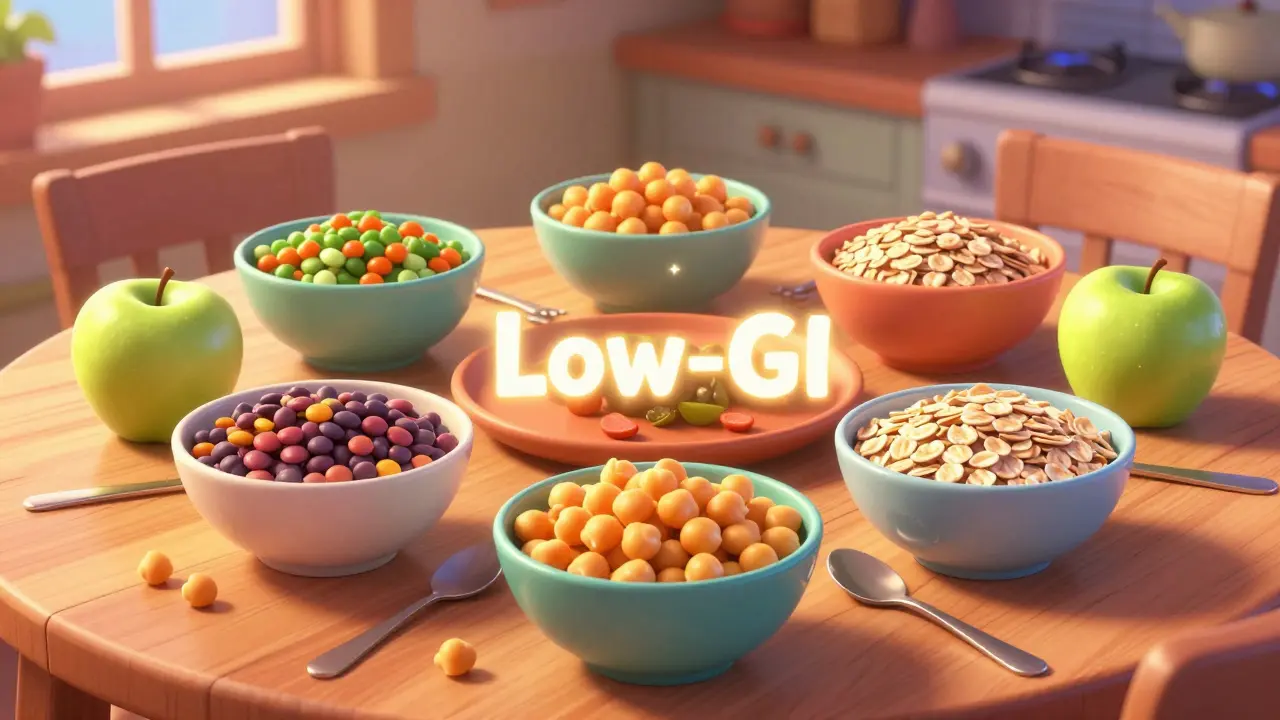
While weight loss is a popular goal, the most proven benefit of this eating pattern is blood sugar management. For anyone dealing with Type 2 Diabetes or prediabetes, this is a game-changer. Research shows that low-GI diets can reduce post-meal glucose peaks by 30-40% compared to high-GI diets. This prevents the "glucose spikes" that damage blood vessels over time.
It's not just about diabetes, either. Managing your glycemic response helps lower LDL Cholesterol (the "bad" kind). In some studies, people on low-GI diets saw their LDL levels drop by nearly 5 mg/dL more than those on high-GI diets. This means your heart gets a break while your waistline shrinks.
| Food Item | GI Value (Approx.) | Category | Best Use |
|---|---|---|---|
| Barley | 25 | Low | Great for soups and stews |
| Chickpeas | 28 | Low | Excellent salad addition |
| Apples | 36 | Low | Perfect portable snack |
| Oats | 55 | Low/Med | Steady morning energy |
| White Rice | 73 | High | Limit portions; pair with fiber |
| Potatoes | 85 | High | Eat chilled or with skin |
How to Build a Low-GI Plate (Practical Tips)
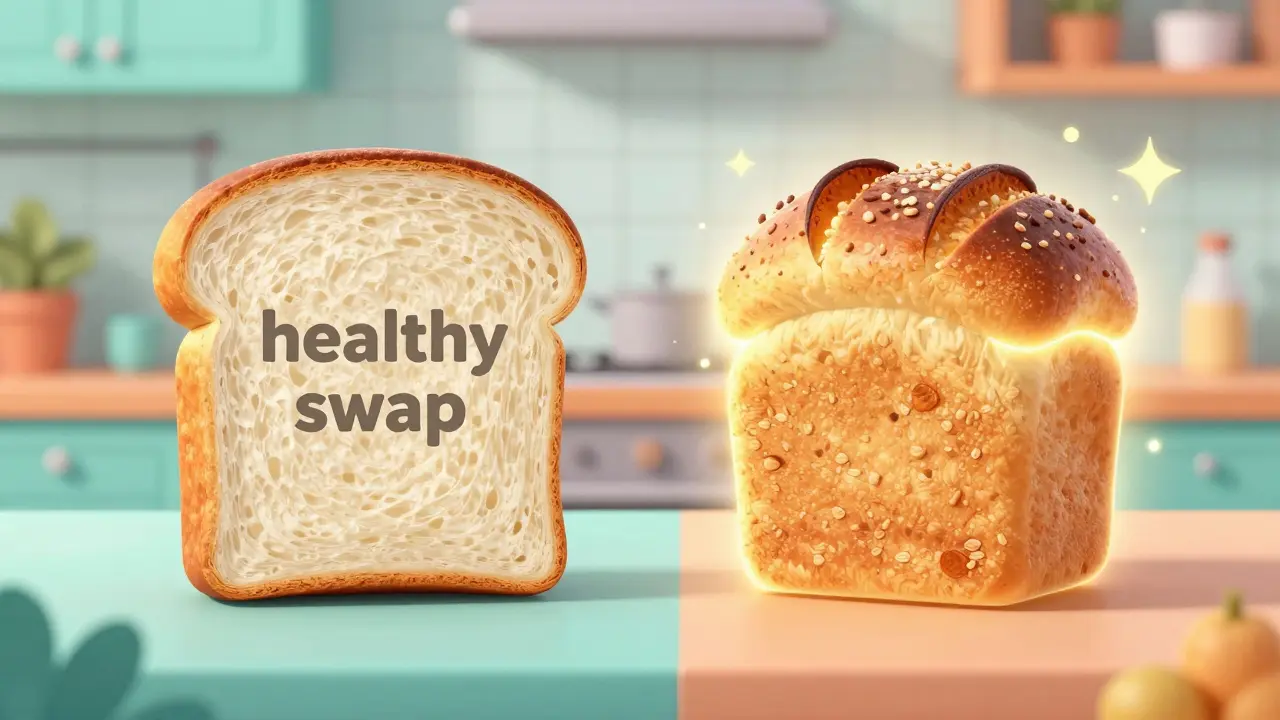
You don't need a PhD in nutrition to start. The easiest way is to focus on "swaps." Instead of cutting out carbs entirely-which is hard to maintain-just change the type of carb you're eating. Swap white rice for quinoa or barley. Swap corn flakes for steel-cut oats. Swap white bread for a dense, sprouted grain sourdough.
But be careful: not everything with a low GI is a "health food." For example, ice cream and some chocolate cakes have surprisingly low GI scores because their high fat content slows down the absorption of sugar. Eating a cake just because it's low-GI won't help you lose weight and certainly won't help your health. Focus on whole, nutrient-dense foods.
Keep these three rules of thumb in mind to manipulate the GI of your meals:
- Combine with Protein and Fat: If you really want that high-GI white rice, eat it with a piece of salmon and a big pile of steamed broccoli. The fat and fiber slow down the digestion of the rice, effectively lowering the overall glycemic load of the meal.
- Watch the Cooking Time: How you cook matters. Al dente pasta has a lower GI (around 45) than pasta that is cooked until it's soft (around 65). The more you process or overcook a starch, the easier it is for your body to break it down, and the faster your blood sugar rises.
- Choose Less Ripe Fruit: A green banana has a much lower GI (about 30) than a spotted, overripe banana (about 51). As fruit ripens, the starches turn into simple sugars.
Is a Low-GI Diet Right for Everyone?
While the general guidelines are helpful, our bodies are different. A study from the Weizmann Institute found that people can have wildly different responses to the same food. One person might have a stable blood sugar response to a bowl of oats, while another might see a significant spike. This is why "personalized nutrition" is becoming the new gold standard.
For most people, the low-GI approach is a safe, sustainable way to eat. It fits perfectly into other healthy patterns like the Mediterranean Diet or the DASH diet. You aren't restricting an entire food group; you're just choosing a smarter version of that group. If you struggle with late-afternoon cravings or "brain fog" after lunch, experimenting with low-GI swaps is a great place to start.
Does a low-GI diet mean no carbs at all?
No, not at all. In fact, a low-GI diet encourages you to eat carbohydrates, but it emphasizes the quality of those carbs. You'll focus on complex carbohydrates like legumes, whole grains, and vegetables, which provide the energy your brain and muscles need without the drastic blood sugar swings.
Can I lose weight if I only eat low-GI foods?
Not necessarily. While low-GI foods help you feel full, calories still matter. If you eat more calories than your body burns-even if those calories come from low-GI sources like nuts and avocados-you won't lose weight. The low-GI approach is a tool to make a calorie deficit easier to maintain by reducing hunger.
Why is a cake low-GI if it's unhealthy?
GI only measures how fast sugar enters the blood. In a cake, the high fat content slows down the digestion process, which prevents the sugar from hitting your bloodstream instantly. However, the cake is still high in calories and saturated fats, which is why it's not recommended for weight loss or general health.
How long does it take to see results with a low-GI diet?
Most people notice a difference in their energy levels and hunger within 2 to 4 weeks. Blood sugar stabilization usually happens almost immediately after a meal, but the long-term effects on weight and cholesterol typically take a few months of consistent eating to become apparent.
Is it better than a keto diet for weight loss?
It depends on your goals. Keto is more aggressive and often leads to faster initial weight loss, but it's much harder to maintain. A low-GI diet is more flexible and generally better for long-term heart health and lipid profiles, as it allows for a wider variety of nutrient-dense fruits and grains.
Next Steps and Troubleshooting
If you're new to this, don't try to change everything overnight. Start by swapping your breakfast. If you usually have sugary cereal, try oatmeal with a few berries. Once that feels normal, look at your lunch-maybe swap a white wrap for a salad with chickpeas.
If you find that you're still feeling sluggish despite eating low-GI foods, consider your portion sizes. Even low-GI carbs can raise blood sugar if you eat too much of them in one sitting. A good rule of thumb is to keep your carbohydrates to about 45-60 grams per meal and always pair them with a source of protein or healthy fat.