
When you walk into a pharmacy in the U.S. and see a $6 copay for your blood pressure pill, it’s easy to think: generic drugs are cheap here. And you’re right-most of the time. But here’s the twist: while Americans pay less for generics than people in most other rich countries, they pay far more for brand-name drugs. The result? The U.S. spends more on medicine than any other country in the world-not because generics are expensive, but because the other 10% of prescriptions are outrageously priced.
Generics in the U.S. Are Actually Cheaper Than Almost Everywhere Else
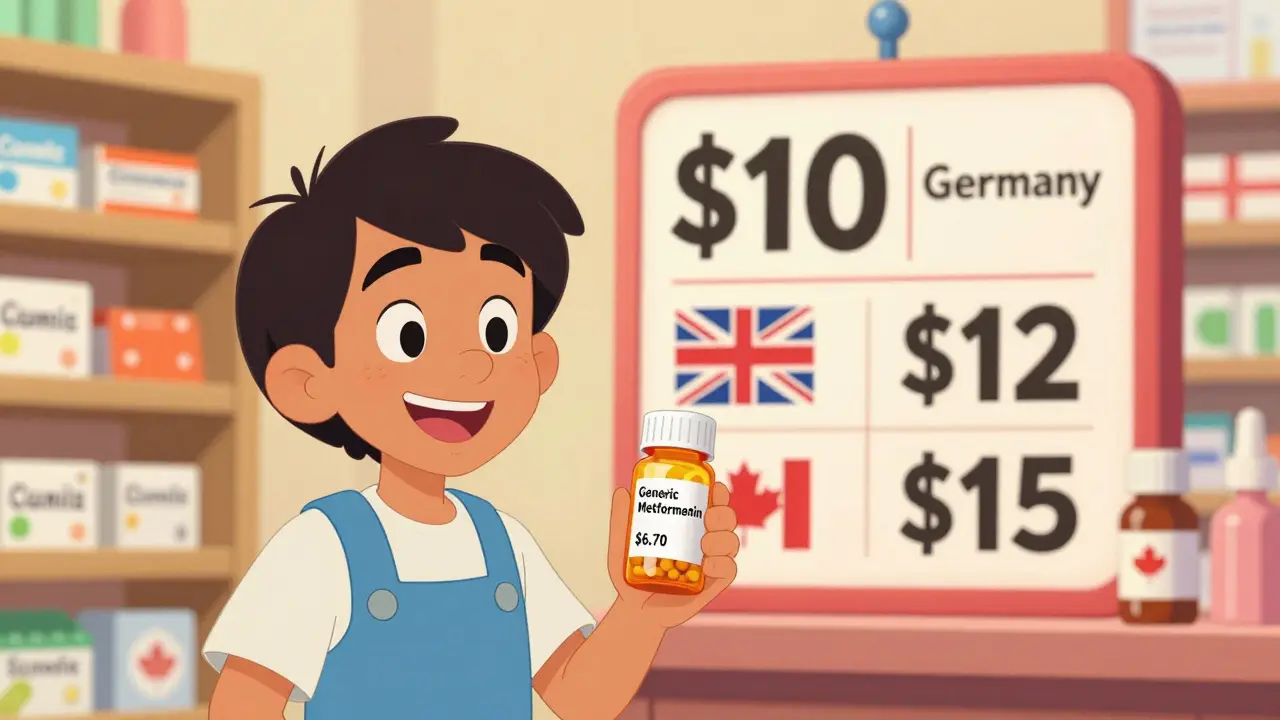
Let’s start with the data that surprises most people: generic drugs in the U.S. cost about 33% less on average than in 33 other developed countries, according to a 2022 study by the RAND Corporation for the U.S. Department of Health and Human Services. That means if a generic version of metformin costs $10 in Germany, you’ll likely pay $6.70 in the U.S. Same with lisinopril, amoxicillin, or atorvastatin. In many cases, you’re paying less than half what someone in Canada or the U.K. pays for the exact same pill.
Why? Three big reasons. First, the U.S. uses generics in 90% of all prescriptions. That’s nearly double the global average of 41%. High volume means manufacturers can produce them at scale, driving prices down. Second, Medicare, Medicaid, and big insurers negotiate aggressively. Third, when three or more companies make the same generic, prices crash-often to just 15-20% of the original brand-name price. The FDA found that the more competitors enter the market, the lower the price goes. That’s why a 30-day supply of generic sildenafil (Viagra) can cost under $10 in the U.S., while it’s $50+ in some European countries.
Brand-Name Drugs Are Where the U.S. Pays a Huge Premium
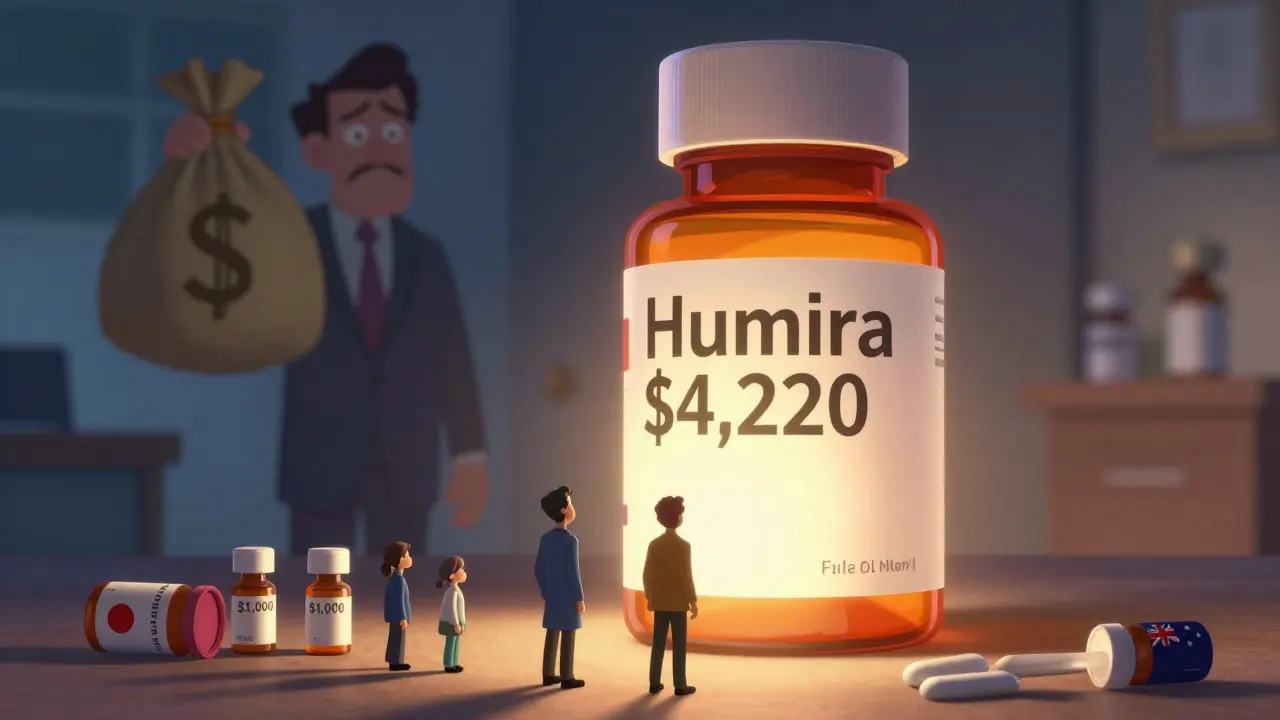
But here’s the catch: that 10% of prescriptions for brand-name drugs? They’re where the U.S. gets hammered. For drugs like Humira, Jardiance, or Stelara, Americans pay 3 to 4 times more than patients in Japan, France, or Australia. The RAND study found U.S. brand-name drug prices were 422% higher than the OECD average. That’s not a typo. If a drug costs $1,000 in Germany, you’ll pay $4,220 in the U.S.-before insurance.
Why? The U.S. doesn’t regulate drug prices like most other countries. In Canada, the U.K., or France, the government negotiates or sets price caps. In the U.S., drugmakers set list prices with little oversight. Insurance companies and pharmacies negotiate rebates behind the scenes, but those savings rarely reach the patient at the counter. That’s why you might see a $56 copay for a brand-name drug, while your neighbor in Germany pays $15 for the same thing.
Net Prices vs. List Prices: The Hidden Math
Here’s where things get confusing. Some reports say the U.S. pays less for drugs than other countries. That’s true-but only if you look at net prices, not list prices. Net prices are what insurers and government programs actually pay after rebates and discounts. A 2024 University of Chicago study found that when you factor in those hidden discounts, U.S. public-sector net prices for generics are 18% lower than in Canada, Germany, the U.K., France, and Japan.
But here’s the problem: most patients don’t see net prices. You see the list price-what the drugmaker charges before any discounts. If you’re uninsured, underinsured, or your plan has a high deductible, you pay that full price. And that’s where the U.S. stands out: it’s the only major country where patients routinely pay full list prices for brand-name drugs.
Medicare’s New Price Negotiations Don’t Fix the Problem
In 2022, Medicare started negotiating prices for 10 high-cost drugs. The first round of prices came out in 2024. The results? Medicare paid less than the U.S. list price-but still more than other countries. For Jardiance, Medicare’s negotiated price was $204 per month. In Japan, the same drug costs $52. For Stelara, Medicare paid $4,490 per dose. In Germany, it’s $2,822. In every case except one, the U.S. negotiated price was higher than the international average.
That’s because Medicare doesn’t have the same bargaining power as national health systems abroad. Countries like Japan and Australia have centralized purchasing and can say, “We’ll pay X or we won’t buy it.” Medicare can only negotiate within limits set by law. So while the program saves billions, it doesn’t bring U.S. prices in line with the rest of the world.
Why Are Some Generics Still Expensive?
You might think: if generics are so cheap, why do I sometimes pay $100 for a pill? That’s because of market failure. When only one or two companies make a generic, they can keep prices high. The FDA found cases where a generic drug had only one manufacturer for years-and the price stayed sky-high. Then, when a new company enters, prices drop fast. But sometimes, companies exit the market because the profit is too small. That creates a monopoly, and prices spike again.
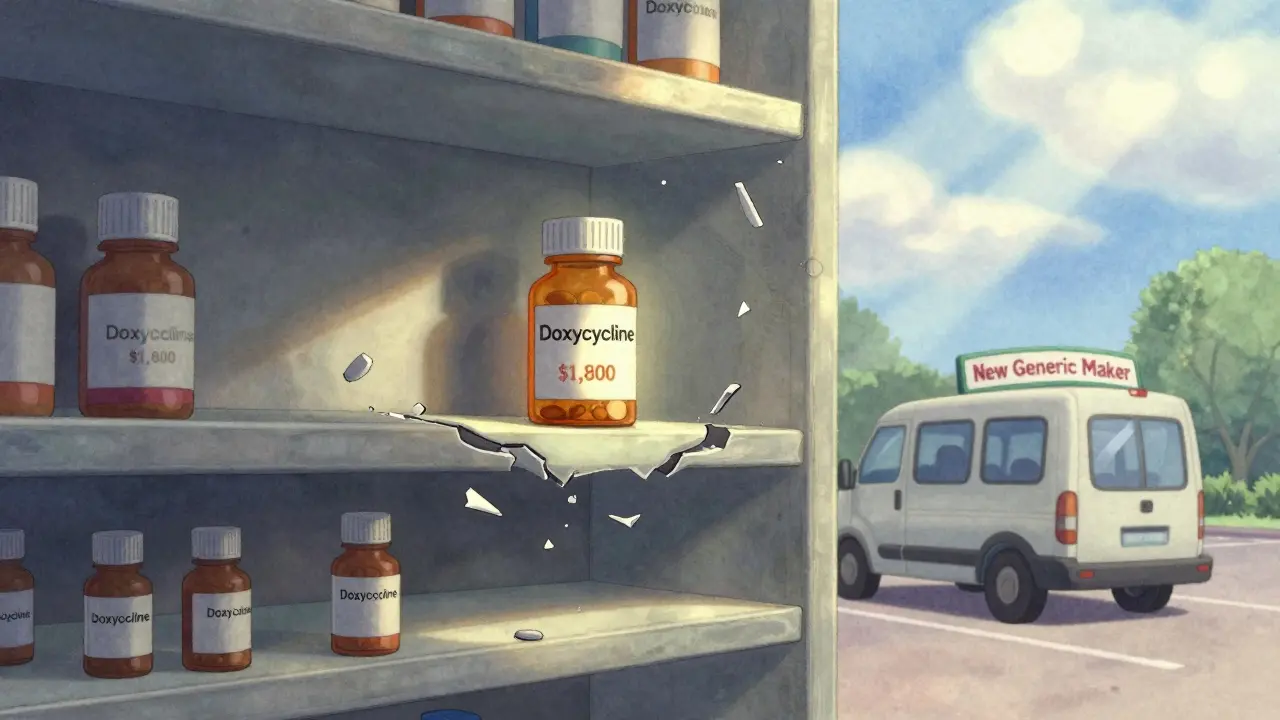
Take the case of doxycycline, an antibiotic. In 2013, a few manufacturers stopped making it. Prices jumped from $20 to $1,800 for a 30-day supply. It took years and new competitors to bring it back down. The FDA now tracks these “drug shortages” closely, but the system still breaks down when profit margins are too thin.
What This Means for You
If you’re taking generics, you’re getting a deal. You’re paying less than people in most other rich countries. But if you’re on a brand-name drug-especially for diabetes, cancer, or autoimmune diseases-you’re paying a premium that’s largely invisible to the rest of the world.
Here’s what you can do:
- Always ask if a generic is available-even if your doctor didn’t suggest it.
- Use GoodRx or SingleCare to compare prices across pharmacies. Sometimes the same generic costs $3 at Walmart and $25 at CVS.
- If you’re on Medicare, check if your drug is in the negotiation program. You might pay less next year.
- Ask your pharmacy about 90-day supplies. Many generics cost less per pill when bought in bulk.
- Don’t assume your insurance will save you. Always check your out-of-pocket cost before filling the prescription.
The Bigger Picture: Who Pays the Real Cost?
The U.S. pays more for brand-name drugs because it funds a huge chunk of global pharmaceutical research. Drug companies argue that without high U.S. prices, they couldn’t afford to develop new medicines. That’s partly true. The U.S. accounts for nearly half of global drug profits.
But here’s the irony: Americans pay high prices for brand-name drugs, and still get cheaper generics than most other countries. Meanwhile, people in places like Canada and the U.K. get both low brand and low generic prices-because their governments control costs.
The real question isn’t whether generics are cheap in the U.S. They are. The real question is: why does the U.S. system let brand-name drugs become so expensive? And why do patients bear the cost while other countries get the benefit of lower prices and American innovation?
The answer isn’t simple. But one thing is clear: if you’re taking a generic, you’re winning. If you’re taking a brand-name drug, you’re paying for the whole system-and most of the world isn’t.
Why are generic drugs cheaper in the U.S. than in other countries?
Generic drugs are cheaper in the U.S. because of high demand (90% of prescriptions are generics), aggressive negotiation by Medicare and insurers, and fierce competition among manufacturers. When three or more companies make the same generic, prices drop to 15-20% of the brand-name price. Other countries have fewer generic manufacturers and less competition, so prices stay higher.
Are U.S. drug prices the highest in the world?
Yes-for brand-name drugs. The U.S. pays 3 to 4 times more than countries like Japan, France, and Germany for the same brand-name medication. But for generics, the U.S. is among the cheapest. Overall, the U.S. spends the most on pharmaceuticals because brand-name drugs drive the cost, even though they make up only 10% of prescriptions.
Can I buy cheaper drugs from other countries?
Technically, yes-but it’s not legal for individuals to import prescription drugs from Canada or Mexico under U.S. law. Some people do it anyway through online pharmacies, but there’s a risk: the drugs may be counterfeit, expired, or improperly stored. The FDA doesn’t regulate these imports, so safety isn’t guaranteed. It’s safer to use price-comparison tools like GoodRx at U.S. pharmacies.
Why do some generic drugs suddenly become expensive?
When only one or two companies make a generic drug, they can raise prices without competition. If manufacturers leave the market due to low profits, it creates a monopoly. The FDA has documented cases where a generic drug’s price jumped from $20 to over $1,000 because only one company was left producing it. Prices only drop again when new manufacturers enter the market.
Does Medicare negotiation lower drug prices to global levels?
No. Medicare’s negotiated prices are still significantly higher than what other countries pay. For example, Medicare pays $204 for Jardiance, while Japan pays $52. The negotiation program reduces U.S. list prices, but it doesn’t match the price controls used in other nations. It’s a step forward, but not enough to close the gap.
How can I find the lowest price for my generic medication?
Use free tools like GoodRx, SingleCare, or RxSaver. Enter your drug name and zip code to compare prices at nearby pharmacies. Often, Walmart, Costco, or Target offer the same generic for under $10 for a 30-day supply. Also ask if your pharmacy offers a discount program or mail-order option for 90-day supplies, which usually cost less per pill.
Tatiana Bandurina
January 22, 2026 AT 10:19It’s not that generics are cheap here-it’s that the system is rigged to make brand-name drugs absurdly expensive so drug companies can fund their next billion-dollar marketing campaign. The fact that we pay less for generics than Europe is a distraction. We’re subsidizing global innovation while getting gouged on the drugs we actually need. And no, GoodRx won’t fix this.
Philip House
January 24, 2026 AT 10:17Let’s be real-this whole ‘U.S. pays more’ narrative ignores the fact that we fund 80% of the world’s new drug R&D. If we cap prices like Canada, innovation dies. You want cheap drugs? Fine. But then stop expecting miracle cures for cancer or Alzheimer’s. We don’t get to have both. The rest of the world is free-riding on American innovation. And yes, I’m proud of that.
Akriti Jain
January 25, 2026 AT 03:06lol the FDA ‘tracks shortages’? 🤡 Meanwhile, the same companies that made doxycycline $1800 are now lobbying Congress to ‘protect intellectual property.’ Coincidence? Nah. Big Pharma owns both parties. They’re not selling pills-they’re selling a monopoly. And you’re paying for the ticket to the circus. 🎪💸
Mike P
January 25, 2026 AT 19:04People don’t get it. The U.S. isn’t broken-it’s optimized. Generics? Cheaper than everywhere because we have 100+ manufacturers fighting over pennies. Brand names? Expensive because we’re the only country that lets patients pay list price. Everyone else has a government saying ‘nope, not paying that.’ We let the market rip. That’s freedom. You want lower prices? Don’t take brand names. Use generics. It’s that simple. Stop blaming the system. You’re just lazy.
And if you’re paying $25 for metformin at CVS? You’re doing it wrong. Walmart’s $4. Go there. Problem solved. No government needed.
Jasmine Bryant
January 27, 2026 AT 11:30I’ve been on lisinopril for 8 years and always thought I was getting a good deal-until I saw a GoodRx coupon for $2.50 at Target. I had no idea. I always just paid what my insurance said. Also, I didn’t realize generics could be so volatile-like that doxycycline thing. I think the FDA should make price spikes public in real time. Maybe even a ‘price alert’ system? I’ve seen people skip doses because they can’t afford it, and that’s scary. Just… we need better transparency.
arun mehta
January 29, 2026 AT 02:18As someone from India, I see this differently. In our public hospitals, generics cost less than a cup of chai. But here’s the truth: the U.S. system, despite its flaws, funds the science that makes those generics possible. Without American investment in R&D, there would be no metformin, no atorvastatin, no lisinopril to begin with. The real tragedy isn’t the price tag-it’s that the world benefits from U.S. innovation while blaming the U.S. for the cost. We must find balance, not blame.
Also, I use GoodRx daily. It’s a game-changer. Thank you for mentioning it.
Chiraghuddin Qureshi
January 29, 2026 AT 07:04From India to the U.S.-I’ve seen both sides. In Delhi, I paid ₹20 for a 30-day pack of generic atorvastatin. In Chicago, I paid $12. Same pill. Same factory. But here, the system is so fragmented. The real issue? No one knows what they’re paying until they get the bill. I wish the U.S. had a simple drug price dashboard-like how we track fuel prices. Transparency would fix half the outrage.
And yes, I still use GoodRx. It’s my daily lifesaver. 🙏
Lauren Wall
January 30, 2026 AT 16:34Generics are cheap. Brand names are a scam. End of story.