19January
Immunotherapy Explained: How Checkpoint Inhibitors and CAR-T Cell Therapy Fight Cancer
Posted by Hannah Voss

When your body’s own immune system is turned against cancer, something powerful happens. For decades, doctors treated cancer with surgery, radiation, and chemotherapy - all aimed at killing fast-growing cells. But those methods often hurt healthy tissue too. Now, a new wave of treatments is changing the game: immunotherapy. Two of the most promising approaches are checkpoint inhibitors and CAR-T cell therapy. They don’t poison cancer. They wake up your immune system to find and destroy it.

How Checkpoint Inhibitors Unleash the Immune System

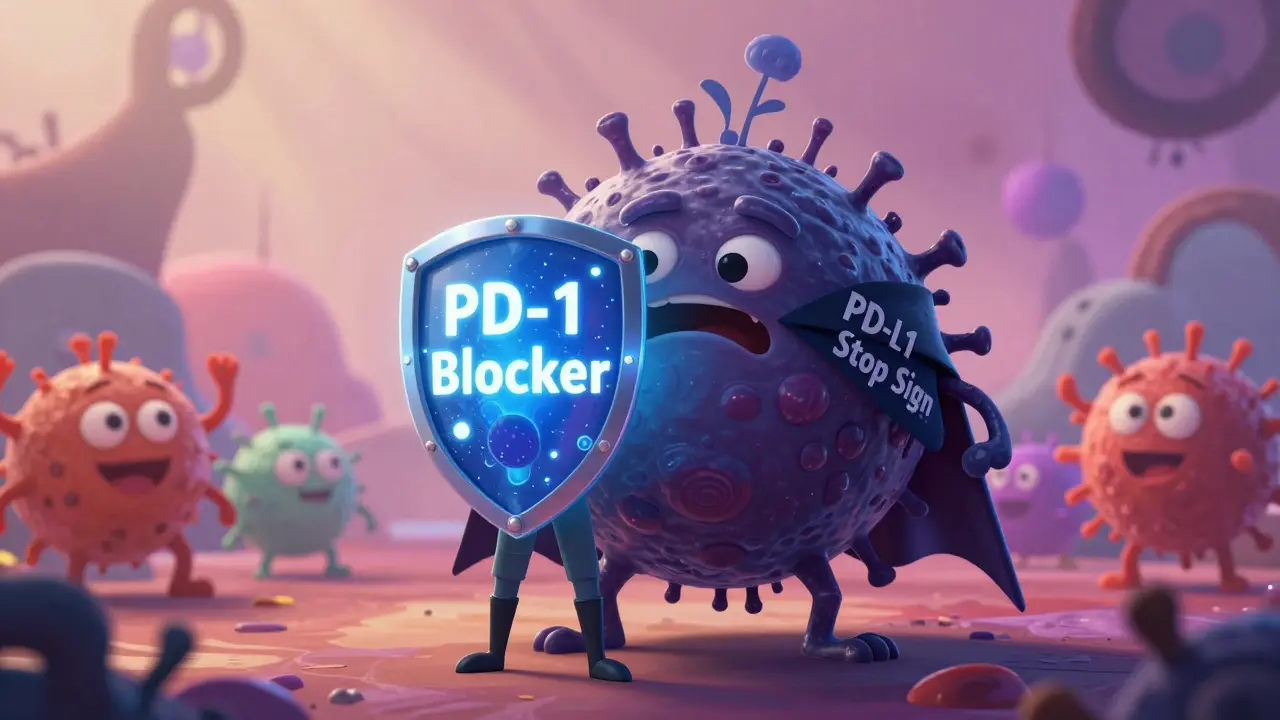
Your immune system has built-in brakes. These are called checkpoints - proteins like PD-1 and CTLA-4 that keep T cells from attacking too hard and damaging healthy organs. Cancer cells exploit this. They turn on PD-L1, a protein that latches onto PD-1 on T cells and says, “Don’t attack me.” It’s like putting a stop sign on your body’s soldiers.

Checkpoint inhibitors are monoclonal antibodies designed to block those stop signs. Drugs like pembrolizumab (Keytruda) and nivolumab (Opdivo) block PD-1. Ipilimumab (Yervoy) blocks CTLA-4. Once those brakes are released, T cells can see the cancer again and start killing it.

These drugs work best in cancers with high mutation rates - like melanoma, lung cancer, and kidney cancer - because more mutations mean more visible targets for the immune system. In melanoma, about 40% of patients respond to anti-PD-1 therapy. Some stay in remission for years. That’s rare with older treatments.

But it’s not magic. Only 20-40% of patients respond at all. And when it doesn’t work, it’s often because the tumor doesn’t have enough T cells inside it to begin with. No soldiers, no fight.

What CAR-T Cell Therapy Is - And How It’s Made

CAR-T therapy is like giving your immune system a custom-made weapon. It starts with a simple blood draw. Your T cells are pulled out, sent to a lab, and genetically rewired to carry a synthetic receptor called a chimeric antigen receptor (CAR). This CAR is designed to lock onto a specific protein on cancer cells - usually CD19 in blood cancers like leukemia and lymphoma.

The modified T cells are grown in huge numbers - billions of them - then put back into your body. Before that, you get chemotherapy to clear out your existing immune cells. This makes room for the new ones. Within weeks, these engineered soldiers flood your bloodstream, hunt down cancer, and multiply as they go.

The results are dramatic. In children with relapsed acute lymphoblastic leukemia (ALL), complete response rates hit 80-90%. Some who had no other options are now cancer-free five years later. For certain types of non-Hodgkin lymphoma, CAR-T therapy works even after multiple rounds of chemo failed.

But this isn’t a pill you pick up at the pharmacy. It’s a personalized treatment. Each batch is made for one person. The whole process - from blood draw to reinfusion - takes 3 to 5 weeks. That delay can be deadly for someone whose cancer is growing fast.

Why CAR-T Struggles with Solid Tumors

CAR-T therapy shines in blood cancers because the targets are easy to reach. But solid tumors - like lung, breast, or pancreatic cancer - are different. They’re surrounded by a fortress: scar tissue, suppressive immune cells, and chemicals that shut down T cells.

Even if CAR-T cells make it into the tumor, they often get tired. They stop multiplying. They stop killing. The tumor microenvironment is like a wall of noise, drowning out the signal to attack.

So far, CAR-T has shown less than 10% effectiveness in most solid tumors. The targets themselves are also harder to find. CD19 exists only on B cells - so targeting it is safe. But many solid tumor proteins also appear on healthy tissues. Hit those, and you risk damaging your heart, lungs, or gut.

That’s called “on-target, off-tumor” toxicity. One patient treated for ovarian cancer had severe lung damage because the CAR targeted a protein also found in lung tissue. It’s a major reason why CAR-T hasn’t broken through in solid cancers yet.
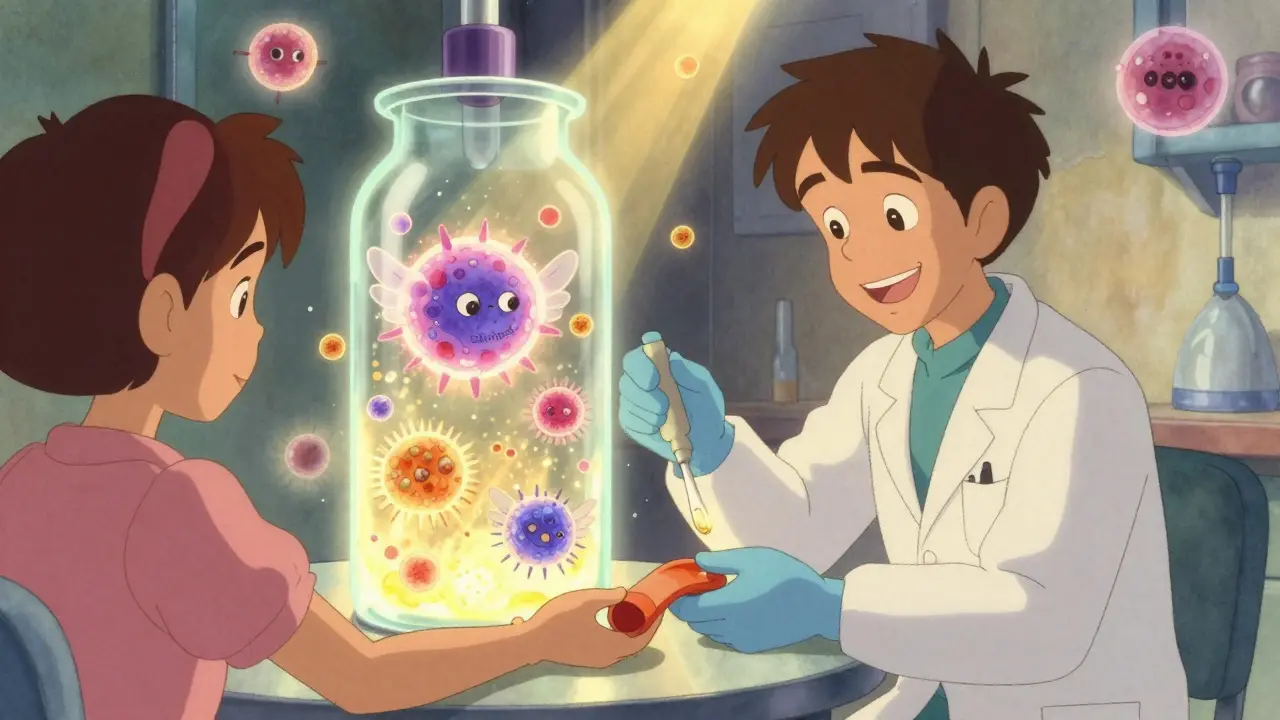
A patient donates blood as glowing CAR-T cells multiply in a magical vial, surrounded by soft light and floating cells.

Side Effects: What You Need to Know

Both therapies can cause serious side effects - but they’re different.

Checkpoint inhibitors trigger immune-related adverse events (irAEs). Your immune system, no longer held back, can start attacking your own organs. Common ones include:

  • Rash or itching (30-40% of patients)
  • Colitis (inflammation of the colon, 10-15%)
  • Hypothyroidism (5-10%), which can cause fatigue and weight gain
  • Pneumonitis (lung inflammation, up to 5%)
These can show up weeks or months after starting treatment. Many are manageable with steroids - but if missed, they can be life-threatening.

CAR-T therapy brings its own dangers. The biggest is cytokine release syndrome (CRS). When millions of CAR-T cells activate at once, they flood the body with inflammatory signals. Symptoms include high fever, low blood pressure, and trouble breathing. About 50-70% of patients get some form of CRS. In severe cases, it needs ICU care.

Then there’s ICANS - immune effector cell-associated neurotoxicity syndrome. Patients may get confusion, tremors, trouble speaking, or even seizures. It affects 20-40% of CAR-T recipients. Most recover with treatment, but it’s terrifying when it happens.

Fatigue, headaches, and fever are common to both. But the intensity and timing are different. With ICIs, side effects creep in slowly. With CAR-T, they hit hard within days.

The Future: Combining Both Therapies

The real breakthrough may come from putting these two tools together. Checkpoint inhibitors give the immune system a boost. CAR-T cells bring the firepower. But giving them as separate drugs doesn’t work well - the side effects pile up, and the drugs don’t always reach the same place at the same time.

Scientists are now engineering smarter CAR-T cells that make their own checkpoint blockers. Imagine a CAR-T cell that doesn’t just attack cancer - but also releases a PD-1 inhibitor right where it’s needed. This keeps the immune boost local, avoiding the whole-body inflammation caused by IV drugs.

In mouse studies, this approach cut immune pneumonitis by 42% and boosted tumor-killing by 37%. Human trials are starting in 2024. Early results show promise for lung and ovarian cancers - two solid tumors that have resisted every other treatment.

Another idea: “armored” CAR-T cells that secrete IL-12, a cytokine that helps T cells survive longer inside tumors. Or “off-the-shelf” CAR-T cells made from donor T cells, so patients don’t wait weeks for treatment.

Even the targets are evolving. Instead of just CD19, researchers are testing CARs for BCMA (in myeloma), HER2 (in breast cancer), and even new ones like CLDN18.2 (in stomach cancer). The goal is to find targets that are unique to cancer - or at least rare in healthy tissue.
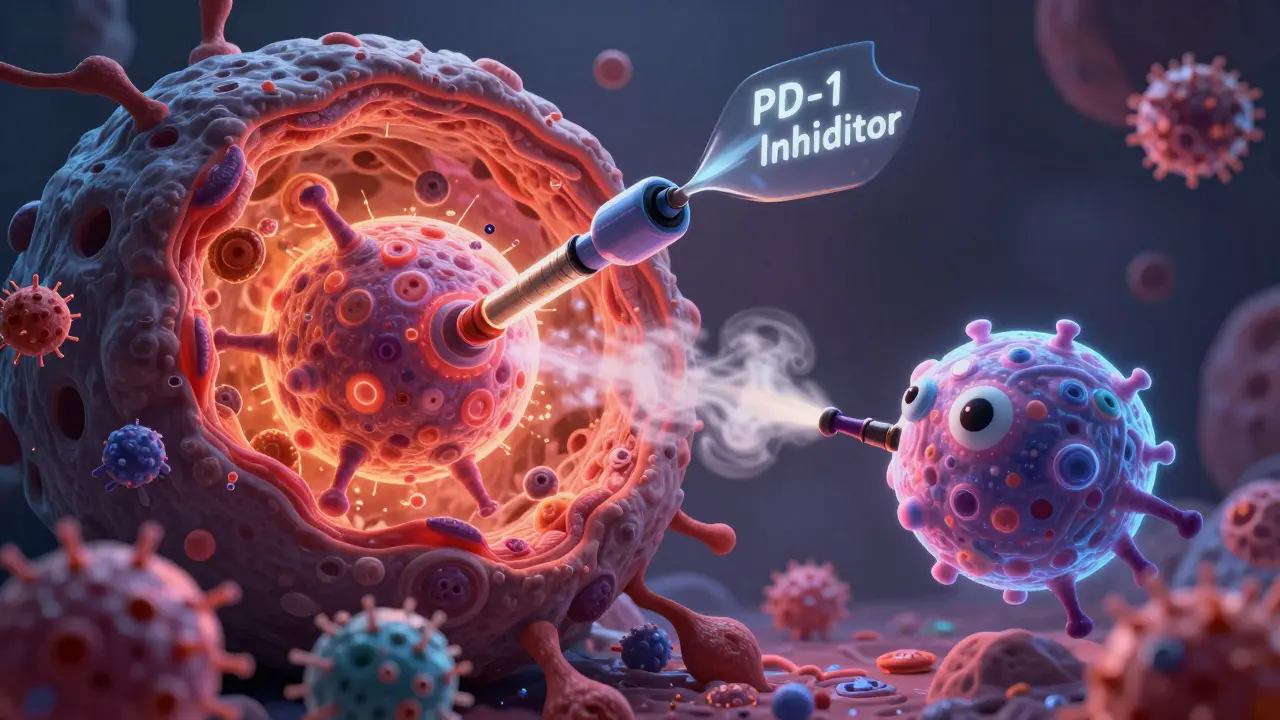
A CAR-T cell fires a PD-1 inhibitor dart into a tumor fortress, breaking through barriers with radiant energy.

Access and Cost: The Hidden Barriers

These therapies are expensive - and not equally available.

A single CAR-T treatment costs between $373,000 and $475,000. Checkpoint inhibitors aren’t cheap either - $100,000 to $150,000 per year. Insurance covers them, but not always easily. Medicaid patients are 23% less likely to get checkpoint inhibitors. Black patients are 31% less likely to receive CAR-T therapy than white patients, even when they have the same cancer type and stage.

And access isn’t just about money. CAR-T therapy is only offered at specialized centers. In the U.S., 87% of CAR-T treatments happen at academic hospitals - even though they make up only 15% of cancer centers. Rural patients often have to travel hundreds of miles. Many can’t afford to take time off work. Others can’t get a referral.

Doctors need special training to manage the toxicities. The American Society for Transplantation and Cellular Therapy says a center must treat at least 10-15 CAR-T patients to become proficient. That means many hospitals just don’t offer it.

What’s Next?

By 2030, the CAR-T market is expected to grow nearly three times faster than checkpoint inhibitors. But growth won’t mean equality. The real challenge isn’t just science - it’s making sure these life-saving treatments reach everyone who needs them.

Right now, immunotherapy is saving lives. But it’s still a tool in development. The next five years will focus on three things: making CAR-T work in solid tumors, reducing side effects, and fixing access gaps. The goal isn’t just to treat cancer - it’s to make sure no one is left behind because of where they live, how much they earn, or the color of their skin.

The immune system was always meant to fight cancer. We’re just learning how to help it do its job better.

11 Comments

  • Image placeholder

    Carolyn Rose Meszaros

    January 19, 2026 AT 11:55
    This is so cool 😍 I had no idea our immune system could be trained like a dog to go after cancer. Like, whoa.
  • Image placeholder

    Emily Leigh

    January 19, 2026 AT 22:37
    Yeah, sure... 'wake up the immune system'... like it's just sleeping on the job? 😒 I mean, if cancer was really just a matter of 'not trying hard enough,' why are we still losing people? This whole thing feels like pharma marketing dressed up as science.
  • Image placeholder

    Greg Robertson

    January 20, 2026 AT 19:29
    Really appreciate you breaking this down. I’ve got a cousin going through CAR-T right now - it’s wild how personalized it is. Feels like sci-fi, but it’s real. Glad we’re making progress.
  • Image placeholder

    Crystal August

    January 21, 2026 AT 03:39
    You people are naive. This isn’t medicine - it’s a money grab. They don’t care if you live or die. They care if you pay $500K and don’t ask questions. And don’t get me started on how they ignore the real causes - toxins, GMOs, 5G. This is distraction therapy.
  • Image placeholder

    pragya mishra

    January 22, 2026 AT 05:20
    In India, we don’t even have access to basic chemo in many villages. Talking about $400K treatments is like discussing yachts while people are starving. This isn’t innovation - it’s elitism with a lab coat.
  • Image placeholder

    Edith Brederode

    January 23, 2026 AT 06:27
    I love how this post highlights both the hope AND the hurdles. 🙌 The combo therapies sound like the future - local immune boosters instead of whole-body chaos. So much potential here!
  • Image placeholder

    Arlene Mathison

    January 23, 2026 AT 16:09
    I’m so fired up reading this. We’re on the brink of something huge. Imagine if every kid with leukemia got this treatment - no more chemo hair loss, no more endless hospital stays. This is the future we’ve been waiting for. Let’s push for access, not just innovation.
  • Image placeholder

    Renee Stringer

    January 24, 2026 AT 18:46
    I’m not against the science, but I’ve seen too many patients suffer from these side effects. The docs act like it’s a miracle, but I’ve held people as they screamed from cytokine storms. No one talks about the trauma.
  • Image placeholder

    Manoj Kumar Billigunta

    January 25, 2026 AT 21:49
    This is good info. But remember - science is not magic. It takes time. And patience. And money. And good doctors. In my village, we wait months for antibiotics. So yes, CAR-T is amazing - but first, let’s fix the basics.
  • Image placeholder

    Andy Thompson

    January 26, 2026 AT 14:34
    They say 'checkpoint inhibitors' - but who controls the checkpoints? Big Pharma. The FDA. The WHO. This is all a control system. They don't want you cured - they want you on lifelong drugs. Look at the profit margins. Coincidence? I think not.
  • Image placeholder

    sagar sanadi

    January 28, 2026 AT 06:52
    CAR-T works on blood cancer? Wow. So what, we just give up on lung, breast, brain? Maybe the real problem isn't the tumor... it's that we're too lazy to find better targets. Or maybe... the whole immune theory is just a fad.

Write a comment

About

Welcome to 24-Meds-Online: Your 24 Hour Online Pharmacy. We offer comprehensive information about medication, diseases, and supplements, making us your trusted resource in healthcare. Discover detailed guides on disease treatment and your best pharmaceutical options. Get advice on medication dosage and explore a wide range of health supplements. Stay informed with 24-meds-online.com, your health is our priority.