
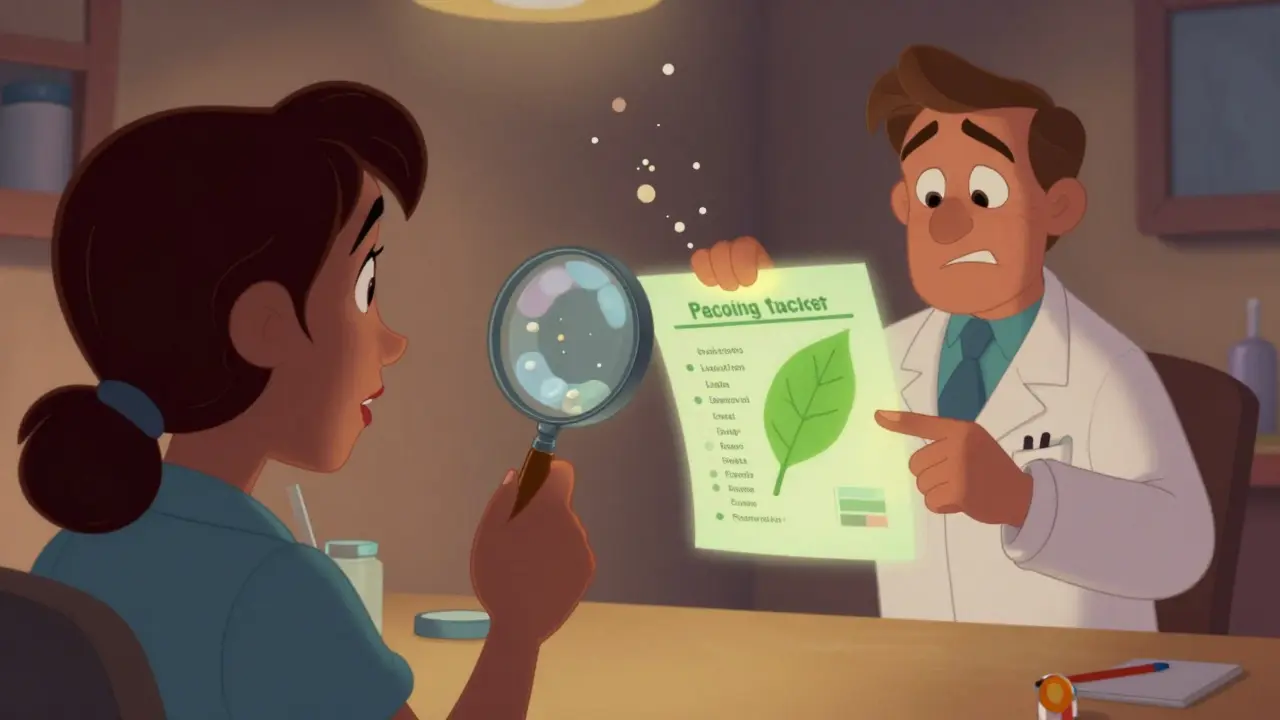
Many people assume that if a medicine is prescribed by a doctor, it’s automatically safe for them. But that’s not true. Even if you’ve taken the same pill for years, a small change in the formula - like switching manufacturers - could introduce an allergen you didn’t know was there. Unlike food, where labels are tightly regulated, medication labels don’t have to clearly say if they contain milk, soy, peanuts, or other common allergens. This gap puts millions of people at risk.
Why Medicine Labels Are Different from Food Labels
In the U.S., food manufacturers must follow strict rules under the Food Allergen Labeling and Consumer Protection Act (FALCPA). That law, updated in 2023 to include sesame, requires clear labeling of the nine major allergens: milk, eggs, fish, shellfish, tree nuts, peanuts, wheat, soy, and sesame. If a product contains any of these, they must be spelled out either in parentheses next to the ingredient (like "lecithin (soy)") or in a "Contains" statement at the end of the ingredient list.But none of that applies to prescription or over-the-counter drugs. The FDA doesn’t require drugmakers to list allergens in the same way. That means a pill might contain lactose (a milk derivative), peanut oil, or soy lecithin - and you’d never know unless you dig deep.
According to the FDA’s Center for Drug Evaluation and Research, there’s no standardized system for declaring allergens in medications. That’s why 4% of American adults with medication allergies have had reactions they didn’t see coming. These reactions aren’t rare. A 2023 study in the Journal of Allergy and Clinical Immunology found that nearly one in five people with food allergies also react to inactive ingredients in drugs.
What Are Inactive Ingredients? (And Why They Matter)
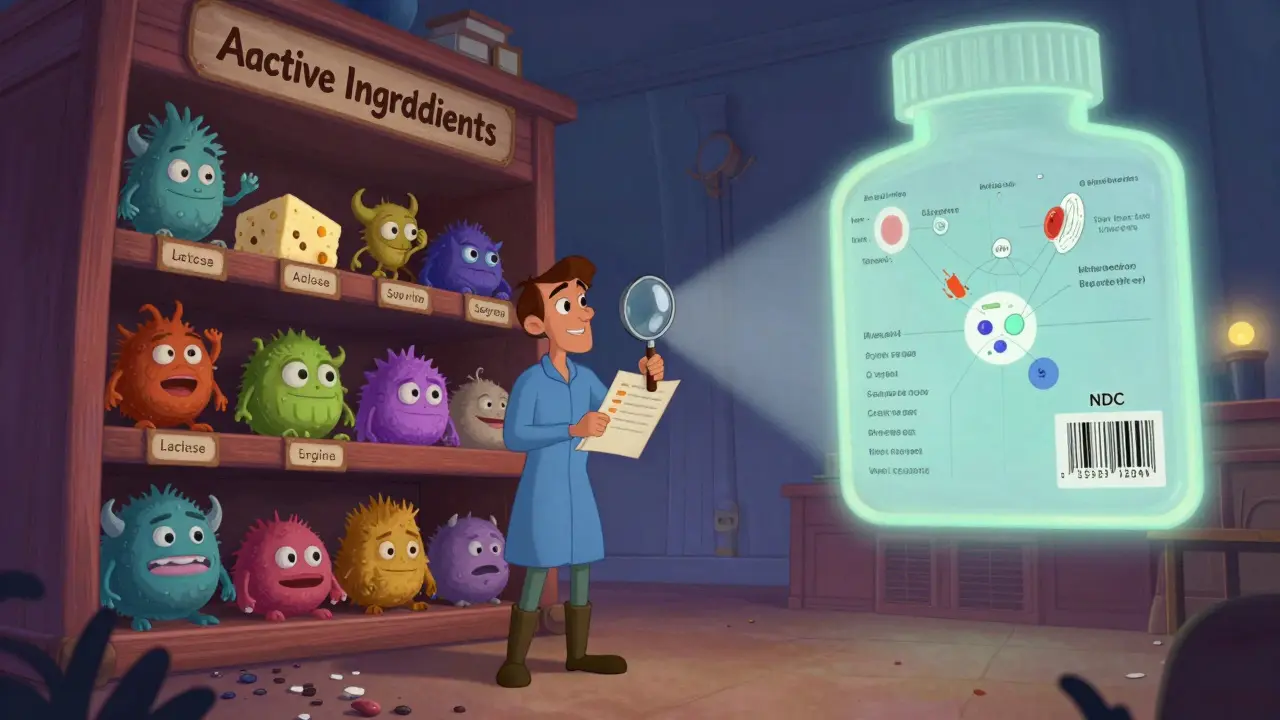
Inactive ingredients - also called excipients - are the non-medicinal parts of a pill or liquid. They help hold the drug together, make it easier to swallow, or preserve it. But many of them come from allergenic sources:- Lactose - often used as a filler. It’s derived from milk and can trigger reactions in people with dairy allergies.
- Soy lecithin - a common emulsifier. Even small amounts can cause reactions in those with soy allergies.
- Peanut oil - sometimes used in topical creams or injectables. It’s rare, but still present in some medications.
- Wheat starch - used in tablets and capsules. Not always obvious from the name.
- Shellfish-derived chitosan - found in some wound dressings and oral tablets.
These ingredients aren’t listed as "allergens." They’re buried in the ingredient list under technical names. If you don’t know what "stearic acid" or "maltodextrin" can mean, you’re flying blind.
How to Read a Prescription Label for Allergens
Most people only look at the drug name and dosage. But to stay safe, you need to go further. Here’s how:- Check the patient information leaflet - It’s usually tucked inside the box. Look for a section called "Inactive Ingredients" or "Excipients." This list is required by the FDA to be included, even if it’s not on the bottle.
- Don’t trust the bottle label alone - Prescription bottles only list the active ingredient and dosage. The allergen info is almost never there.
- Ask your pharmacist - Say: "Can you give me the full list of inactive ingredients in this medication?" Pharmacists have access to databases that list all components, including those not printed on the label.
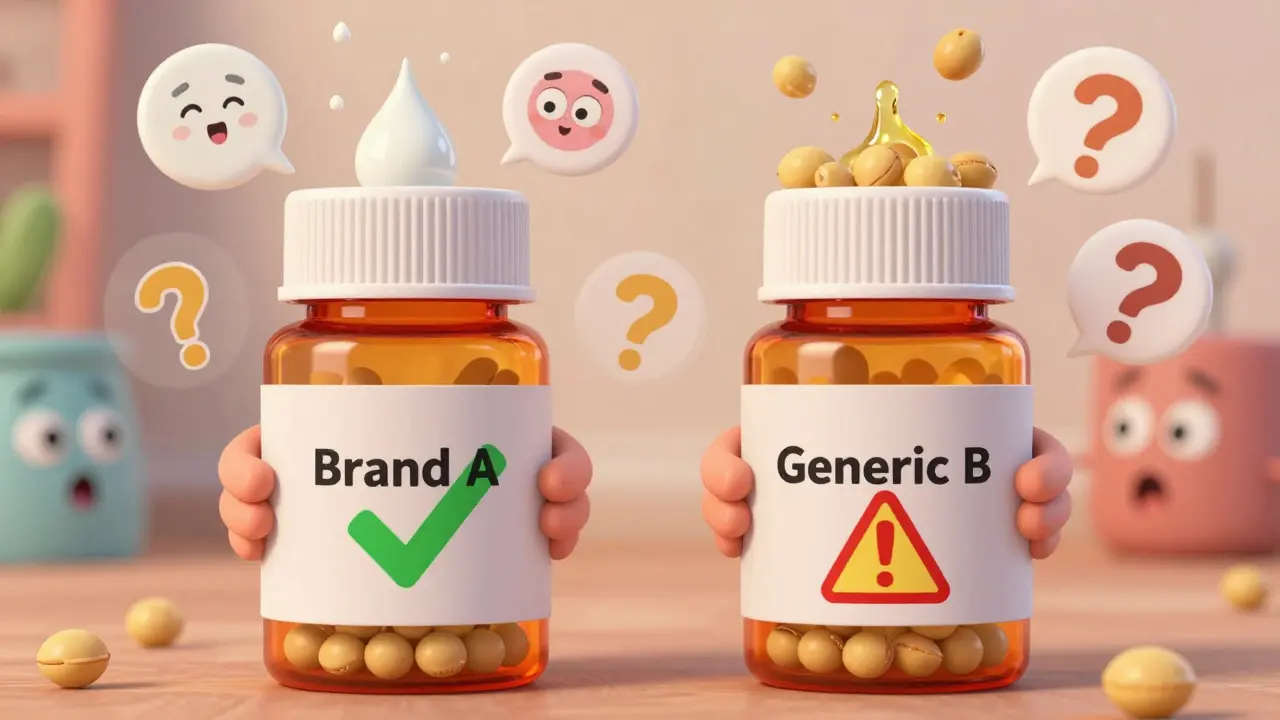
- Compare generic versions - Two brands of the same generic drug can have different fillers. A pill from one manufacturer might contain lactose; another might use cornstarch. Always check when switching.
- Use the drug’s National Drug Code (NDC) - Find the NDC on your bottle (it’s a 10- or 11-digit number). Type it into the FDA’s National Library of Medicine database (DailyMed.net) to pull up the full ingredient list.
One woman in Edinburgh, who had a severe reaction to a generic asthma inhaler, later found out it contained soy lecithin - something her previous brand never had. She’d never checked because she assumed "the same drug" meant "the same ingredients."
The Hidden Risks of Switching Brands
A 2022 report from the Food Allergy Research & Education (FARE) found that 37% of allergic reactions to medications happened after switching to a different generic version. Why? Because manufacturers change excipients to cut costs or improve stability. No one notifies you.Even small changes matter. A single tablet of a generic pain reliever might contain 50mg of lactose. For someone with a severe dairy allergy, that’s enough to trigger hives, swelling, or worse. The FDA has documented over 140 cases since 2020 where patients were hospitalized after taking a medication they thought was safe.
That’s why it’s not enough to ask once. You need to check every time you refill - even if it’s the same prescription. Formulations change without warning.
What to Do If You Have a Reaction
If you suspect a medication caused an allergic reaction - even if it’s your first time taking it - stop using it immediately. Contact your doctor and pharmacist. Then:- Write down the drug name, manufacturer, and lot number.
- Save the packaging and leaflet.
- Report it to the FDA’s MedWatch program. You can do it online at fda.gov/medwatch.
These reports help the FDA track patterns. In 2023, 22% of reported allergic reactions to drugs came from patients who had previously taken the same medication without issue. Your report could prevent someone else’s reaction.
How to Stay Safe Long-Term
There’s no perfect system yet. But you can build habits that protect you:- Keep a personal medication allergy list - Write down every ingredient you react to, including inactive ones. Bring it to every appointment.
- Use a pharmacy that tracks allergies - Some pharmacies (like CVS and Walgreens) let you add allergy alerts to your profile. Ask them to flag any medication with your known triggers.
- Look for allergen-free brands - Companies like Nature Made, Pure Encapsulations, and Thorne Research list all ingredients clearly and avoid common allergens. They’re often pricier, but worth it.
- Learn the hidden names - Milk = lactose, casein, whey. Soy = lecithin, textured vegetable protein. Peanut = arachis oil. Wheat = gluten, starch. Know these so you can spot them.
- Don’t rely on "natural" or "hypoallergenic" labels - These terms aren’t regulated for drugs. A product labeled "natural" could still contain soy or dairy.
One man in Glasgow, who’d been taking a daily blood pressure pill for five years, suddenly developed swelling in his throat. He’d never had issues before. After testing, he found out the new batch used a different starch - one made from wheat. He’d never checked because he trusted the brand. Now, he calls his pharmacist every refill.
What’s Changing in the Future
There’s growing pressure to fix this gap. In 2024, the FDA proposed new rules that could require clearer labeling of allergens in medications - similar to food. Some experts are pushing for QR codes on pill bottles that link to full ingredient lists. Apps like MedSafe (launched in late 2024) already let users scan barcodes to check for allergens in drugs.But until those changes happen, the responsibility falls on you. No one else will check for you. Your health depends on reading beyond the drug name.
Do all prescription drugs list inactive ingredients on the bottle?
No. Prescription bottles only show the active ingredient and dosage. The full list of inactive ingredients is only found in the patient information leaflet inside the box or through the manufacturer’s database. Always ask your pharmacist for the complete list.
Can I trust generic drugs if I have allergies?
Not automatically. Generic drugs contain the same active ingredient as brand-name versions, but their inactive ingredients can differ. A generic version of your medication might use lactose instead of cornstarch. Always verify the excipients when switching generics.
What should I say to my pharmacist to get allergen info?
Say: "Can you please provide the complete list of inactive ingredients for this medication, including the manufacturer and lot number?" Pharmacists have access to databases that list all components. Don’t accept a vague answer - insist on specifics.
Are there any medications that are guaranteed allergen-free?
There’s no official certification for allergen-free drugs in the U.S. But some manufacturers - like Thorne, Pure Encapsulations, and NutraGenesis - specialize in hypoallergenic formulations and clearly label all ingredients. These are often available through compounding pharmacies or specialty retailers.
How do I report a reaction to a medication’s inactive ingredient?
Report it to the FDA’s MedWatch program at fda.gov/medwatch. Include the drug name, manufacturer, lot number, and a description of your reaction. These reports help the FDA identify patterns and improve safety standards. Even one report can lead to changes.
rafeq khlo
March 9, 2026 AT 09:07The FDA's failure to mandate allergen disclosure in pharmaceuticals is not merely an oversight-it is a systemic betrayal of public trust. The absence of standardized labeling protocols exposes vulnerable populations to preventable harm. Lactose, soy lecithin, and wheat starch are not benign fillers-they are latent threats disguised as inert substances. The burden of vigilance placed on patients is not just unreasonable-it is unethical. We must demand regulatory reform with the same urgency we apply to food labeling. This is not a niche concern-it is a matter of life and death for millions.
Morgan Dodgen
March 9, 2026 AT 22:32So the FDA doesn't regulate inactive ingredients like food? DUH. Of course they don't. Big Pharma and the government are in cahoots. They want you dependent on meds that *might* kill you so you keep buying them. I checked my blood pressure pill-lactose AND soy lecithin. And the bottle? NOTHING. They're hiding it. QR codes? LOL. That's just a distraction. Real solution? Ban all fillers. Go 100% pure active ingredient. Or better yet-go natural. 🤷♂️
Philip Mattawashish
March 10, 2026 AT 10:38You people are naive. You think reading a leaflet or asking a pharmacist is enough? That's like trusting a used car salesman to tell you the engine's about to blow. The entire pharmaceutical supply chain is built on obfuscation. Manufacturers change excipients to cut costs-no one tells you. No one *can* tell you. The system is designed to keep you ignorant. And when you react? They'll say 'rare side effect.' It's not rare. It's routine. You're being experimented on. Wake up. This isn't medicine-it's corporate roulette.
Tom Sanders
March 11, 2026 AT 04:43Bro. I just take what the doctor gives me. If I get hives, I stop taking it. Done. Why are we making this so complicated? I don't even know what 'lecithin' is. Should I care? Probably not. Just don't give me the one that made me swell last time. Easy.
Erica Santos
March 11, 2026 AT 07:11Oh wow, a whole article about how people don’t read labels? Groundbreaking. Let me guess-you also think people should read the manual before using a toaster. But here’s the twist: the manual is written in Latin, hidden in a box, and the company changes it every time you buy a new toaster. So yeah, congrats. You’ve exposed a system where the only way to survive is to become a full-time lab technician. Bravo. Now go tell your pharmacist you’re filing a complaint. They’ll probably hand you a pamphlet titled 'How to Enjoy Your Allergic Reaction.' 😘
Scott Easterling
March 12, 2026 AT 08:13Wait. Wait. Wait. You're telling me that the same drug-same name, same dosage-can have different ingredients depending on the manufacturer? And no one is required to tell you? That's... that's... insane. I mean, imagine if two different brands of milk had different proteins, and you had no idea? You'd sue the company. But with drugs? You're just supposed to 'check the leaflet'? And if you don't? You die? This isn't healthcare. This is a lottery. And the odds? They're rigged. I'm done. I'm switching to herbal tea. And I'm telling everyone.
Melba Miller
March 13, 2026 AT 17:02My brother died because he took a generic version of his asthma medication. The new one had soy. He didn't know. He trusted the pharmacy. He trusted the brand. He trusted the system. Now I check every single pill. Every. Single. One. I call the pharmacy. I look up the NDC. I cross-reference with DailyMed. I don't care if it takes an hour. He's gone. And I won't let this happen again. If you're not doing this, you're not trying hard enough. This isn't a suggestion. It's survival.
Katy Shamitz
March 15, 2026 AT 10:44I used to think this was overblown until I had a reaction to a generic painkiller. Swelling. Panic. ER visit. Turns out it had lactose. My old brand didn't. I felt so stupid. But here's the thing-no one warned me. Not my doctor, not the pharmacist, not the label. So now? I keep a little card in my wallet: 'ALLERGIC TO: LACTOSE, SOY, WHEAT.' I hand it to every pharmacist. They're always surprised. But I don't care. My life is worth a minute of their inconvenience. And if you're not doing this? You're not being responsible. I'm not mad. I'm just disappointed.