

Heart failure isn’t a single disease-it’s a cascade of problems where the heart can’t pump enough blood to meet your body’s needs. But here’s the good news: modern medicine has four key drug classes that don’t just manage symptoms-they actually save lives. If you or someone you care about has heart failure with reduced ejection fraction (HFrEF), understanding these medications isn’t optional. It’s essential.
ACE Inhibitors: The Original Game Changer
ACE inhibitors were the first heart failure drugs proven to cut death risk. When enalapril was tested in the CONSENSUS trial back in 1987, it slashed mortality by 27% in people with severe heart failure. That was revolutionary. Today, we still use them, but they’re no longer the first choice for most patients.
How do they work? They block the enzyme that turns angiotensin I into angiotensin II-a powerful chemical that tightens blood vessels and makes the heart work harder. By stopping this, ACE inhibitors lower blood pressure, reduce strain on the heart, and help it recover over time.
Common ones include enalapril (start at 2.5mg twice daily), lisinopril (start at 2.5-5mg daily), and ramipril (start at 1.25-2.5mg twice daily). Doses are slowly increased over weeks to reach targets like 10-20mg twice daily for enalapril.
But they come with trade-offs. About 1 in 5 people develop a dry, nagging cough. Some get high potassium levels (hyperkalemia), which can be dangerous. Rarely, swelling of the face or throat (angioedema) happens. If any of these occur, you can’t just keep taking them.
ARNI: The New Standard in Heart Failure Care
Enter sacubitril/valsartan-better known by its brand name, Entresto. Approved in 2015 after the landmark PARADIGM-HF trial, this drug changed everything. It doesn’t just block angiotensin like ACEIs or ARBs. It also blocks neprilysin, an enzyme that breaks down natural heart-protecting chemicals called natriuretic peptides. More of these peptides mean better fluid control, lower blood pressure, and less heart stress.
The results? Compared to enalapril, Entresto cut cardiovascular death by 20% and hospitalizations for heart failure by 21%. That’s not a small improvement-it’s a major leap. The 2022 American Heart Association guidelines now say ARNI should be the first choice for HFrEF, replacing ACEIs outright if you’re eligible.
Dosing starts low: 24/26mg twice daily. It’s doubled every 2-4 weeks until you hit the target of 97/103mg twice daily. But there’s a hard rule: you must wait at least 36 hours after your last ACEI dose before starting ARNI. Jumping straight from one to the other raises your risk of angioedema by half a percent-enough to make doctors cautious.
Real-world data shows patients feel better. On patient forums, many report reduced shortness of breath within two weeks. One user wrote, “Switching from lisinopril to Entresto made me feel like I could walk to the mailbox again.” But cost is a barrier. Without insurance, Entresto runs about $550 a month. Insurance often requires prior authorization. That’s why only 42% of community clinics use it, even though 65% of academic centers do.
Beta Blockers: Slowing Down to Save the Heart
It sounds backward-slowing your heart rate to help a failing heart. But beta blockers do exactly that, and they’ve been shown to cut death risk by up to 35%.
Not all beta blockers are equal. You need the ones proven in heart failure trials: carvedilol, metoprolol succinate, and bisoprolol. Drugs like propranolol or atenolol? Not recommended. They don’t have the same evidence.
Carvedilol starts at 3.125mg twice daily. Metoprolol succinate begins at 12.5mg daily. Bisoprolol? Just 1.25mg once a day. You don’t ramp up fast. You wait 2-4 weeks between each dose increase. Why? Because your heart is already weak. Pushing too hard can make symptoms worse before they get better.
Side effects are real. Fatigue, dizziness, low blood pressure, and slow heart rate are common. Many patients say they feel “drained” at first. But long-term? The benefits are undeniable. One Reddit user shared, “Carvedilol raised my ejection fraction from 25% to 45% over 18 months.” That’s not luck-it’s science.
Key point: never stop these suddenly. If you need to discontinue, do it slowly over weeks under medical supervision. A sudden stop can trigger a heart attack or worsen heart failure.
Diuretics: Managing the Fluid, Not Fixing the Pump
Diuretics don’t improve survival. But they make a huge difference in how you feel. If you’re swollen, short of breath, or waking up at night needing to pee, diuretics are your best friend.
Loop diuretics like furosemide (20-80mg daily), bumetanide (0.5-2mg daily), and torsemide (10-20mg daily) are the go-to. They pull fluid out of your body fast. Torsemide may be better than furosemide-studies show it leads to 18% fewer hospitalizations.
Thiazides like hydrochlorothiazide (12.5-25mg daily) are sometimes added if loop diuretics aren’t enough. But here’s the catch: they’re weaker and less reliable in advanced heart failure.
Spironolactone is special. It’s a diuretic, yes-but it’s also a mineralocorticoid receptor antagonist (MRA). That means it blocks aldosterone, a hormone that causes fluid retention and scarring in the heart. The RALES trial showed it cut death risk by 30%. But it also raises potassium. So if you’re on ARNI or ACEIs, your potassium must be checked weekly at first.
Patient feedback is mixed. Many love the relief from swelling. But others hate the constant bathroom trips. One user on PatientsLikeMe said, “Furosemide gave me leg cramps until I started taking magnesium.” That’s not rare. Low potassium, low magnesium, low sodium-all common side effects. Your doctor should monitor them.
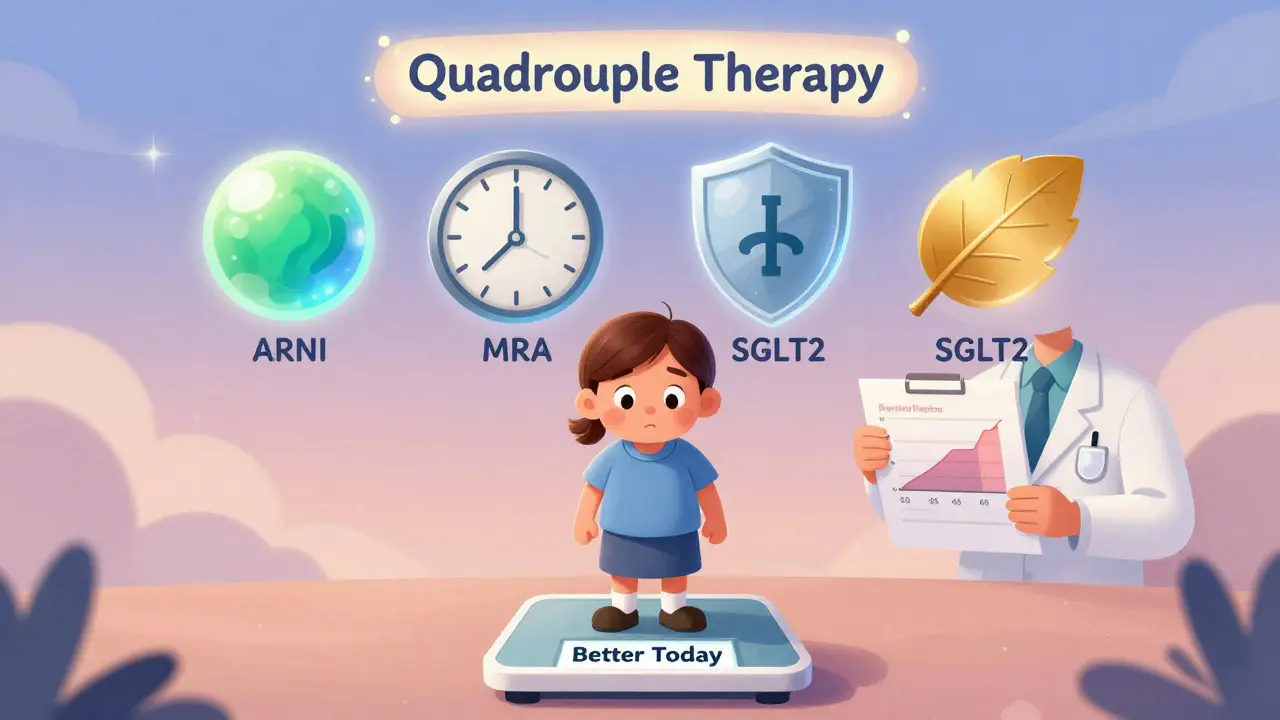
The Quadruple Therapy Revolution
The real breakthrough isn’t just one drug. It’s the combo. Today’s gold standard for HFrEF is four drugs working together:
- ARNI (or ACEI/ARB if ARNI isn’t an option)
- Beta blocker (carvedilol, metoprolol succinate, or bisoprolol)
- MRA (spironolactone or eplerenone)
- SGLT2 inhibitor (dapagliflozin or empagliflozin)
This isn’t theory. It’s proven. The PARADIGM-HF trial showed this approach cuts death and hospitalizations by 20-21%. The 2022 guidelines call it “quadruple therapy.” But here’s the problem: only 35% of eligible patients get all four within a year of diagnosis.
Why? Cost, fear, and complexity. ARNI is expensive. Beta blockers make you tired. Diuretics mean constant bathroom trips. And SGLT2 inhibitors? Newer, cheaper now (generic dapagliflozin is under $10/month), but many doctors still don’t prescribe them routinely.
Specialized heart failure clinics hit 85% adherence. General practices? Only 52%. The gap isn’t about science. It’s about access, education, and follow-up.
What to Watch For
These drugs work best when carefully managed. Here’s what your care team should monitor:
- Potassium: Keep it under 5.0 mmol/L. Too high? Risk of dangerous heart rhythms.
- Creatinine: A 30% rise from baseline means you may need to reduce doses.
- Blood pressure: Systolic should stay above 100 mmHg. Below that? Doses may need to be lowered.
- Ejection fraction: Repeat echo at 3-6 months. Many see improvement within 6 months.
And don’t ignore symptoms. If you’re dizzy, swollen, or too tired to walk, tell your doctor. It’s not “just part of it.” It’s a signal your meds need tuning.
Real Talk: The Patient Experience
On Reddit, a common theme: “I hate how tired I feel.” On Amazon, diuretics get 4.1/5 stars-but complaints about frequent urination are everywhere. ARNI? Highest rating (4.3/5) for effectiveness, but cost keeps it from being perfect.
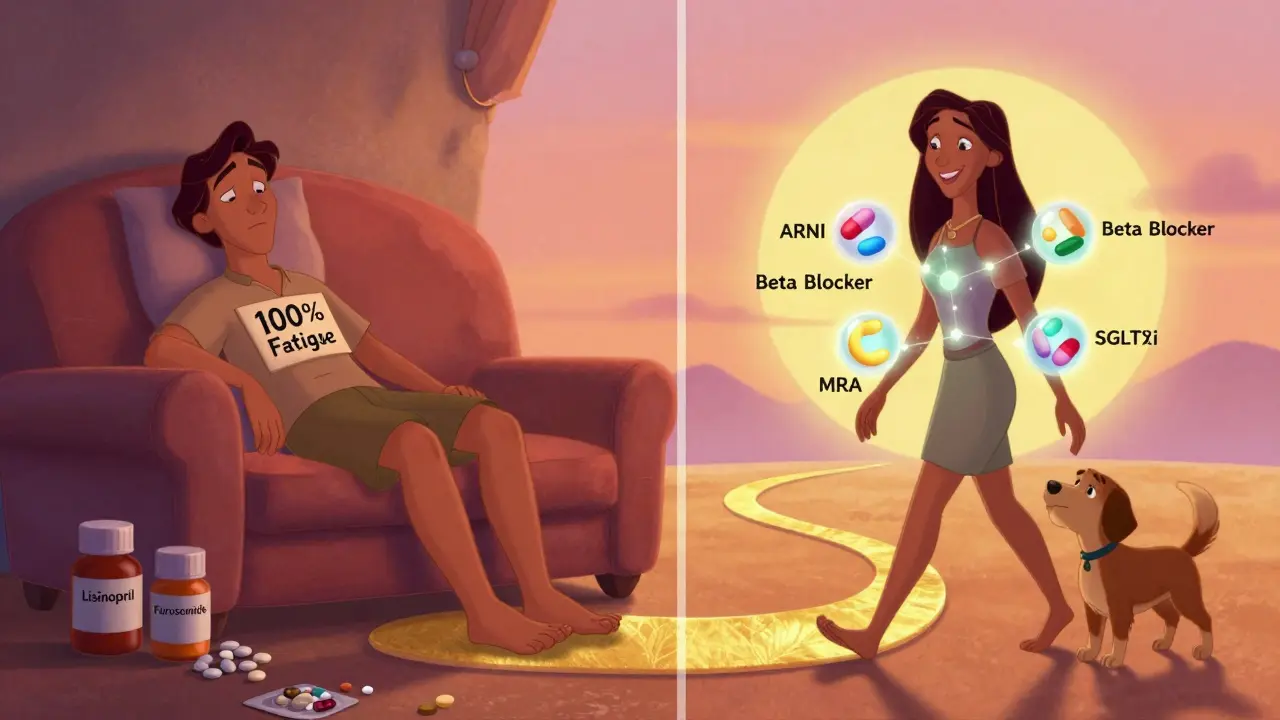
One woman in Sydney told her nurse: “I started on lisinopril, got a cough. Switched to Entresto. My breathing improved in days. Now I walk my dog every morning again.” That’s the goal.
Another man said: “I stopped my beta blocker because I couldn’t handle the fatigue. My doctor said, ‘Try half the dose for two weeks.’ I did. Now I’m on 50mg of carvedilol and feel 80% better.”
Progress isn’t about perfection. It’s about persistence. Finding the right mix takes time. Side effects don’t mean you quit. They mean you adjust.
What’s Next?
Research is moving fast. SGLT2 inhibitors (like dapagliflozin) are now recommended even for heart failure with preserved ejection fraction (HFpEF)-a group once thought untreatable. Vericiguat, a newer drug, adds another layer of protection for those who still have symptoms after quadruple therapy.
By 2027, experts predict ARNI will be first-line for 70% of HFrEF patients. But until then, the biggest challenge isn’t finding the right drugs. It’s making sure patients get them.
If you’re on these meds, stay in touch with your care team. Ask questions. Track your symptoms. Don’t give up if things feel hard at first. The goal isn’t just to live longer. It’s to live better.
Can I take ACE inhibitors and ARNI together?
No. You must wait at least 36 hours after your last ACE inhibitor dose before starting ARNI. Taking them together increases the risk of angioedema-a serious swelling reaction. This is a strict safety rule backed by clinical trials and the 2022 AHA/ACC/HFSA guidelines.
Why is ARNI better than ACE inhibitors?
ARNI (sacubitril/valsartan) works in two ways: it blocks the harmful effects of angiotensin like an ARB, and it boosts natural heart-protecting chemicals by inhibiting neprilysin. The PARADIGM-HF trial showed it reduced cardiovascular death by 20% and hospitalizations by 21% compared to enalapril. It’s not just slightly better-it’s a major step forward in survival and quality of life.
Do beta blockers make heart failure worse at first?
Yes, sometimes. When you start a beta blocker, your heart rate slows and blood pressure drops. This can temporarily make symptoms like fatigue or shortness of breath worse. That’s why doctors start at the lowest dose and increase very slowly-every 2-4 weeks-only if you’re stable. Most patients improve after a few months. Stopping suddenly can be dangerous.
Are diuretics necessary if I’m on ARNI and beta blockers?
Yes, if you have fluid buildup. ARNI and beta blockers improve heart function over time, but they don’t remove excess fluid right away. Diuretics like furosemide or torsemide are essential for managing swelling, shortness of breath, and weight gain. They’re not curative, but they’re critical for daily comfort and preventing hospital visits.
Can I stop my heart failure meds if I feel better?
Never stop without talking to your doctor. Even if you feel great, these drugs are working behind the scenes to prevent scarring, reduce strain, and lower your risk of sudden death. Stopping can cause your condition to rebound quickly. Many patients feel better because the meds are working-not because they’re cured.
Why is potassium monitoring so important?
All four main drug classes-ACEIs, ARNIs, beta blockers, and MRAs like spironolactone-can raise potassium levels. High potassium (over 5.0 mmol/L) can cause dangerous heart rhythms or even cardiac arrest. That’s why your doctor checks your blood within 1-2 weeks of starting or changing any of these drugs. If potassium is high, they may reduce doses, add a potassium binder, or switch medications.
Is ARNI covered by insurance in Australia?
In Australia, Entresto (sacubitril/valsartan) is listed on the PBS (Pharmaceutical Benefits Scheme) for eligible patients with HFrEF. This means you pay a subsidized price-usually under $30 per script with a concession card, or around $32.60 for general patients. You still need a specialist prescription and must meet specific clinical criteria, but cost is no longer a major barrier here as it is in the U.S.
What if I can’t tolerate any of these medications?
There are alternatives. If you can’t take ARNI or ACEIs due to cough or angioedema, ARBs like valsartan or losartan are options. If beta blockers cause too much fatigue, lower doses or switching to bisoprolol (often better tolerated) may help. For diuretics, switching from furosemide to torsemide or adding a low-dose thiazide can improve tolerance. Your heart failure specialist can tailor a regimen that works for you-even if it’s not the textbook quadruple therapy.
LiV Beau
March 10, 2026 AT 22:29Just switched to Entresto last month after the cough from lisinopril got unbearable. Within 10 days, I could walk to my mailbox without stopping. Now I’m walking my dog twice a day 😍
Adam Kleinberg
March 11, 2026 AT 07:38They say ARNI is the gold standard but nobody tells you how much it costs. My insurance denied it 3 times. I had to pay $480 out of pocket. This whole system is rigged for pharma profits. They don’t care if you live they care if you pay
Denise Jordan
March 11, 2026 AT 13:25So basically we’re just swapping one side effect for another. Cough for fatigue. Swelling for bathroom emergencies. I’m just here for the drama
Gene Forte
March 11, 2026 AT 17:59Every heart failure patient deserves access to the best science. Quadruple therapy isn’t just a treatment-it’s a promise. A promise that we can do better than just surviving. We can live. And that’s worth every conversation, every adjustment, every pill.
Kenneth Zieden-Weber
March 13, 2026 AT 00:01Y’all are acting like beta blockers are some kind of magic potion. They’re not. They’re a tool. And if you’re too tired to walk to the fridge after starting them? Good. That means your heart isn’t overworking anymore. You’re not broken-you’re healing. Slow down. Let your heart catch up.
Mike Winter
March 13, 2026 AT 11:57I’ve been on carvedilol for 2 years now. The fatigue was brutal at first, but I stuck with it. Now my EF is up from 28% to 47%. I’m not saying it’s easy, but it’s worth it. You’re not weak for needing help. You’re brave for taking it
Randall Walker
March 14, 2026 AT 06:59...I just want to say... I think... we all deserve... to feel better... even if... it takes... time...
Miranda Varn-Harper
March 15, 2026 AT 12:14It’s alarming how many patients are led to believe these drugs are cure-alls. They’re not. They’re management tools. And if you’re not monitoring potassium, creatinine, and blood pressure weekly-you’re playing Russian roulette with your heart.
Alexander Erb
March 16, 2026 AT 05:30My mom’s on the full quadruple combo. She was in the hospital 4 times last year. This year? Zero. She still gets tired, still pees a lot, still hates her pills-but she’s alive and she’s walking. That’s the win. Don’t let the side effects scare you. Talk to your doc. Adjust. Keep going.
Donnie DeMarco
March 16, 2026 AT 17:57Entresto is a beast but the price? Wild. I’m on generic dapagliflozin now-$8 a month-and I’m feeling 10x better than when I was on furosemide alone. Someone should make a meme: "When your heart is failing but your wallet is thriving"
Tom Bolt
March 17, 2026 AT 17:17My husband started ARNI after being on lisinopril for 3 years. He got angioedema. Not once. Twice. The second time, he nearly died. The ER docs said he was lucky. Now he’s on an ARB. He’s alive. But I’ll never trust ACEIs again. This isn’t medicine. It’s a minefield.
Shourya Tanay
March 19, 2026 AT 01:37From a clinical perspective, the paradigm shift from ACEI to ARNI as first-line is supported by Class I evidence from PARADIGM-HF with NNT of 21 for cardiovascular death reduction. However, real-world adherence is hampered by pharmacoeconomic constraints, particularly in low-resource settings where SGLT2i availability remains limited despite Class I recommendations in HFpEF as per 2022 AHA/ACC/HFSA guidelines. The disconnect between guideline adherence and implementation is not a knowledge gap-it is a systemic equity gap.
Chris Bird
March 19, 2026 AT 20:15So you’re telling me I have to take 4 pills every day just to not die? And the government won’t pay for the good one? This is why people stop taking meds. They’re not lazy. They’re broke. And nobody cares.