
When someone you love dies, it’s normal to feel broken. You cry. You can’t sleep. You lose interest in food, in work, in life. But is this grief-or is it depression? The line between the two is thin, and too often, people are told to just "get over it" when what they really need is to be understood. Grief and depression aren’t the same thing, even though they feel alike. And treating them the same can make things worse.
What grief really looks like
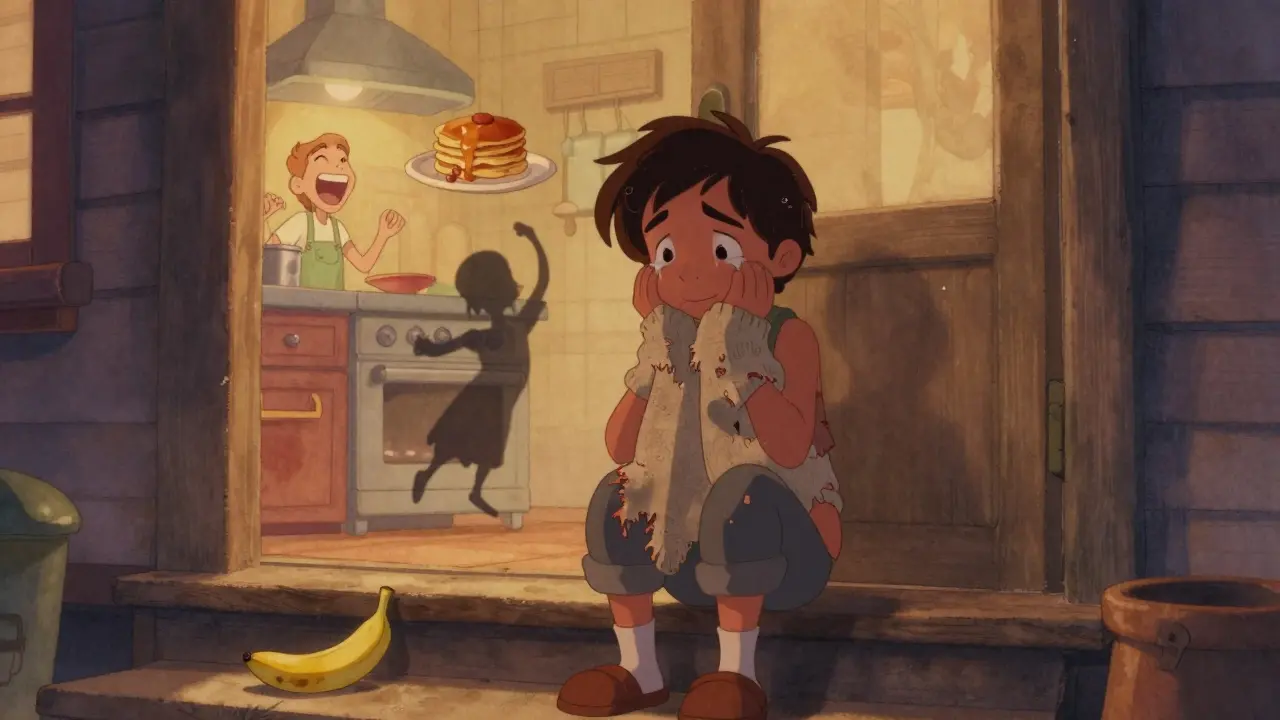
Grief isn’t a disorder. It’s a natural response to loss. When you lose someone close, your brain doesn’t just shut down-it rewires. You remember their laugh. You find their sweater in the closet and hold it. You cry at the grocery store because you suddenly remember how they hated buying bananas. Then, minutes later, you smile because you recall how they used to dance in the kitchen while making pancakes.
This back-and-forth is key. Grief comes in waves. It hits hard, then fades. Then it comes again-maybe on their birthday, maybe when you hear a song they loved. But between those waves, there are moments of peace. Of connection. Of warmth. That’s not depression. That’s love surviving.
The American Psychiatric Association’s DSM-5, updated in 2022, recognizes this with a formal diagnosis: Prolonged Grief Disorder. It’s not about being sad for too long. It’s about being stuck. If, after six months (or a year for kids), you can’t accept the person is gone, you avoid anything that reminds you of them, you feel numb all the time, or you’re consumed by guilt or bitterness-you’re not just grieving. You’re trapped in it.
What depression actually is
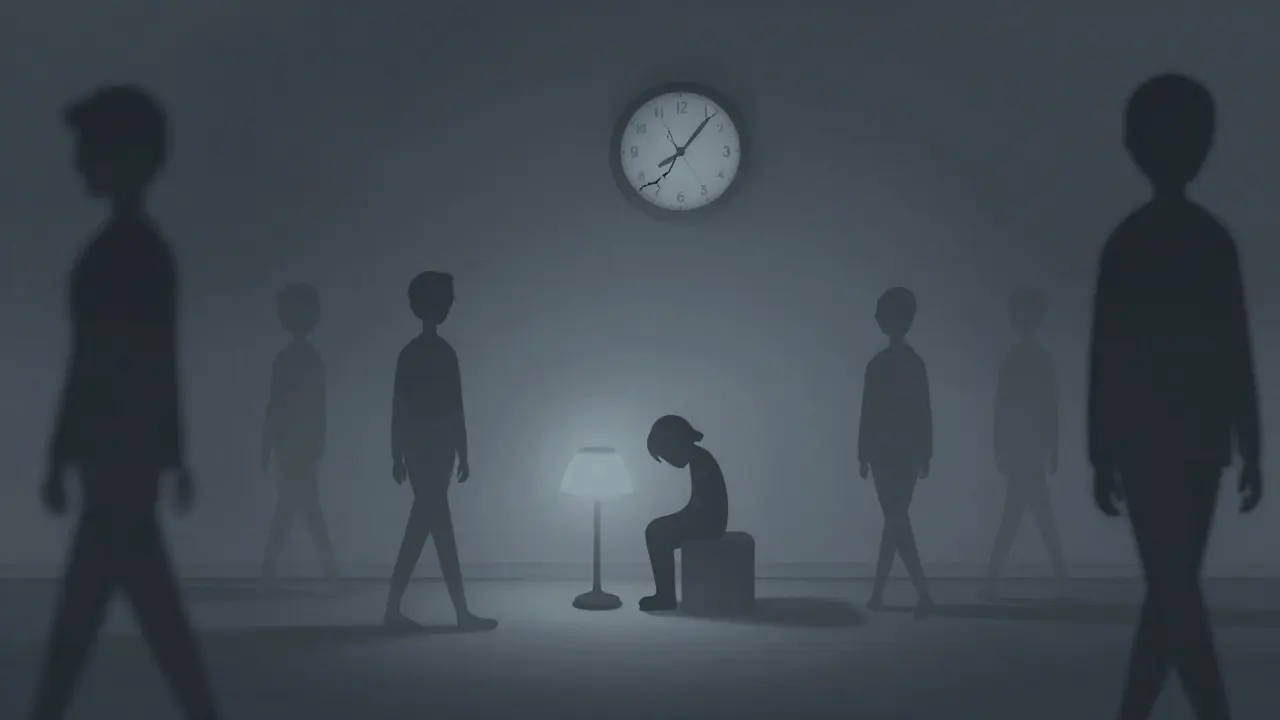
Depression isn’t sadness. It’s emptiness. It’s a constant, heavy fog that doesn’t lift, no matter what you do. You don’t miss the person you lost-you miss the feeling of being alive. You wake up and feel worthless before your feet even hit the floor. You stop calling friends because you’re sure they don’t want to hear from you. You eat less or more, but it doesn’t matter. Nothing tastes good. Nothing feels real.
Depression doesn’t care about your loss. It doesn’t care about your memories. It just says: nothing matters. And that’s the biggest difference. In grief, your pain is tied to someone specific. In depression, your pain is tied to yourself.
The DSM-5 says you have Major Depressive Disorder if you have five or more of these symptoms for at least two weeks: low mood, loss of pleasure in everything, weight changes, sleep problems, fatigue, feelings of guilt or worthlessness, trouble focusing, and thoughts of death. It doesn’t matter if your spouse died last week. If you’re feeling this way, it’s not grief-it’s depression.
The numbers don’t lie
Studies show that after a loss, about 1 in 10 people develop Prolonged Grief Disorder. About 1 in 7 develop depression. Only 1 in 40 end up with both. That means most people who are grieving aren’t depressed-and most people who are depressed aren’t grieving.
A 2016 study tracked nearly 400 people after losing a loved one. At 12 months, 9.8% had Prolonged Grief Disorder. 14.3% had depression. Only 2.6% had both. That’s not random. It’s a pattern.
And here’s what really matters: in a study of 217 people, 87% of those with prolonged grief said their main feeling was longing for the person. Only 12% of those with depression felt that way. Meanwhile, 93% of depressed people said they felt worthless. Only 18% of grieving people did.
That’s not a coincidence. It’s a diagnostic clue.
How people describe it
On Reddit, one man wrote: “After my wife died, I had days where I could smile at memories of her, then crash into sadness-but I always had those good moments. With depression after my layoff last year, it was just constant emptiness with no silver linings.”
Another person on a mental health forum said: “When my mom died, I felt sad but also grateful for our time together. When my depression hit last winter, I felt worthless with no connection to positive memories at all.”
These aren’t just stories. They’re maps. They show the difference between a heart that’s broken but still beating-and a mind that’s shut down.
How doctors tell them apart
Clinicians don’t guess. They use tools. The UCLA Grief Reaction Scale is a 37-question interview that helps separate grief from depression with 85% accuracy. It asks things like: “Do you feel a strong yearning for the person?” “Do you avoid places or things that remind you of them?” “Do you feel like life has no meaning without them?”
It’s not about how long you’ve been sad. It’s about what you’re sad about.
And the treatment? Totally different.
How to heal from grief
If you’re dealing with prolonged grief, you don’t need antidepressants. You need to talk-specifically, about the person you lost. Complicated Grief Treatment (CGT), developed by Columbia University, is a 16-week therapy program designed for this. It helps you reconnect with memories without being crushed by them. You learn to carry the loss without letting it take over your life.
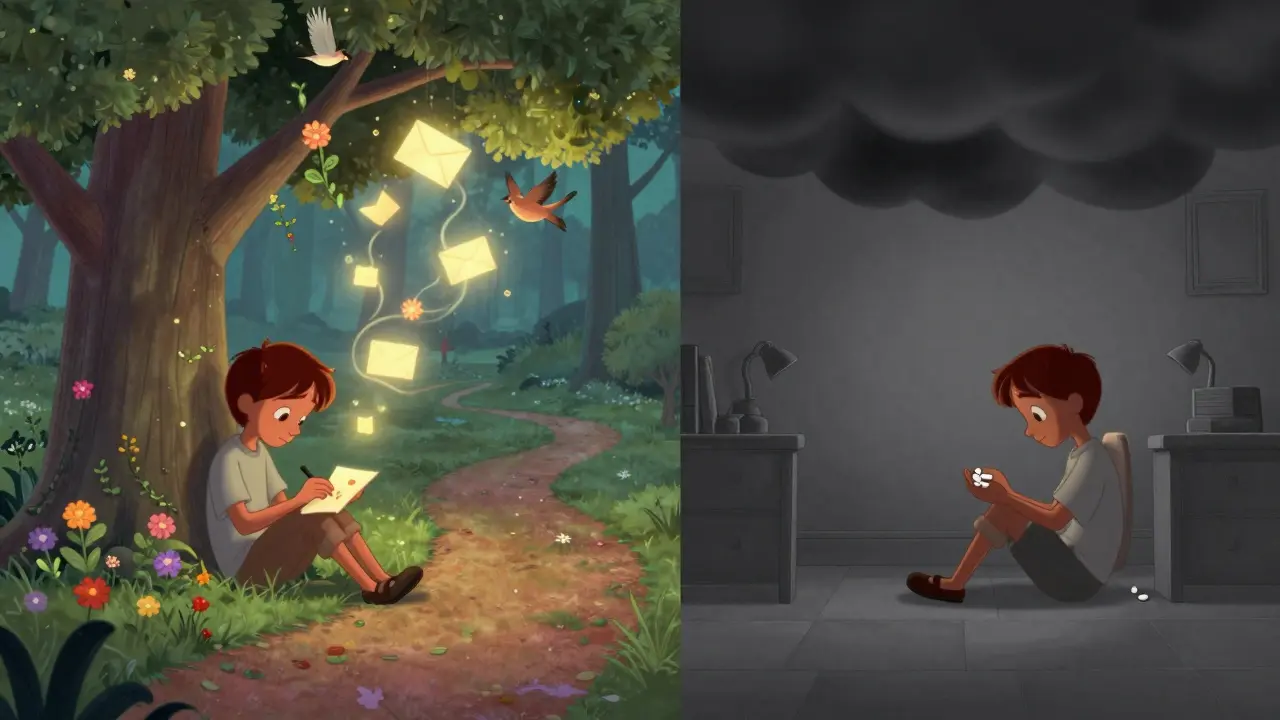
One woman in the program told her therapist: “I kept thinking if I didn’t cry, she’d be forgotten.” Her therapist helped her write letters to her daughter every week. Not to say goodbye. To say: “I still see you. I still love you.” After 16 weeks, her symptoms dropped by 70%.
That’s the goal: not to move on, but to move forward-with them still in your heart.
How to heal from depression
If you’re depressed-even after a loss-you need a different path. Antidepressants like sertraline or fluoxetine, combined with Cognitive Behavioral Therapy (CBT), work best. The STAR*D trial showed that over half of depressed patients improved after 12 weeks of this combo.
But here’s the catch: if you’re grieving and you take antidepressants too early, you might suppress your natural healing process. The National Institute for Health and Care Excellence (NICE) says: don’t prescribe antidepressants for normal grief. 73% of people recover within six months without them.
What they need is time. Support. Space to feel. Not pills to numb it.
What to do if you’re unsure
If you’re not sure whether you’re grieving or depressed, ask yourself:
- Do I still feel joy when I remember them?
- Do I feel worthless, or do I just miss them?
- Do I want to be around people, or do I want to disappear?
- Is my pain tied to a person-or to a feeling that nothing matters?
If you’re stuck for more than six months and you’re not getting better-even with support-it’s time to see a professional. Not just any therapist. One who knows the difference between grief and depression.
There are certified grief counselors everywhere now. The Association for Death Education and Counseling has over 4,200 trained professionals in the U.S. alone. Look for them. Ask your doctor. Call a helpline. Don’t wait.
What helps-no matter what you’re feeling
Whether it’s grief or depression, some things help both:
- Move your body-even a short walk outside
- Keep a routine, even if it’s small: wake up, eat, shower
- Find one person you can say, “I’m not okay,” to
- Write down one good thing from your day, no matter how small
And if you’re supporting someone who’s grieving or depressed? Don’t say, “I know how you feel.” Say, “I’m here.” Sit with them. Don’t fix it. Just be there.
Because healing doesn’t come from being told to cheer up. It comes from being seen.
What’s changing right now
Technology is helping. A 2023 study showed that AI can now analyze how someone speaks-tone, pauses, word choice-and tell grief from depression with nearly 90% accuracy. That’s huge. It means we might soon have tools that catch this early.
Apps like GriefShare are also making a difference. In a trial, people using it for 12 weeks saw a 42% drop in symptoms. But depression apps? They barely helped people with prolonged grief. That tells you something: the right tool for the right problem matters.
The NIH spent $47 million in 2023 just to study grief. That’s a 28% jump from 2020. We’re finally starting to treat grief like what it is: a real, complex, human experience-not a phase to get through.
And that’s the most important thing to remember: you’re not broken. You’re not weak. You’re not failing. You’re responding to loss in the only way a human can.
Whether you’re grieving or depressed, your pain is valid. And healing? It’s possible. But only if you know what you’re fighting.
RAJAT KD
January 10, 2026 AT 12:59Grief isn't depression. Stop pathologizing sadness. You don't need a DSM label to feel human.
tali murah
January 12, 2026 AT 01:26Oh please. Another article pretending grief is some noble, poetic state while depression is just ‘weakness.’ Tell that to the people on SSRIs who are still alive because they didn’t ‘sit with their pain.’
Micheal Murdoch
January 12, 2026 AT 22:33I lost my brother in 2019. For eight months, I cried every morning. Then I started laughing again-over dumb memes, over burnt toast. That didn’t mean I was ‘better.’ It meant I was learning how to carry him. The article’s right: grief isn’t linear. It’s not a problem to solve. It’s a relationship that changes shape. And yeah, if you’re numb for a year, avoiding everything, feeling worthless all the time-that’s not grief. That’s depression. But don’t mistake the difference for a moral judgment. We’re all just trying to stay alive.
Jenci Spradlin
January 13, 2026 AT 14:13my therapist said if i’m crying over a song but still making coffee in the morning, it’s grief. if i’m staring at the wall for 3 days and can’t remember my own name, it’s depression. simple as that.
Aron Veldhuizen
January 14, 2026 AT 09:13Of course the DSM says grief is ‘normal’-it’s designed by academics who’ve never held a dead child. Grief is a neurological shutdown masked as emotion. Depression is the same thing, just without the socially acceptable narrative. You’re not ‘carrying’ anyone-you’re stuck in a loop of trauma replay. And no, therapy won’t fix it. Only time, or meds, or both. Stop romanticizing suffering.
Gregory Clayton
January 15, 2026 AT 04:22USA is the only country that turns pain into a diagnostic category. In India, they just say ‘be strong.’ In Japan, they sit quietly. Here? We need 37-question scales and AI to tell us when to cry. Pathetic.
Catherine Scutt
January 16, 2026 AT 17:41People who say ‘grief is natural’ are the same ones who tell rape victims to ‘just move on.’ If your grief lasts longer than 6 months, you’re broken. Get help. Don’t cling to pain like it’s a virtue.
Jacob Paterson
January 17, 2026 AT 03:41You think depression is ‘emptiness’? Nah. It’s rage. Rage at yourself for surviving. Rage at the world for not stopping it. Rage at the person who left because they were weak enough to die. You call that grief? That’s guilt with a side of self-hatred. And no, you don’t need ‘letters to your daughter.’ You need to face what you did-or didn’t do.
Johanna Baxter
January 17, 2026 AT 07:52I lost my husband and my job in the same month. I didn’t cry for 11 days. Then I screamed at a toddler in Target because he dropped his ice cream. That’s grief? Or depression? Or just me being a monster? Nobody told me I could be both.
Jeffrey Hu
January 17, 2026 AT 23:13Let’s be real: 90% of people who read this article are just looking for validation that their sadness is ‘real’ and not ‘clinical.’ The DSM doesn’t care. Your pain does. Stop outsourcing your healing to professionals who charge $200/hour to say ‘it’s okay.’ You’re not broken. You’re just tired.
Matthew Maxwell
January 18, 2026 AT 04:25It’s irresponsible to suggest antidepressants are inappropriate for grief. The NIH spent $47 million to study this? That’s a waste. If someone can’t function, they need medication. Period. Romanticizing suffering is a luxury of the mentally healthy.
Jerian Lewis
January 19, 2026 AT 22:26My mom died. I didn’t cry for six months. Then I started talking to her in the mirror. I didn’t need therapy. I needed silence. And time. Not a 16-week program. Just… quiet.
Kiruthiga Udayakumar
January 20, 2026 AT 08:54In India, we say ‘dil toot gaya’-heart is broken. We don’t call it a disorder. We cook for each other. We sit together. We don’t fix. We just stay. Maybe the West is the problem-not the grief.
Patty Walters
January 22, 2026 AT 06:28my dad died last year. i started walking 10 mins a day. just outside. no phone. just trees. after 3 weeks, i noticed the birds were louder. i didn’t realize how quiet i’d been. small things. they matter.
Phil Kemling
January 22, 2026 AT 12:58If grief is love with nowhere to go, then depression is love that learned to hate itself. The difference isn’t in the brain-it’s in the story we tell. One says: ‘I miss them.’ The other says: ‘I don’t deserve to miss them.’ The first heals. The second suffocates.