
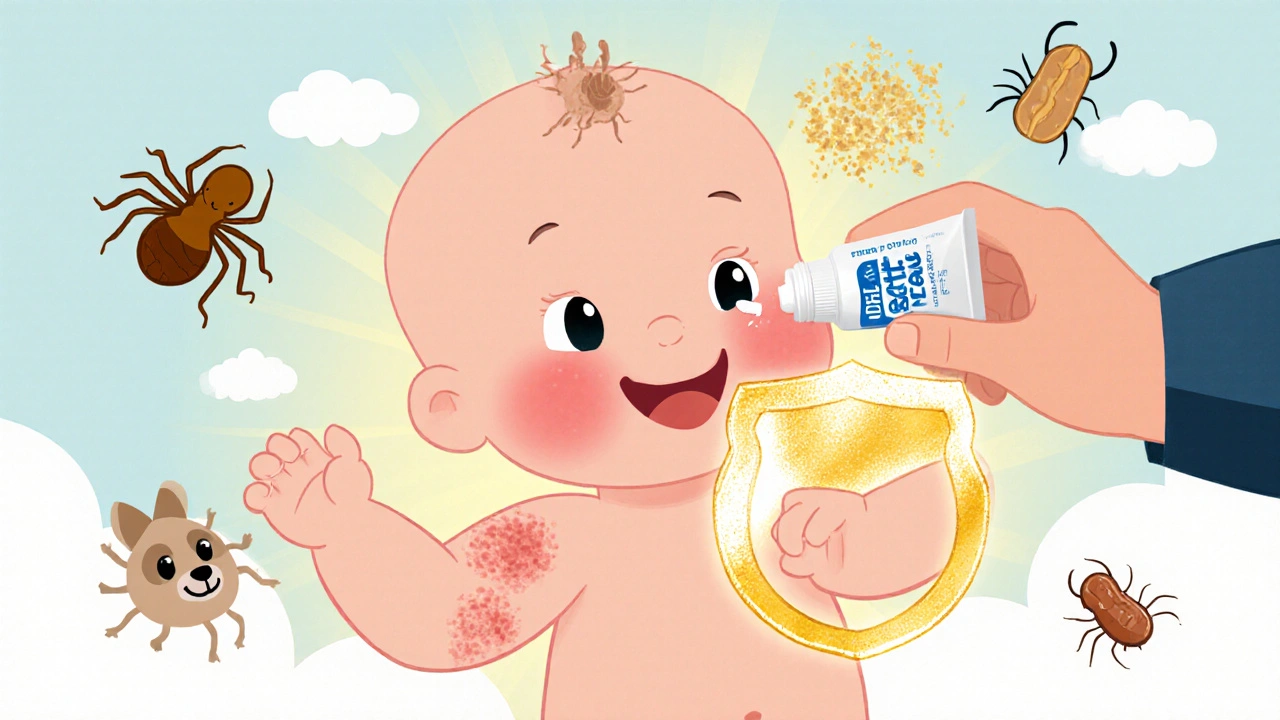
When your baby’s skin is dry, red, and itchy, it’s easy to think it’s just a rash. But for many families, that eczema is the first sign of something bigger - a chain reaction called the atopic march. This isn’t just about dry skin. It’s about how a broken skin barrier can set off a chain of allergic diseases: food allergies, asthma, hay fever - sometimes all of them. The good news? We now know more than ever about how to stop it before it starts.
What Is the Atopic March, Really?
The atopic march used to be taught like a straight line: eczema first, then food allergies, then asthma, then hay fever. But that’s outdated. New research shows it’s not a guaranteed path - it’s a risk pattern. Only about 3.1% of children with eczema follow the classic progression. That means most kids with eczema won’t develop asthma or peanut allergies. But for the 25% who do, the risk is real.
Here’s what actually happens: babies with eczema often have a genetic flaw - most commonly a mutation in the filaggrin gene. This protein is like the mortar between the bricks of your skin. When it’s weak, tiny cracks form. Allergens from dust, pet dander, or even peanut residue on your hands can slip through those cracks. The immune system, still learning how to work, mistakes these harmless substances for invaders. It reacts. And once sensitized, the body keeps reacting - sometimes to food, sometimes to pollen, sometimes to air pollution.
It’s not just skin. The same genes that mess up the skin barrier also affect the lungs and gut. Polymorphisms in genes like TSLP and IL-33 make the immune system more likely to overreact across multiple organs. That’s why kids with severe eczema are 3 to 4 times more likely to develop multiple allergic conditions. But here’s the key: it’s not the eczema itself that causes asthma. It’s the combination of broken skin, immune misfires, and genetics.
Why Skin Barrier Care Isn’t Just for Itching
For years, we treated eczema as a symptom to manage - creams for flare-ups, antihistamines for itch. Now we know: protecting the skin barrier might prevent allergies entirely. Think of it like putting a lock on a door before someone tries to break in.
Studies show that babies born with dry, cracked skin are at higher risk of developing food allergies. The LEAP study proved this. Infants with severe eczema who were given peanut protein by mouth before age 1 were 86% less likely to develop peanut allergy. Why? Because oral exposure teaches the immune system to tolerate the allergen. But if peanut dust lands on cracked skin first? That teaches it to fear it.
This is called the dual-allergen exposure hypothesis. Skin exposure = sensitization. Oral exposure = tolerance.
That’s why daily moisturizing isn’t just comfort - it’s prevention. The PreventADALL trial found that applying emollients (fragrance-free moisturizers) from birth reduced eczema incidence by 20-30%. And fewer cases of eczema mean fewer chances for the allergic march to begin.
You don’t need fancy products. Simple, thick ointments like petroleum jelly or ceramide-rich creams work best. Apply them at least twice a day, right after bathing while skin is still damp. Skip scented lotions, alcohol-based wipes, and bubble baths. They strip what little barrier your baby has left.
Is It Really All About Genetics?
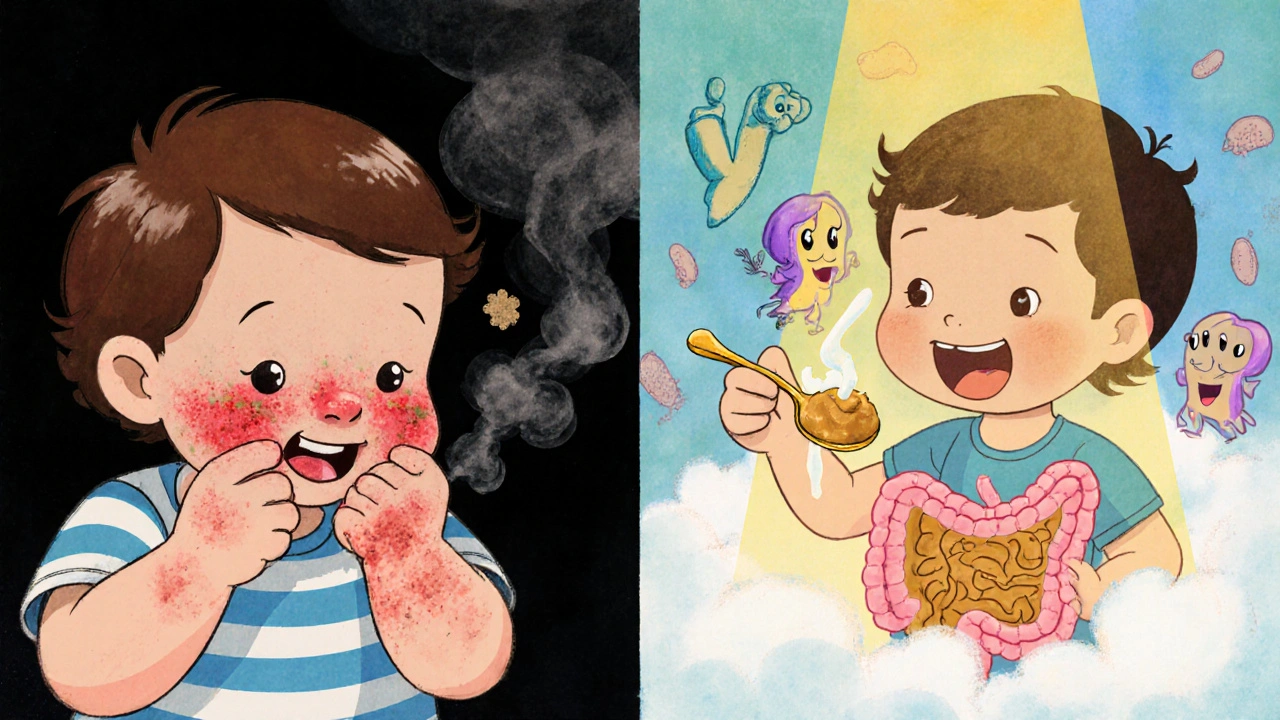
No. Genes load the gun. Environment pulls the trigger.
Filaggrin mutations are common - about 1 in 5 people of European descent carry at least one copy. But not everyone with the mutation gets eczema. Why? Because environmental factors matter. Dry air, harsh soaps, low humidity, even the type of detergent you use can make cracks worse.
And it’s not just skin. The gut plays a role too. Babies who develop allergic sensitization often have gut microbiomes with less ability to produce butyrate - a short-chain fatty acid that calms inflammation. Studies link this to lower levels of beneficial bacteria like Faecalibacterium. That’s why some researchers are now testing probiotics and dietary changes during pregnancy and infancy to see if they can reduce risk.
But don’t rush to buy probiotic drops. The science isn’t settled yet. What we do know: breastfeeding (when possible), avoiding unnecessary antibiotics, and letting babies play in dirt (yes, dirt) helps build a stronger immune system. Over-sanitizing might do more harm than good.
What Does ‘Severe Eczema’ Really Mean?
Not all eczema is the same. Mild eczema might be a few dry patches on the cheeks. Severe eczema means constant itching, oozing, sleepless nights, and skin thickened from scratching. It’s this severity that predicts progression.
Children with severe eczema have a 60% higher chance of developing asthma compared to those with mild cases. And if they’re also sensitized to multiple allergens - like egg, milk, and dust mites - their risk skyrockets. That’s why doctors now focus on identifying high-risk kids early: those with early-onset, persistent, or widespread eczema, especially with a family history of asthma or allergies.
It’s not about scaring parents. It’s about giving them tools. If your child has severe eczema, talk to your doctor about:
- Early introduction of allergenic foods (peanut, egg, dairy) around 4-6 months, under guidance
- Using fragrance-free moisturizers daily
- Watching for signs of food allergy (hives, vomiting, swelling after eating)
- Monitoring for wheezing or coughing during colds - it could be early asthma
What You Can Do Today
You don’t need to wait for a diagnosis or a referral. Start with three simple steps:
- Moisturize daily. Use ointments, not lotions. Apply right after bath time. Do it even when the skin looks fine.
- Introduce allergenic foods early. If your child has severe eczema, talk to your pediatrician about introducing peanut butter (thinned with water or breastmilk) and cooked egg around 6 months. Don’t wait until they’re older.
- Avoid triggers. Wool clothing, harsh detergents, hot baths, and dry air all make eczema worse. Use gentle, fragrance-free products. Run a humidifier in winter.
And if your child already has food allergies? Don’t avoid the food. Work with an allergist. Oral immunotherapy (OIT) is now an option for many kids, helping them build tolerance slowly and safely.
The Bigger Picture: It’s Not a March - It’s a Web
The term ‘atopic march’ is still useful. But we’re learning it’s not a one-way street. Many kids develop asthma and eczema at the same time. Others get hay fever before eczema. Some never develop anything beyond mild skin issues.
What matters most is recognizing patterns - not predicting doom. If your child has eczema, especially if it’s severe or starts early, you’re not just treating a rash. You’re helping their immune system learn the right way to respond. That’s why skin care isn’t cosmetic. It’s medical. It’s preventive. It’s powerful.
And if you’re feeling overwhelmed? You’re not alone. The goal isn’t perfection. It’s progress. One moisturized morning. One spoonful of peanut butter. One less scratchy night. Those small steps add up.
Can eczema cause food allergies?
Eczema itself doesn’t cause food allergies, but a broken skin barrier from eczema lets allergens like peanut or egg enter the body through the skin. This can trigger the immune system to become sensitized - meaning it starts reacting to those foods. That’s why early skin care and early oral exposure to allergens are so important.
Is the atopic march inevitable if my child has eczema?
No. Only about 25% of children with eczema go on to develop asthma, and just 3.1% follow the full classic progression. Most kids with eczema won’t develop other allergies. But if eczema is severe, early-onset, or runs in the family, the risk increases - which is why early intervention matters.
What moisturizer should I use for my baby’s eczema?
Use thick ointments like petroleum jelly or ceramide-based creams. Avoid lotions with alcohol, fragrance, or dyes. Ointments seal in moisture better than lotions. Apply twice daily, especially after bathing while skin is still damp. Brands like CeraVe, Eucerin, and Vanicream are commonly recommended.
When should I introduce peanut to my baby with eczema?
If your baby has severe eczema, introduce peanut-containing foods between 4 and 6 months, after other solid foods have been tolerated. Talk to your pediatrician or allergist first - they may recommend allergy testing before starting. For mild to moderate eczema, you can introduce peanut around 6 months at home. Always use smooth peanut butter thinned with water or breastmilk, never whole peanuts.
Does breastfeeding prevent the atopic march?
Breastfeeding doesn’t guarantee protection, but it supports immune development. It provides beneficial bacteria and antibodies that help train the baby’s immune system. While it’s not a magic shield, it’s one piece of a larger strategy - along with skin care, early allergen introduction, and avoiding unnecessary antibiotics.
Can I reverse the atopic march once it’s started?
You can’t undo past sensitization, but you can change the course. Early, aggressive treatment of eczema reduces the chance of asthma developing. Oral immunotherapy can help children outgrow food allergies. Controlling inflammation and maintaining skin barrier health can slow or stop progression - even after symptoms appear.
tushar makwana
December 1, 2025 AT 00:19my cousin's kid had eczema since birth and we thought it was just dry skin till she started reacting to eggs. now we moisturize like it's a religion. no more lotions, just plain vaseline twice a day. it's not fancy but it works.
Richard Thomas
December 2, 2025 AT 00:49While the empirical data presented in this article regarding the atopic march is largely corroborated by longitudinal cohort studies conducted by the National Institute of Allergy and Infectious Diseases, it is imperative to acknowledge the methodological limitations inherent in self-reported parental compliance with emollient regimens. The PreventADALL trial, while statistically significant, employed a non-blinded design which may introduce observer bias, particularly in the context of cultural variations in skincare practices across socioeconomic strata.
Mary Kate Powers
December 4, 2025 AT 00:10This is such a relief to read. I was terrified my daughter’s eczema meant she’d definitely get asthma. Knowing it’s not a guarantee and that daily moisturizing can actually change the path? That gives me hope. I’ve been using CeraVe and it’s made a huge difference. Keep doing the small things - they matter more than you think.
Sara Shumaker
December 5, 2025 AT 13:52I’ve been thinking a lot about how we’ve been taught to fear dirt and germs, but maybe the real enemy is overprotection. Our immune systems didn’t evolve to live in sterile bubbles. Letting kids touch grass, play with dogs, even lick a dropped cookie - these aren’t risks, they’re training. The skin barrier is a gatekeeper, not a prison wall. Maybe healing isn’t about sealing everything off, but teaching the body what’s safe to let in.
Scott Collard
December 7, 2025 AT 02:41Stop using petroleum jelly. It clogs pores and traps heat. Use ceramide creams only. And don’t introduce peanut before 6 months unless tested. You’re risking anaphylaxis.
Steven Howell
December 8, 2025 AT 13:31The dual-allergen exposure hypothesis is a compelling framework, yet it must be contextualized within the broader epidemiological landscape of urbanization and microbiome depletion. The correlation between early emollient use and reduced eczema incidence is robust, but causality remains partially obscured by confounding variables such as maternal atopy, gestational antibiotic exposure, and infant feeding patterns.
Robert Bashaw
December 10, 2025 AT 10:39My kid’s eczema was so bad she cried during bath time. We tried everything - steroids, bleach baths, fancy oils, even acupuncture (yes, really). Then we started slathering on plain Vaseline like it was magic paint. Two weeks later, she slept through the night. No more scratching. No more guilt. Just grease. Sometimes the simplest thing is the most powerful. I’m not a doctor, but I’m a mom. And this worked.
jamie sigler
December 12, 2025 AT 10:30Great article. Now I feel guilty for not moisturizing enough. Thanks for making me anxious about my baby’s future allergies too. I’m sure the peanut butter will be fine. Probably.
Andrew Keh
December 14, 2025 AT 00:03I appreciate the practical advice. My son had mild eczema and we started moisturizing daily at 3 months. He’s 2 now and has no food allergies. It’s not a guarantee, but it’s the best thing we did. Simple, consistent care makes a difference.
Peter Lubem Ause
December 14, 2025 AT 17:12As a father from Nigeria, I’ve seen how traditional practices - like using shea butter and avoiding harsh soaps - align with modern science. My daughter had eczema at 4 months. We used shea butter twice a day, kept her cool, and introduced peanut paste at 6 months after consulting our pediatrician. She’s 3 now, no asthma, no allergies. It’s not magic - it’s consistency. And yes, letting her play in the dirt helped too. Culture and science can walk hand in hand.
linda wood
December 16, 2025 AT 06:01Oh wow so now I’m supposed to smear grease on my baby’s face and feed him peanut butter before he can even sit up? And if he dies, it’s my fault? 😏
LINDA PUSPITASARI
December 16, 2025 AT 16:16Just started using CeraVe on my 5mo old and OMG it’s a game changer 🙌 no more red cheeks at night and she actually sleeps! Also introduced peanut butter thinned with breastmilk last week - no reaction yet 😍 keep it simple, keep it consistent, and don’t panic. You got this 💪
Sullivan Lauer
December 18, 2025 AT 12:15Let me tell you what happened when I ignored the advice. My daughter had eczema at 2 months - mild, just a few patches. I thought, ‘It’ll clear up.’ I didn’t moisturize daily. I waited until she was a year to introduce peanut. She developed a full-blown peanut allergy by 14 months. Emergency room. Epipen. Sleepless nights. I thought I was being careful. I was just slow. The skin barrier isn’t just skin - it’s the first line of defense. Treat it like your baby’s armor. Not an option. A requirement. Don’t wait for the worst to happen. Start today. Even if it’s just one layer of ointment. One spoonful of peanut. One less scratch. That’s how you fight the march - not with fear, but with tiny, stubborn acts of love.