
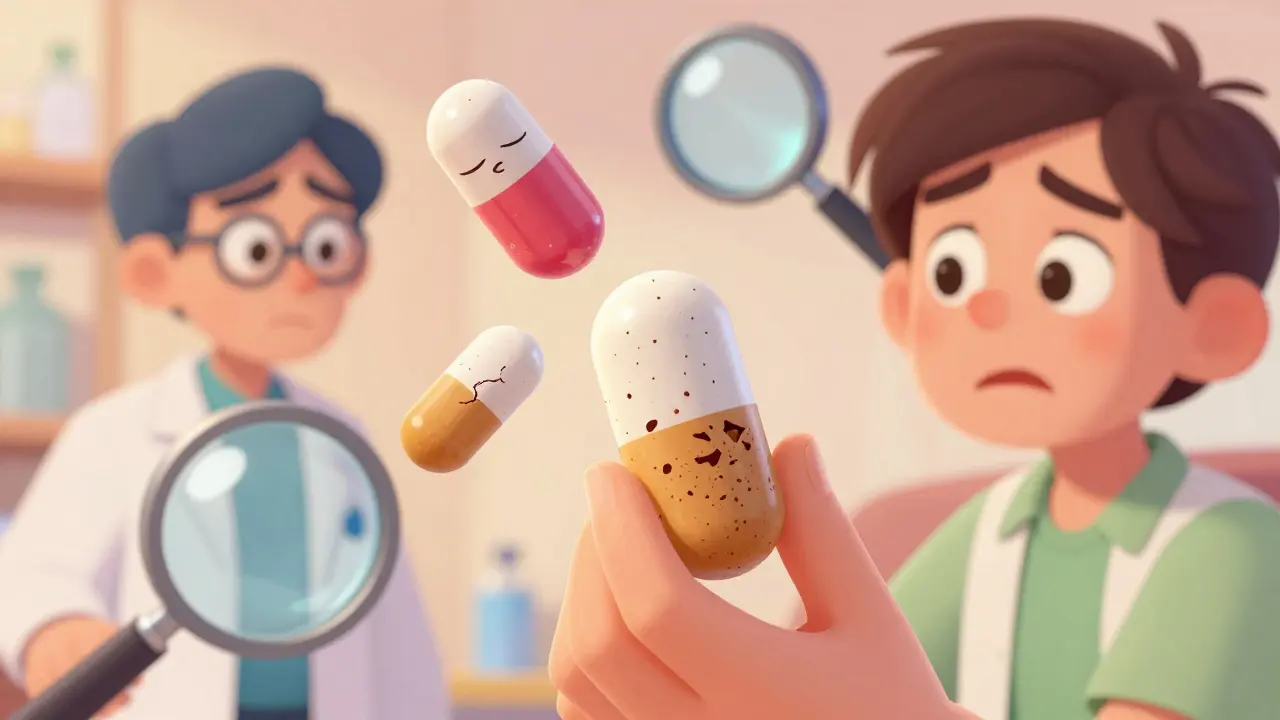
When you pick up a generic pill at the pharmacy, you expect it to work just like the brand-name version. But behind that simple tablet or capsule, there’s a complex manufacturing process that often fails-sometimes in ways that put your health at risk. Between 2019 and 2023, generic drugs had 3.2 times more quality defects than their branded counterparts, according to FDA inspection data. These aren’t rare glitches. They’re systemic problems tied to cost-cutting, outdated equipment, and weak oversight.
What Exactly Are These Defects?
Generic drug defects fall into a few clear categories, each with real-world consequences. The most common ones you won’t see on the label but might feel in your body:- Capping: The top or bottom of a tablet splits off during handling or swallowing. This happens when compression force exceeds 15 kN and moisture levels drop below 2% in hydrophobic formulations. A capping tablet doesn’t deliver the full dose-meaning you might get 70% of what you need.
- Lamination: Layers peel apart inside the tablet. This occurs at turret speeds above 40 rotations per minute with poor pre-compression. It’s especially dangerous in extended-release pills, where the coating controls how fast the drug enters your bloodstream.
- Weight variation: Tablets vary too much in weight. The USP <905> standard allows only ±5% deviation. But when granule flow rates drop below 0.5 g/s, 12.7% of batches fail. One pill might have 10 mg of active ingredient; the next, 15 mg. That’s a 50% dose difference.
- Punch sticking: The drug material clings to the machine’s metal punch heads, causing uneven shapes and incomplete tablets. This spikes when active ingredients melt below 120°C and moisture hits 4% or higher during long runs.
- Mottling: Uneven coloring. Looks bad, yes-but it often signals poor mixing of ingredients. In some cases, it means the active drug isn’t evenly distributed. One pill could be strong, the next nearly inert.
- Particulate contamination: Tiny particles floating in injectables. These can cause inflammation, blockages, or even strokes. Sterile injectables have an 8.7% defect rate, mostly from this issue.
These aren’t theoretical. Pharmacists report patients bringing back blister packs with crumbling metformin ER tablets or levothyroxine pills that look discolored. In 2023, the FDA logged 1,842 adverse event reports tied directly to visible defects in generics-327 of them involved chipping, cracking, or discoloration.
Why Do These Problems Keep Happening?
It’s not about incompetence. It’s about economics.Generic drugs make up 90% of prescriptions in the U.S. but only 23% of total drug spending. That means manufacturers are squeezed to produce pills cheaper than ever. While branded companies spend 15-18% of production costs on quality control, generics average just 8-10%. That gap shows up in inspections: 57% of generic manufacturing plants failed FDA checks in 2023, compared to 28% for branded facilities.
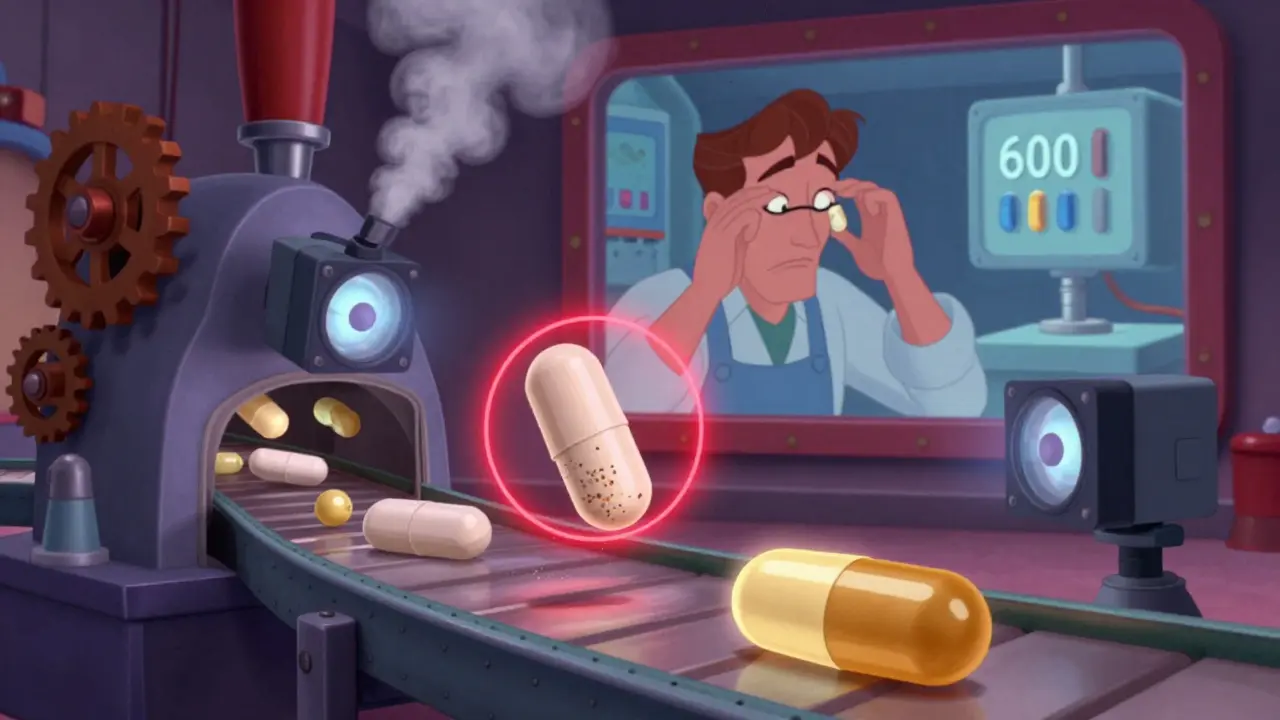
Many factories still use machinery from the 1980s. Modern tablet presses have real-time force sensors, automated visual inspection, and moisture control systems. But older presses lack these. One facility might run 1,200 tablets per minute with human inspectors checking only 1 in 100-leading to error rates as high as 30%. Automated systems cut that to under 2%.
Shared facilities make things worse. The same line that makes your blood pressure pill might have just made an antibiotic. Cross-contamination is a real threat. And with price pressure so intense, companies delay upgrades. The Generic Pharmaceutical Association estimates it would take $28.7 billion to bring all U.S. generic plants up to modern standards. They’re spending $1.2 billion a year.
Who’s Affected-and How?
It’s not just patients. Pharmacists are on the front lines.A 2023 survey of 1,247 U.S. pharmacists found that 68% had encountered a quality issue with a generic drug in the past year. Forty-two percent said patients complained about tablets crumbling, breaking, or looking odd. Twenty-nine percent reported patients saying the generic didn’t work the same way as before-even when the manufacturer stayed the same.
For people on narrow-therapeutic-index drugs-like levothyroxine, warfarin, or seizure meds-small dose changes can be dangerous. A 10% drop in levothyroxine can trigger hypothyroidism. A 10% increase can cause heart palpitations or bone loss. Yet bioequivalence failures in generics rose to 7.3% between 2015 and 2020, according to Harvard researchers. And in many cases, those failures weren’t due to the formula-they were due to how it was made.
Hospitals have noticed. In 2023, 17.3% of requests to switch a patient from brand to generic included quality concerns. Nearly 10% of those requests were denied outright because the hospital couldn’t trust the generic batch.
What’s Being Done to Fix It?
Change is slow, but it’s happening.The FDA’s 2022 Quality by Design (QbD) guidelines require manufacturers to map out the entire production process and define safe operating ranges for every variable. That means knowing exactly how moisture, temperature, and pressure affect each pill. It’s not optional anymore.
Some companies are upgrading. The FDA’s Emerging Technology Program has helped 47 generic manufacturers switch to continuous manufacturing-where ingredients flow through a single, sealed system instead of being mixed in batches. This cuts defect rates by 65%. Sandoz and Dr. Reddy’s are using AI-powered cameras to scan tablets at 600 per minute. These systems spot defects as small as 0.1 mm-far better than human eyes.
Training is improving too. Staff now get 40+ hours of GMP training annually, with requalification tests showing over 85% proficiency. Real-time monitoring of compression forces is now standard in better plants-keeping variation within ±10% of target.
The 2024 Drug Supply Chain Security Act is forcing better tracking. If a batch of pills turns out to be contaminated, you can now trace it back to the exact machine, shift, and raw material lot. That’s cutting down on fake or mixed products.
What You Can Do
You can’t control how your generic drug is made. But you can protect yourself:- Check your pills. If they look different-color, shape, markings-ask your pharmacist. Don’t assume it’s just a new batch.
- For critical drugs like thyroid meds, blood thinners, or epilepsy pills, ask if a brand-name version is medically necessary. Sometimes it’s worth the extra cost.
- Report bad pills. Use the FDA’s MedWatch system. One report might seem small, but if 50 people report the same batch, the FDA investigates.
- Know your manufacturer. Some generic makers have much better track records. Teva had only 0.8% batch rejection in 2023. Smaller companies averaged 3.2%.
There’s no magic fix. But the data shows this: quality isn’t a luxury in generics. It’s the only thing standing between a safe dose and a dangerous one. The system is broken-not because of bad people, but because of bad incentives. Until manufacturers are paid enough to make quality drugs, the defects will keep coming.
Frequently Asked Questions
Are generic drugs less effective than brand-name drugs?
Not by design. Generic drugs must meet the same bioequivalence standards as brand-name drugs-meaning they deliver the same amount of active ingredient into your bloodstream. But manufacturing defects can cause batches to fall short. A 2021 study found that 7.3% of generic applications failed bioequivalence tests-not because of the formula, but because of inconsistent production. So while generics are supposed to be just as effective, defective ones aren’t.
Can I tell if my generic drug has a quality defect?
Yes, sometimes. Look for visible signs: tablets that crumble easily, have uneven coloring (mottling), split apart (capping), or have visible particles. If your pill looks different from previous refills-even if the name is the same-ask your pharmacist. Also, if you notice a sudden change in how the drug works-like your blood pressure fluctuating or your thyroid symptoms returning-it could be a sign of inconsistent dosing from a faulty batch.
Why do some generic manufacturers have fewer defects than others?
It comes down to investment. Companies like Teva and Sandoz spend more on modern equipment, automated inspection, and staff training. Smaller manufacturers, especially those under heavy price pressure, cut corners on maintenance, quality control, and upgrades. In 2023, Teva had a 0.8% batch rejection rate. Smaller competitors averaged 3.2%. That’s a fourfold difference.
Are injectable generics more dangerous than pills?
Yes, in terms of risk. Injectable generics have an 8.7% defect rate, mostly from particulate contamination. A single particle in an IV bag can cause a stroke or severe inflammation. Unlike pills, you can’t see or feel what’s in the syringe. That’s why sterile injectables are the most common cause of drug shortages-only a handful of plants make them, and if one fails an inspection, supply vanishes.
What should I do if I suspect a defective generic drug?
Stop taking it. Contact your pharmacist or doctor immediately. Report the issue to the FDA through MedWatch (online or by phone). Include the drug name, lot number, and a description of the defect. If multiple people report the same batch, the FDA can issue a recall. Your report could prevent harm to others.
Jason Yan
January 15, 2026 AT 07:20It's wild how we treat medicine like it's a commodity you can just squeeze for profit. We don't cut corners on our smartphones or our cars, but when it comes to something that keeps us alive, we shrug and say 'eh, it's generic.' The fact that a tablet can crumble in your hand and you're expected to just swallow it like it's a candy is terrifying. I've had metformin that looked like it was made from crushed chalk-no joke. And no one bats an eye. We're literally gambling with our biology because someone decided that $0.02 per pill is the new standard. It's not just about cost-it's about respect. For the patient. For the science. For the people who take these pills every day just to survive.
shiv singh
January 17, 2026 AT 01:43INDIA MAKES 80% OF THE WORLD'S GENERIC DRUGS AND YOU THINK THIS IS A PROBLEM? LOL. YOU WANT QUALITY? PAY FOR BRANDS. STOP BEING LAZY AND EXPECTING CHEAP MEDS TO BE PERFECT. OUR FACTORIES FEED THE WORLD AND YOU COMPLAIN ABOUT A FEW CRUMBLY PILLS? GET A LIFE.
Sarah Triphahn
January 18, 2026 AT 16:24Let’s be real-this isn’t about manufacturing. It’s about capitalism. The system is designed to fail you. They don’t want you healthy. They want you dependent. A 10% dose variation? That’s not a defect-it’s a feature. Keeps you coming back. Keeps you on the treadmill. The FDA? They’re just the PR department for Big Pharma. You think they’re going to shut down a factory that makes 100 million pills a day because someone’s thyroid is acting up? Please. This is all theater. The real question is: why are you surprised?
Vicky Zhang
January 19, 2026 AT 21:24I just want to say-this post made me cry. Not because I’m emotional, but because I’ve been there. My mom’s on levothyroxine and one batch made her heart race like she’d downed three espressos. We called the pharmacy. They said ‘oh, different manufacturer.’ We didn’t know what to do. I spent hours researching, calling doctors, checking lot numbers. I’m so glad someone finally put this out there. If you’re reading this and you’ve had a bad batch-please, speak up. You’re not crazy. Your body is telling you something. And we need to listen.
Henry Sy
January 21, 2026 AT 10:38So you’re telling me the same pill I’ve been taking for 5 years suddenly stopped working because the machine was greasy? That’s not a defect-that’s a horror movie plot. I’m starting to think my anxiety isn’t from work-it’s from the fact that I don’t know if the damn thing in my hand is medicine or a placebo with a logo. I once took a pill that looked like it had been run over by a truck. I swallowed it anyway. That’s the level of trust we have now. We’re all just guessing.
Anna Hunger
January 21, 2026 AT 15:37While the concerns raised in this post are valid and deeply concerning, it is imperative to distinguish between systemic manufacturing deficiencies and individual anecdotal experiences. The FDA’s post-market surveillance mechanisms, including MedWatch and lot-tracing protocols, are designed precisely to address these issues. Moreover, the implementation of Quality by Design principles represents a significant paradigm shift toward proactive quality assurance-not reactive enforcement. To conflate isolated incidents with industry-wide failure risks undermining the credibility of legitimate patient advocacy efforts. Data-driven reform, not fear-based rhetoric, must guide policy.
Robert Way
January 22, 2026 AT 11:28so i just got my generic blood pressure med and the pill is like half the size of last time?? and the writing is faded?? i asked the pharmacist and they said oh thats normal new batch?? i dont think so. i think they just dont care. also why is the bottle smell like old socks??
Allison Deming
January 24, 2026 AT 02:27The notion that cost-cutting in pharmaceutical manufacturing is somehow an acceptable trade-off for accessibility is morally indefensible. To equate affordability with acceptability of substandard products is to devalue human life as a line item on a balance sheet. The fact that patients are being subjected to inconsistent dosing, particulate contamination, and physical tablet failures in a nation with the technological capacity to prevent these failures speaks to a failure of governance, not a failure of industry. We have the tools. We have the knowledge. What we lack is the collective will to prioritize health over profit. This is not a defect in a tablet. This is a defect in our society.
Susie Deer
January 25, 2026 AT 19:56AMERICA IS WEAK. WE LET OTHER COUNTRIES MAKE OUR MEDS AND THEN WE COMPLAIN. IF YOU DON’T LIKE IT THEN BUY THE BRAND NAME OR MOVE TO GERMANY. WE USED TO MAKE THINGS HERE. NOW WE JUST WHINE.
TooAfraid ToSay
January 27, 2026 AT 18:36Wait wait wait. You’re telling me the same drug that’s sold in Nigeria for $0.03 a pill is somehow unsafe in the US? I’ve seen kids in Lagos take these pills with no issues. You people are so paranoid. Maybe your body isn’t used to real medicine. Maybe you need to stop being so sensitive. We don’t have time for your ‘mottling’ and ‘capping’ drama. Just swallow the damn pill.
Dylan Livingston
January 29, 2026 AT 17:04Oh sweet summer child. You think this is about pills? No. This is about the slow, quiet death of trust. We used to believe in science. Now we believe in lot numbers. We used to trust doctors. Now we Google ‘is my generic fake?’ at 2 a.m. We used to think medicine was sacred. Now it’s just another Amazon product with a 3-star review and a 40% chance of dissolving in your mouth. And the worst part? No one’s mad enough to do anything about it. We’ve all just accepted that our bodies are the testing ground for someone else’s quarterly earnings report.
Andrew Freeman
January 30, 2026 AT 18:45generic is just a fancy word for cheap. if you want good pills pay up. no one forced you to buy the $2 version. also the FDA is a joke. they inspect one plant every 10 years. the rest is luck. my cousin took a pill that had a whole other drug in it. turned out it was made on the same line as a blood thinner. no one got sued. just another day in america.