

Every winter, people start wondering: is this just a cold, or is it the flu? It’s easy to mix them up. Both make you feel awful. Both involve coughing, sore throats, and runny noses. But they’re not the same illness - and treating them the same way can make things worse.
What Causes a Cold vs the Flu?
The common cold isn’t one virus. It’s more than 200 different viruses that can trigger it. Rhinoviruses are the biggest culprits, causing 30-50% of cases. Then come coronaviruses (not the kind that cause COVID-19), adenoviruses, and RSV (respiratory syncytial virus). These have been studied since the 1950s at the Common Cold Unit in Salisbury, UK. They’re everywhere - in doorknobs, on phones, in the air when someone sneezes.
The flu? That’s different. It’s caused only by influenza viruses - types A, B, and C. Type A is the one that causes big outbreaks and pandemics. The 1918 Spanish flu killed 50 million people. Even today, flu viruses change every year, which is why you need a new vaccine each season.
Here’s the reality: you’ll get 2-3 colds a year as an adult. The CDC estimates 9-41 million flu cases in the U.S. alone each season. That’s a huge range, but it shows how unpredictable flu seasons can be.
How Do the Symptoms Differ?
People often say, "I had the flu last year - it was just a bad cold." But that’s not accurate. The difference isn’t just in severity. It’s in how fast things happen and what symptoms show up.
Cold symptoms creep in. You wake up with a scratchy throat. By day two, your nose is running. By day three, you’re congested. Fever? Rare in adults - only 15-20% get one, and it’s usually below 100°F. Most colds clear up in 7-10 days. Some hang on for two weeks, but that’s normal.
Flu symptoms hit like a truck. One minute you’re fine. The next, you’re shivering, achy, and exhausted. Fever hits fast - 85% of flu patients have a temperature of 100°F or higher, often spiking to 102-104°F. Headaches? 75% of cases. Muscle pain? 80%. And fatigue? It doesn’t go away in a few days. It lasts two to three weeks.
Here’s what no cold does: extreme exhaustion. If you feel like you’ve been hit by a bus and can’t get out of bed for days? That’s flu. Chest discomfort? Common in 70% of flu cases. In colds? Only 20%. And while colds rarely cause complications, flu can lead to pneumonia - especially in older adults, pregnant women, or people with weak immune systems.
When Does It Become Dangerous?
Most colds are annoying, not dangerous. The worst that usually happens is a sinus infection (5% of cases) or an ear infection (10% in kids). You might feel bad, but you’ll recover on your own.
Flu is different. Every year, the CDC estimates 140,000 to 710,000 people in the U.S. are hospitalized because of flu. About 12,000 to 52,000 die. That’s more than car accidents in some years. Adults over 65 make up 70-85% of those deaths. Pregnant women are three times more likely to be hospitalized. People with asthma, diabetes, or heart disease are at higher risk too.
Complications don’t just mean pneumonia. Flu can trigger heart attacks, worsen chronic lung disease, or cause sepsis. And it doesn’t always look like a typical respiratory illness. In the 2022-2023 season, 45% of flu patients reported nausea, vomiting, or diarrhea - symptoms most people associate with stomach bugs, not flu.
Antivirals: What Works, and When?
Here’s the biggest mistake people make: taking antibiotics for a cold or flu. Antibiotics kill bacteria. Cold and flu are caused by viruses. Using antibiotics for viral infections contributes to 30% of unnecessary antibiotic prescriptions in the U.S. - and that’s helping create superbugs.
But there are drugs that work against flu: antivirals. And they’re only for flu - not colds.
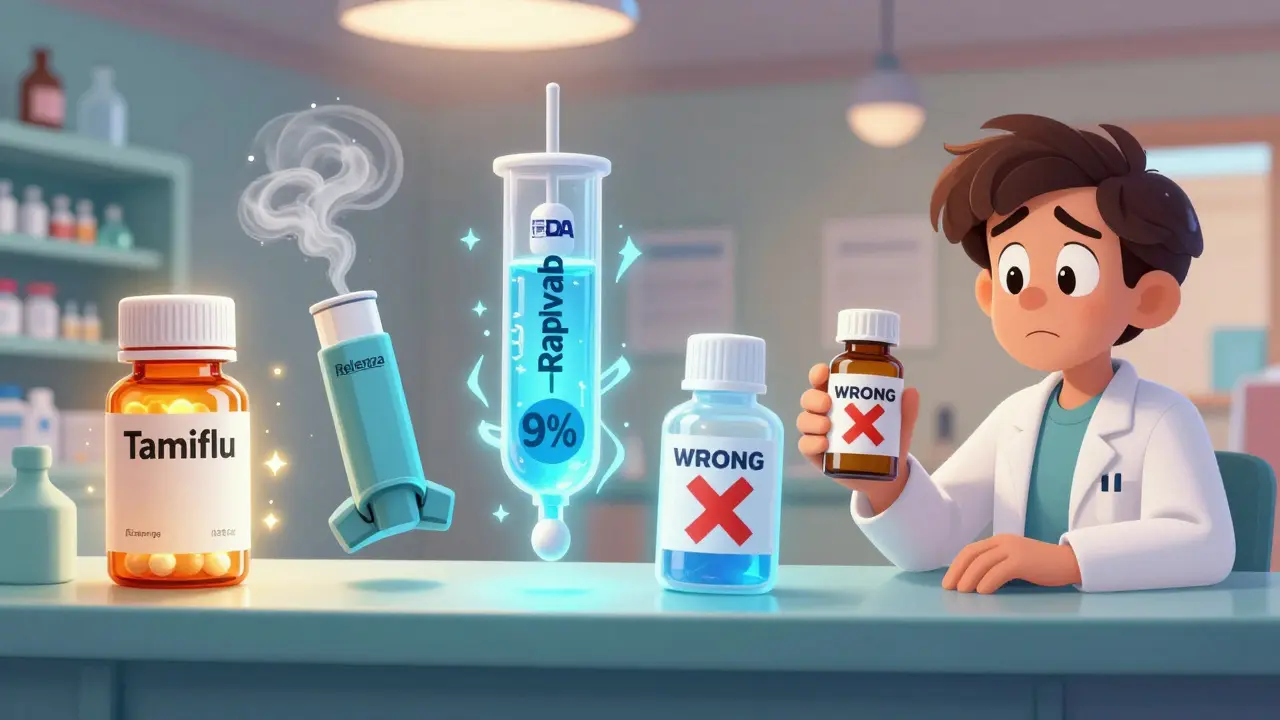
There are four FDA-approved antivirals:
- Oseltamivir (Tamiflu) - taken as a pill for five days. Reduces symptom duration by 17-39 hours if taken within 48 hours of symptoms. Median reduction? 30 hours.
- Zanamivir (Relenza) - inhaled powder. Works well for high-risk patients, cuts illness by about 1.5 days.
- Peramivir (Rapivab) - one IV dose. Used in hospitals or for people who can’t take pills.
- Baloxavir marboxil (Xofluza) - single-dose pill. Stops the virus from multiplying. Reduces viral load by 99% in 24 hours.
Pricing? Generic oseltamivir costs $15-$30 without insurance. Brand-name Tamiflu? $105-$160. Xofluza runs $150-$200. Insurance helps, but not always enough. Many people skip it because of cost - even though studies show it cuts hospitalization risk by 34% in high-risk groups.
Important: antivirals don’t work for colds. No drug on the market targets rhinoviruses. There are over 160 types - too many to make a single antiviral effective.
What About Cold Remedies?
Since there’s no cure for the common cold, treatment focuses on easing symptoms.
- Pseudoephedrine (in Sudafed) reduces nasal congestion by 30-40%.
- Acetaminophen (Tylenol) or ibuprofen (Advil) lower fever and ease aches. A 650mg dose of acetaminophen drops temperature by 2-3°F.
- Zinc lozenges - if taken within 24 hours of symptoms, may shorten a cold by 1.6 days. But they can cause a bad metallic taste, and long-term use might lead to copper deficiency. Not everyone tolerates them.
- Saline nasal sprays and humidifiers help with congestion without side effects.
Don’t waste money on echinacea, vitamin C mega-doses, or garlic supplements. Studies show they don’t reliably help. The best thing for a cold? Rest, fluids, and time.
How Do You Know What You Have?
Doctors can’t tell just by looking. Symptom checklists are only 60-70% accurate. That’s why rapid testing matters.
Tests like the BD Veritor molecular assay give results in 15 minutes with 95% accuracy. They cost $25-$50. Many urgent care centers offer them. If you’re high-risk (over 65, pregnant, diabetic) and have flu-like symptoms, get tested. If it’s flu, antivirals can make a real difference.
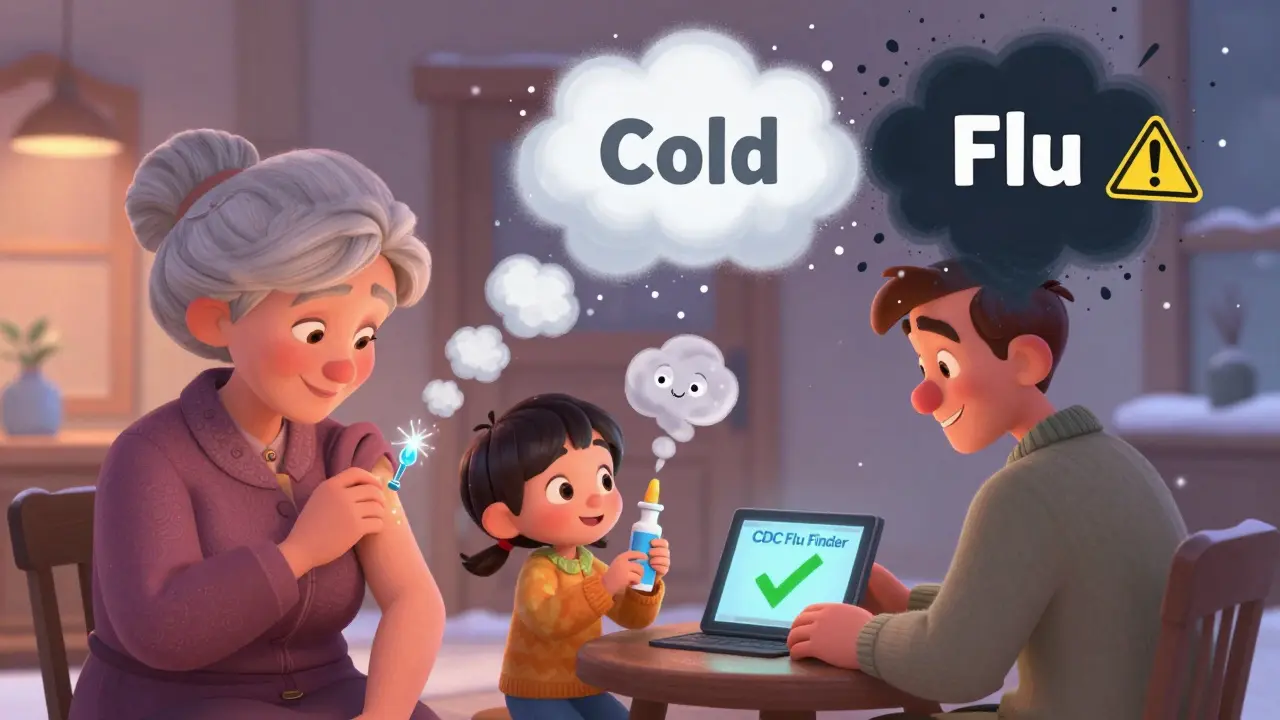
There’s also the CDC Flu Finder tool - an online guide that helps people recognize key signs. Primary care clinics using it cut misdiagnosis by 40%.
And don’t confuse flu with allergies. Allergies cause sneezing (90% of cases), itchy eyes, and clear mucus - no fever. Cold? More congestion, thicker mucus, maybe a low fever. Flu? High fever, body aches, exhaustion.
What Do Real People Say?
Look at thousands of Reddit threads and patient reviews. The stories are clear.
One person wrote: "Started Tamiflu 12 hours after my fever hit. Back to work in three days. Normally, I’m out for a week." Another: "I waited three days for antivirals. By day five, I had pneumonia. Don’t wait."
But not all experiences are good. "Xofluza cost $180 with insurance. For my mild case? Not worth it." Or: "Zinc lozenges made my mouth feel like I was chewing aluminum foil. I quit after day two."
And here’s the scary part: 78% of flu patients wish they’d sought help sooner. Delayed treatment isn’t just inconvenient - it’s dangerous.
What’s Changing in the Future?
Flu vaccines improved in 2023. The new quadrivalent versions cover four strains: A/Victoria/4897/2022 (H1N1), A/Darwin/9/2021 (H3N2), B/Austria/1359417/2021, and B/Phuket/3073/2013. Coverage in the U.S. reached 51.8% of adults in 2022-2023 - still too low, but improving.
Next up? mRNA flu vaccines from Moderna. They’re in Phase III trials and could be available by late 2024. They work like the COVID mRNA shots - faster to produce, better match to circulating strains.
Even more exciting: universal flu vaccines. Researchers at NIAID are testing ones that target the "stalk" of the flu virus - a part that doesn’t change much between strains. In primates, they showed 70% cross-protection. If it works in humans, we might not need yearly shots anymore.
But challenges remain. Antiviral resistance is real - 1.5% of H1N1 strains are now resistant to oseltamivir. And climate change? It’s extending flu season by 12 days each year since 2000. More time for the virus to spread.
As Dr. Anthony Fauci said: "Flu antivirals will remain essential, even with better vaccines, because vaccine effectiveness varies between 40% and 60% each year." That’s why treatment still matters.
What Should You Do?
- If you have sudden fever, body aches, and exhaustion - get tested for flu. Don’t wait.
- If you’re over 65, pregnant, or have a chronic illness - talk to your doctor before flu season starts. Ask about antivirals and vaccination.
- If you have a cold - rest. Drink water. Use saline spray. Skip the expensive supplements.
- Don’t take antibiotics. They won’t help. They might hurt.
- Wash your hands. Cover your cough. Stay home if you’re sick. It’s simple, but it works.
The bottom line: colds are annoying. Flu can be deadly. Knowing the difference isn’t just about feeling better - it’s about staying alive.
Can you get the flu from the flu shot?
No. Flu vaccines use either inactivated (killed) virus or just a single protein from the virus. You can’t catch the flu from the shot. Some people feel mild side effects - sore arm, low-grade fever, achiness - but that’s your immune system responding, not the flu. If you get sick after the shot, you were likely exposed to another virus or caught the flu before the vaccine had time to work (it takes two weeks).
Are antivirals effective if taken after 48 hours?
Effectiveness drops sharply after 48 hours, but it’s not zero. For high-risk patients - like those with asthma, diabetes, or over 65 - doctors may still prescribe antivirals up to 72 hours after symptoms start. In hospitalized patients, even later treatment can reduce complications. But for healthy adults, waiting beyond two days means you’re likely past the window where antivirals make a noticeable difference.
Why can’t we make a cure for the common cold?
There are more than 160 different rhinovirus strains - and they mutate quickly. A drug that works against one strain won’t work against others. Developing a single antiviral that covers them all is like trying to build one key that opens 160 different locks. Plus, colds are usually mild, so pharmaceutical companies focus on more serious illnesses. The cost and complexity don’t add up.
Can zinc really shorten a cold?
Some studies say yes - especially zinc lozenges taken within 24 hours of symptoms starting. A Cochrane review found they can shorten colds by about 1.6 days. But results are inconsistent. Some trials show no benefit. And side effects like bad taste, nausea, or even loss of smell can be severe. The CDC warns against long-term use due to risk of copper deficiency. It’s not a guaranteed fix, but it’s worth trying if you’re okay with the taste.
Is the flu worse than COVID-19?
It depends. In healthy people, flu is often less severe than early COVID-19. But in older adults or those with chronic conditions, both can be deadly. Flu doesn’t cause loss of taste or smell as commonly as COVID-19 did. But flu spreads faster, hits harder in winter, and kills more people annually in the U.S. than COVID-19 has since 2020. Neither should be taken lightly.
Nerina Devi
February 21, 2026 AT 19:02As someone who’s lived through three flu seasons in Delhi, I can tell you the difference isn’t just medical-it’s cultural. Here, people don’t wait for tests. They grab ginger-turmeric tea, rub eucalyptus oil on their chests, and rest under three blankets. No antivirals. No panic. Just quiet resilience. I’ve seen grandmas get up after three days, shaking but smiling, because they knew the flu would pass. We don’t have access to Tamiflu, but we have wisdom passed down through generations.
Dinesh Dawn
February 22, 2026 AT 14:26Yup. Got the flu last year. Thought it was a cold. Slept for 36 hours straight. Woke up feeling like my bones were made of glass. Took a day off work. Boss thought I was faking. Then I showed him the fever chart. He apologized. Now he gets tested too.
kirti juneja
February 23, 2026 AT 13:25Okay but let’s talk about zinc lozenges. I tried them last winter like a total wellness bro. Tasted like licking a battery. My tongue went numb. I cried. But? I was back to work in four days. My coworker said I looked like a zombie who’d won the lottery. I didn’t care. I’ve since switched to saline sprays and chamomile tea. No drama. Just peace. Also-please stop saying ‘boost your immune system.’ That phrase is marketing nonsense wrapped in a glittery bow. Your immune system doesn’t need boosting. It needs rest. Water. Sleep. Not a $40 bottle of liquid glitter.
Haley Gumm
February 25, 2026 AT 09:23Wow. This post is so… thorough. Like, I’m impressed. But let’s be real-90% of people who read this are still going to pop a vitamin C pill and pray. The fact that we’re still debating whether zinc works in 2024 is wild. Also, why is no one talking about how the CDC’s numbers are skewed by overtesting? I mean, if you test every sniffle, of course you’re going to inflate flu stats. It’s not a public health crisis. It’s a data artifact.
Spenser Bickett
February 27, 2026 AT 07:43lol. antivirals? for a virus we’ve had since the 1800s? you people are so obsessed with pills you forgot how to be human. i got the flu in 2019. i drank broth, slept, and let my body do its job. no drugs. no tests. no drama. just me, my blanket, and the quiet hum of my immune system doing what evolution designed it to do. we’ve become a society of medical tourists. you don’t need a pill for every ache. you need to stop being scared of your own body.
Natanya Green
February 27, 2026 AT 15:32OH MY GOSH. I JUST REALIZED. I MISSED THE WINDOW. I HAD FLU SYMPTOMS LAST WEEK AND DIDN’T GET TESTED. I’M GOING TO DIE. I’M GOING TO GET PNEUMONIA. I’M GOING TO HAVE A HEART ATTACK. I’M GOING TO BE A STATISTIC. MY KIDS ARE GOING TO BE ORPHANS. MY CAT IS GOING TO BE A STRAY. I JUST ATE A BANANA. IS THAT A SYMPTOM? I’M SO SCARED. I NEED TO TALK TO A DOCTOR. RIGHT NOW. I’M CRYING. I JUST SPILLED MY TEA. I’M A MESS.
Steven Pam
February 28, 2026 AT 13:38Love this breakdown. Honestly, the biggest takeaway for me? It’s not about being scared-it’s about being smart. I got tested last year after my sister got hospitalized. Turned out it was flu. Took Xofluza. Was back to hiking in 48 hours. No drama. No guilt. Just science. And yeah, the cost sucks-but if you’re high-risk, it’s not a luxury, it’s insurance. Also, universal flu vaccines? If they work, we’re looking at a world where we don’t need yearly shots. That’s huge. Imagine not having to argue with your mom about getting the flu shot every October. Peace.
Michael FItzpatrick
March 1, 2026 AT 08:13People treat colds like they’re harmless. But let’s not forget-RSV doesn’t care if you’re ‘just’ an adult. My nephew got it at 14 months. Spent a week in the NICU. Colds aren’t cute. They’re not ‘just a sniffle.’ They’re a gateway. And if you’re around kids, elderly, or immunocompromised folks? Your ‘mild’ cold could be their worst nightmare. So yes-stay home. Wash your hands. Don’t be that guy who sneezes on the subway and calls it ‘just a cold.’
Lillian Knezek
March 3, 2026 AT 05:28Okay but what if the flu vaccine is part of the big pharma agenda? I read on a forum that the flu virus was engineered to spread faster in winter because it’s easier to track people who are sick. And Tamiflu? It’s just a way to keep people dependent. I mean, why would they make a vaccine that changes every year if it wasn’t intentional? And don’t get me started on mRNA. It’s not science-it’s nanotech surveillance. 🤫👁️
Maranda Najar
March 3, 2026 AT 09:09Let me tell you, as someone who has spent three nights in a hospital due to influenza-induced myocarditis, this post reads like a love letter to the medical establishment. I weep for the ignorance of those who believe rest and hydration are enough. The body is a temple, yes-but it is also a fragile, ticking clock. And when the virus breaches the citadel, it does not ask permission. It does not pause for your schedule. It does not care if you ‘can’t afford’ antivirals. The cost of inaction is measured not in dollars, but in oxygen saturation levels, in ventilator settings, in funeral arrangements made before the fever breaks. I survived. Many do not. And so I say: test. Act. Advocate. Do not wait until your lungs scream.
Lou Suito
March 4, 2026 AT 00:27Actually, the CDC estimates are inflated because they count positive rapid tests as confirmed cases. But rapid tests have a 30% false positive rate. Also, antivirals don’t reduce mortality-only symptom duration. And zinc? The Cochrane review says ‘low-quality evidence.’ So why are we treating this like gospel? Also, universal flu vaccines? That’s a fantasy. Viruses mutate faster than we can patent. And climate change? It’s not extending flu season-it’s making winters more variable. And that’s not bad. It’s natural. Stop pathologizing nature.