
QT Prolongation Risk Calculator
This tool helps you understand your risk of QT prolongation when taking antiemetics like ondansetron. Based on factors mentioned in the article, it calculates a simplified risk score. This is for educational purposes only and does not replace medical advice.
Why Ondansetron Can Be Riskier Than You Think
Most people know ondansetron as the go-to drug for nausea-whether it’s from chemotherapy, surgery, or a bad stomach bug. It works fast, it’s effective, and for years, it was the standard. But behind its reputation lies a quiet but serious danger: QT prolongation. This isn’t a side effect you can feel. It doesn’t cause dizziness or a racing heart right away. Instead, it quietly stretches out the time your heart takes to recharge between beats. If it stretches too far, your heart can slip into a deadly rhythm called torsades de pointes. And it’s not just a theory-it’s happened. More than 140 documented cases since 2012, mostly after high-dose IV use.
How Ondansetron Slows Down Your Heart’s Reset
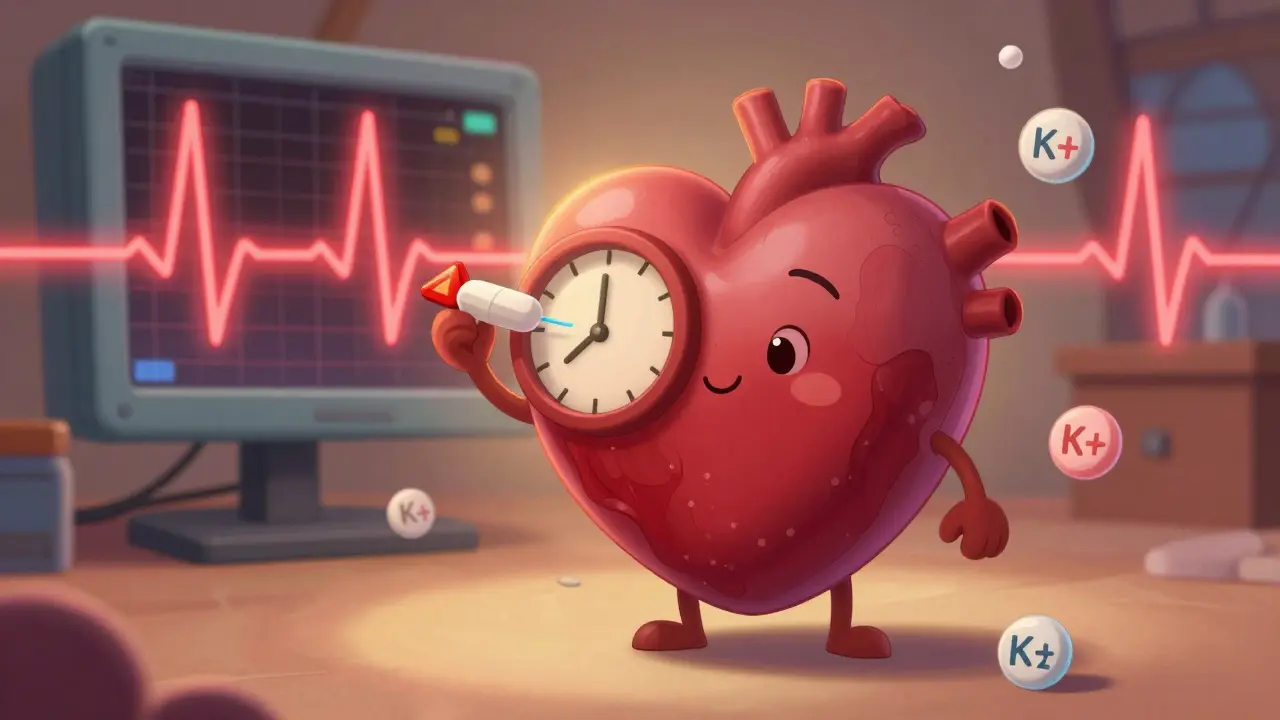
Your heart beats because of electrical signals. After each beat, it needs to reset, and that reset happens through tiny ion channels in heart cells. One of those channels, called hERG, lets potassium flow out to help the heart calm down after contracting. Ondansetron blocks that channel. When it does, potassium can’t leave fast enough. The heart stays electrically charged longer than it should. That delay shows up on an ECG as a longer QT interval. The longer the QT, the higher the risk of a dangerous arrhythmia.
Studies show that a single 32 mg IV dose of ondansetron can stretch the QT interval by an average of 20 milliseconds. That might sound small, but in cardiac terms, it’s a red flag. The FDA pulled the plug on 32 mg IV doses in 2012 because of this. Even 16 mg can push QT prolongation past safe limits in some people. For comparison, a typical oral dose of 8 mg raises the QTc by only about 6 ms-much less risky.
Who’s Most at Risk?
Not everyone who gets ondansetron will have a problem. But certain people are walking into a minefield without knowing it:
- People with congenital long QT syndrome-even if they’ve never been diagnosed
- Those with heart failure or bradycardia (slow heart rate)
- Patients with low potassium or magnesium-common in cancer patients or those vomiting for days
- People taking other QT-prolonging drugs-like certain antibiotics, antidepressants, or antifungals
- Older adults, especially over 75, with multiple health issues
A 2019 Johns Hopkins case series found that three out of 15 elderly patients with existing heart conditions developed QTc intervals over 500 ms after just 8 mg of IV ondansetron. That’s well into the danger zone. And in many cases, no one checked their ECG before giving the drug.
Comparing Antiemetics: Which Ones Are Safer?
Ondansetron isn’t the only antiemetic with cardiac risks, but it’s one of the most commonly used-and the most misunderstood. Here’s how other options stack up:
| Drug | Class | Max QTc Increase (ms) | IV Dose Limit | Relative Risk |
|---|---|---|---|---|
| Ondansetron | 5-HT3 antagonist | 20 | 16 mg (max) | High |
| Dolasetron | 5-HT3 antagonist | 25 | Not recommended for IV use | Very High |
| Granisetron | 5-HT3 antagonist | 8-10 | 3 mg IV | Low |
| Palonosetron | 5-HT3 antagonist | 9.2 | 0.25 mg IV | Lowest |
| Droperidol | Butyrophenone | 15-20 | 2.5 mg IV | High |
| Prochlorperazine | Phenothiazine | 10-15 | 10 mg IM/IV | Moderate |
| Dexamethasone | Corticosteroid | 0-2 | 8-20 mg IV | Very Low |
Palonosetron is now the preferred choice for cancer patients with heart risks. It’s just as good at stopping nausea, but its effect on the QT interval is barely noticeable. Dexamethasone, often used alongside antiemetics, doesn’t prolong QT at all-making it a smart add-on for low-risk cases.
What Hospitals Are Doing Now
Since the FDA warning in 2012, things have changed. A 2022 survey found that 92% of U.S. hospitals now have formal protocols for ondansetron use. That’s up from just 37% in 2011. What do those protocols look like?
- Baseline ECG is required for patients with heart disease, electrolyte imbalances, or on other QT-prolonging drugs
- Maximum IV dose is capped at 8 mg for high-risk patients, not 16 mg
- Electrolytes are checked-potassium below 3.5 or magnesium below 1.8 mg/dL? Fix those first
- ECG monitoring for 4 hours after IV dosing if the patient has a baseline QTc over 440 ms
- Pharmacist review is mandatory before giving any IV dose over 4 mg in many centers
One ER nurse in Boston told me she used to give 8 mg IV without thinking. Now she checks the ECG, asks about other meds, and often switches to dexamethasone if the patient’s just mildly nauseated. “It’s not harder,” she said. “It’s just smarter.”
What You Should Ask Your Doctor
If you’re about to get ondansetron-especially in a hospital or clinic-here are three questions to ask:
- “Have you checked my ECG or known heart history?”
- “Are my potassium and magnesium levels normal?”
- “Is there a safer alternative, like granisetron or dexamethasone?”
Don’t assume they’ve already thought of this. A 2020 survey of anesthesiologists found that even after the FDA warning, 22% still routinely used 16 mg IV doses. Many didn’t even know the limit had been lowered.
The Bigger Picture: Why This Matters Beyond One Drug
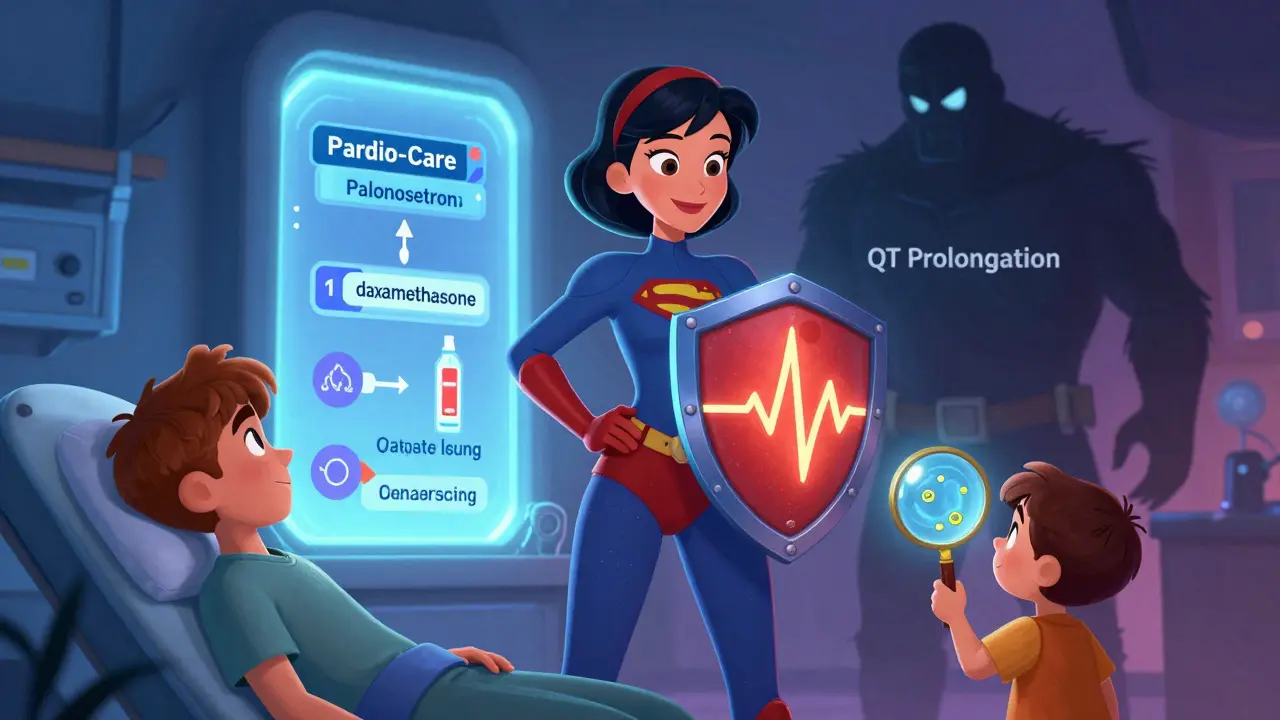
This isn’t just about ondansetron. It’s about how we treat symptoms without looking at the whole picture. Nausea is uncomfortable, but it’s rarely life-threatening. The drugs we use to treat it shouldn’t create new, deadlier risks. The fact that 18% of oncology nurses have seen ECG abnormalities from ondansetron means we’ve been too focused on stopping vomiting and not enough on protecting hearts.
That’s why alternatives are growing. Aprepitant and fosaprepitant-drugs that work on a different pathway-are now used in 28% of high-risk chemo cases. They don’t touch the QT interval at all. And they’re just as effective.
What’s Coming Next
Research is moving toward personalized dosing. Scientists at the University of Florida found that people with a genetic variation called CYP2D6 poor metabolizer status break down ondansetron slower. That means the drug sticks around longer-and so does its effect on the heart. In the future, a simple genetic test might tell your doctor whether you’re at higher risk before they even give you the first dose.
The NIH is already running a trial called QT-EMETIC, tracking 1,200 cancer patients to see if tailoring ondansetron doses based on genetics and heart health reduces arrhythmias. Results are expected in mid-2024.
Bottom Line: Safer Use Is Possible
Ondansetron isn’t evil. It’s saved countless lives from vomiting. But it’s not risk-free. The key isn’t to avoid it-it’s to use it wisely. Lower doses. Check the heart. Fix the electrolytes. Know your alternatives. When done right, it’s still one of the best tools we have. When done carelessly, it can be deadly. The difference isn’t the drug. It’s the practice.
Can I still take ondansetron if I have a heart condition?
You can, but only under strict conditions. If you have heart failure, a history of slow heart rate, or known long QT syndrome, your doctor should avoid IV ondansetron entirely. Oral doses may be safer, but only if your electrolytes are normal and you’re not on other QT-prolonging drugs. Always get an ECG before use if you have heart issues. In many cases, dexamethasone or granisetron are better choices.
Is oral ondansetron safer than IV?
Yes, significantly. IV ondansetron hits the bloodstream all at once, causing a sharp spike in drug levels that can trigger QT prolongation. Oral doses are absorbed slowly, so the effect on the heart is much smaller. The FDA says single oral doses up to 24 mg are safe for most people. But even with oral use, patients with existing heart conditions or low potassium should still be monitored.
What’s the maximum safe dose of IV ondansetron?
The FDA recommends no more than 16 mg as a single IV dose. But for patients with heart disease, low potassium, or those taking other QT-prolonging drugs, many hospitals now cap it at 8 mg. Some even use 4 mg for high-risk cases. The 32 mg dose was banned in 2012 because it doubled the risk of dangerous arrhythmias.
Do I need an ECG before getting ondansetron?
Not always-but you should if you’re over 65, have heart disease, are on other heart-affecting drugs, or have had vomiting for more than 24 hours (which can lower potassium). Many hospitals now require an ECG for anyone getting IV ondansetron, especially in cancer or ER settings. If you’re unsure, ask your provider. A simple 10-second ECG can prevent a cardiac arrest.
Are there antiemetics that don’t affect the heart?
Yes. Dexamethasone (a steroid) is one of the safest options-it doesn’t prolong QT at all. Metoclopramide and promethazine carry some risk but are lower than ondansetron. Palonosetron and granisetron are 5-HT3 blockers like ondansetron but have much less effect on the heart. For patients with cardiac risks, these are often preferred. Always ask: “Is there a non-cardiac option that works just as well?”
Shawn Peck
January 30, 2026 AT 22:19They don't care until someone drops dead. Then they write a protocol. Too late.
Niamh Trihy
January 31, 2026 AT 21:42Always check electrolytes. Always review meds. Always consider alternatives. It takes 30 seconds to do it right.
Sarah Blevins
February 1, 2026 AT 19:49Jason Xin
February 3, 2026 AT 07:50My favorite part? The 22% of anesthesiologists still giving 16mg. That’s not ignorance. That’s arrogance wrapped in a white coat. You don’t need an ECG to know that if your patient’s been vomiting for 48 hours, they’re probably low on potassium. Duh.
Yanaton Whittaker
February 5, 2026 AT 01:45Also, dexamethasone? That's a steroid! They'll turn you into a pumpkin! 😡🇺🇸
Kathleen Riley
February 5, 2026 AT 03:41Thus, the administration of ondansetron, irrespective of dosage, constitutes a metaphysical negation of the patient’s inherent physiological sovereignty.
Beth Cooper
February 5, 2026 AT 13:05My cousin took it for morning sickness and was fine. They just want you scared so you'll pay for more tests. Trust your gut-not the ECG.
Donna Fleetwood
February 5, 2026 AT 15:22One lady said, ‘I didn’t know my nausea could hurt my heart.’ That broke my heart. We can do better. We’re not just treating symptoms-we’re protecting people. Small changes, big impact. Thank you for this.